 English

Views: 0 Author: Site Editor Publish Time: 2026-07-01 Origin: Site


Fleet procurement carries massive stakes for your daily operations. Specifying the wrong axle configuration often leads to crippling regulatory fines. It also causes rapid tire wear and dangerous losses of traction. A 6X4 tractor truck solves many of these heavy hauling challenges. It features three total axles, featuring two driven rear axles. This robust layout stands as the global industry standard. It perfectly balances extreme cargo-pulling capabilities with reliable road grip.
Fleet managers and owner-operators need exact data to make informed buying choices. Guesswork during the specification process will ruin your operational efficiency. This guide serves as your comprehensive technical and evaluation tool. It bypasses generic advice to deliver hard engineering facts.
You will learn how to validate if this specific truck configuration aligns precisely with your operational demands. We will cover critical load capacity parameters and strategic vehicle comparisons. You will also discover an evidence-based spec'ing checklist. This knowledge empowers you to configure a vehicle capable of dominating any haul.
Standardized Load Capacity: 6x4 configurations typically support a Gross Combination Weight Rating (GCWR) of 40 to 80+ tons, heavily dependent on regional axle load regulations and suspension spec.
Core Applications: Ideal for heavy-duty cargo tractor truck operations, long-distance freight over varied terrain, and construction/mining logistics.
The 4x2 vs. 6x4 Trade-off: 6x4 offers superior traction and payload distribution at the cost of higher initial purchase price, slight fuel economy penalties, and increased tire maintenance.
Procurement Focus: Buying decisions must prioritize engine torque-to-weight ratios, rear axle gear ratios, and suspension types matched to the primary route.
Understanding capacity requires strict differentiation between vehicle weight and towing mass. You must master these metrics to haul safely.
You cannot use these two terms interchangeably. Gross Vehicle Weight (GVW) represents the scale weight of the tractor head truck itself. This includes the chassis, engine, fluids, and driver. It does not include the trailer. Conversely, Gross Combination Weight Rating (GCWR) defines the absolute maximum allowable mass. It encompasses the truck, the trailer, and the entire payload. Engineers calculate the GCWR based on the weakest driveline component. Exceeding this rating causes immediate transmission overheating and brake failure.
Proper weight distribution keeps your vehicle stable at highway speeds. You must load trailers carefully to balance the pressure across all wheels.
Front steer axle capacity: This axle typically handles 7 to 9 tons. It manages steering geometry and frontal braking. Overloading it makes steering dangerously heavy.
Tandem rear drive axles capacity: These axles manage massive loads. Together, they typically carry 26 to 32+ tons. They transfer engine torque to the pavement. They also bear the primary downward pressure from the fifth wheel.
Local bridge laws govern your actual hauling capacity. Highway weight limits always supersede raw mechanical capacity. Your truck might physically pull 80 tons easily. However, local highway patrols might restrict your combined weight to 45 tons. European, American, and Asian markets all enforce distinct axle-load regulations. You must map your target jurisdictions. Always check legal payload ceilings before signing a purchase order. Fines for overloaded axles will quickly erase your freight profits.
Chassis frame thickness dictates safe hauling limits. A standard single frame bends under extreme trailer pin weights. Heavy-duty applications require an 8+8mm double frame. This nested steel construction prevents chassis flexing over rough terrain. The fifth-wheel capacity also forms a critical bottleneck. A standard 2-inch pin serves regular freight. A massive 3.5-inch pin is mandatory for oversized equipment. You need properly matched components to avoid catastrophic structural failure.
Choosing the right axle layout defines your fleet capabilities. You must analyze your route geography before deciding.
You must select a tandem-drive setup when hauling multi-axle trailers over 40 tons. A single drive axle simply cannot grip the road under such weight. The tandem layout also proves essential for routes featuring steep gradients. Loose gravel, mud, and heavy rain make single-drive units slip helplessly. The dual drive axles guarantee forward momentum. They push the load up inclines smoothly. You avoid dangerous stalls on mountain passes.
Avoid tandem drives for light-to-medium container transport on flat highways. A 4x2 model provides superior fuel economy in these environments. It weighs less and creates less mechanical drag. You will also pay lower toll costs on highways charging per axle. Operating a heavy tandem truck for lightweight consumer goods wastes fuel. It represents a misallocation of heavy-duty resources.
You might consider an 8x4 configuration for extreme weight. An 8x4 rigid truck hauls heavier payloads directly on its own chassis. However, it lacks flexibility. An articulated tandem tractor provides superior maneuverability in tight spaces. You can swap trailers seamlessly at logistics hubs. One truck can drop a flatbed and immediately hitch to a tanker. This flexibility keeps your fleet utilization rates exceptionally high.
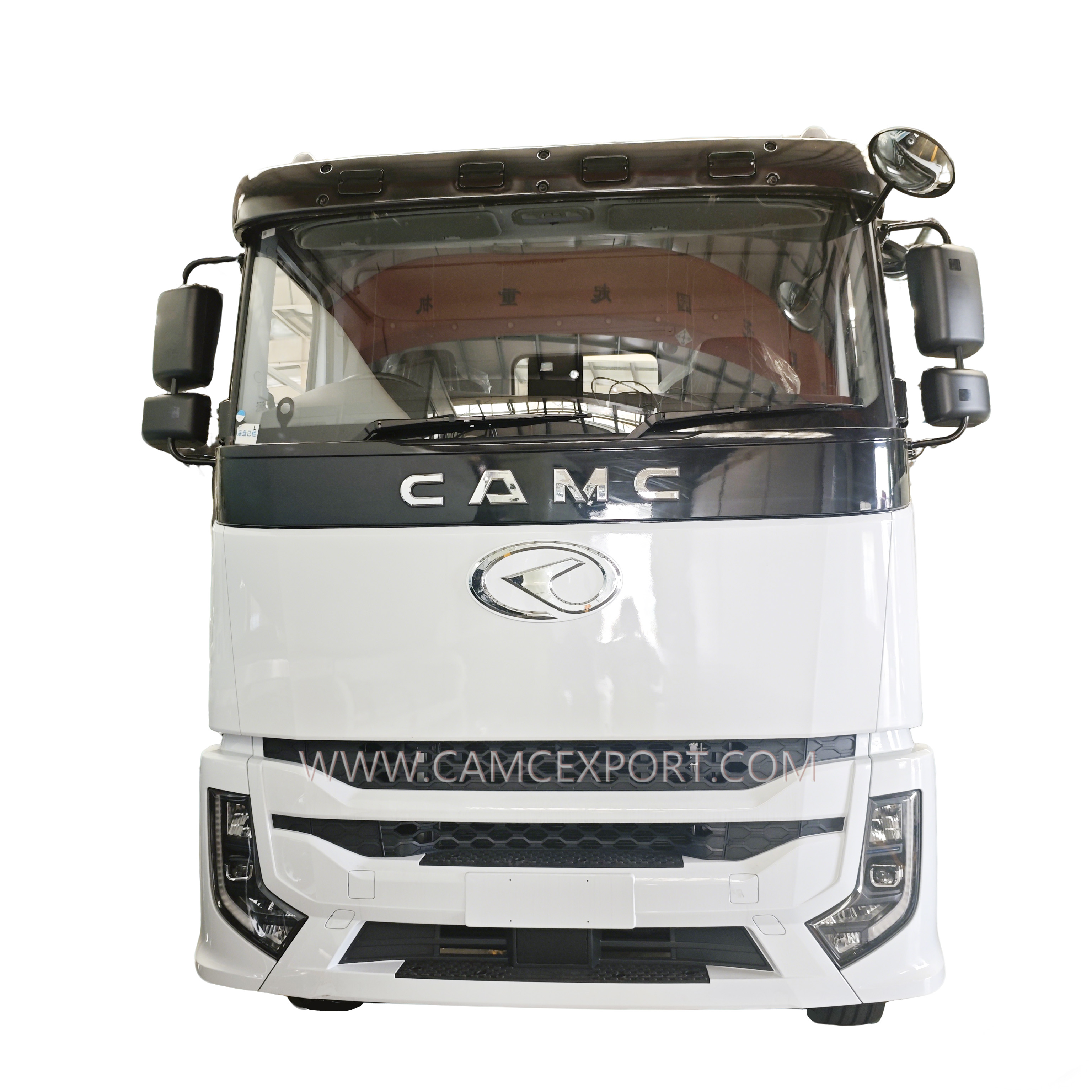
Certain industries demand tandem-axle capabilities. These trucks thrive under conditions that destroy standard commercial vehicles.
These trucks excel at moving massive industrial goods across continents. Transport companies rely on them to pull flatbeds and drop-decks. Common cargoes include heavy mining machinery, dense steel coils, and bulk construction materials. The dual drive axles distribute immense trailer pin weight safely across eight tires. This prevents the trailer from crushing the truck chassis. It also ensures stable braking dynamics when descending long hills.
Ports often connect to rugged inland terminals. You need a robust cargo tractor truck to haul high-weight shipping containers safely. Coastal ports frequently load max-weight containers bound for mountainous regions. These routes demand continuous traction. Furthermore, unpaved facility roads trap lesser vehicles in the mud. The tandem layout powers through soft ground. It ensures your freight arrives on schedule regardless of road quality.
Mining and logging operations depend entirely on these trucks. They pull heavy dump trailers and wide lowboys effortlessly. Major infrastructure projects require their rugged chassis designs. Standard highway trucks shatter their suspensions in rock quarries. The tandem layout flexes and absorbs massive impacts. They crawl through deep ruts fully loaded. They represent the backbone of remote industrial development.
You cannot buy a heavy truck off the shelf. You must engineer the specifications to match your exact freight profile.
Your engine and transmission dictate how the truck performs under stress. Follow these specific steps to match your powertrain to your payload:
Calculate your maximum GCWR: Determine the heaviest combined weight you will ever pull.
Select the right horsepower: Match horsepower to your terrain. Typical heavy ranges sit between 400HP and 560HP+.
Prioritize torque: Torque output matters far more than raw horsepower for moving static loads. Look for high torque at low RPMs.
Choose your transmission type: Match the gearbox to your driver experience level and route type.
Transmission choice heavily impacts daily operations. Manual gearboxes offer rugged, low-speed torque control. They suit construction sites perfectly. Automated Manual Transmissions (AMT) improve overall fleet fuel efficiency. They also boost driver retention by reducing fatigue in heavy traffic.
The differential gear ratio acts as a multiplier for your engine torque. High numerical ratios (e.g., 4.11 or higher) deliver exceptional low-speed gradeability. They help trucks climb out of steep quarries. However, they limit top speed. Low numerical ratios (e.g., 3.08) allow for efficient highway cruising speeds. The engine runs at lower RPMs on the highway. Choose low ratios for pure long-haul operations.
Your suspension choice affects cargo safety and axle compliance. Different materials serve entirely different purposes.
| Suspension Type | Primary Advantage | Best Use Case | Limitation |
|---|---|---|---|
| Steel Leaf Spring | Extreme Durability | Mining, logging, heavy construction | Harsh ride, heavier tare weight |
| Air Suspension | Cargo Protection | Electronics, long-haul highway | Vulnerable to off-road punctures |
Leaf springs offer pure mechanical durability. They handle extreme off-road shock loading without failing. Air suspensions protect fragile cargo. They also ensure strict highway axle-weighing compliance because they distribute weight dynamically. Drivers strongly prefer the smoother ride of air systems.
Driver retention depends heavily on cab comfort. You must prioritize excellent interior ergonomics. Choose adequate sleeper cab dimensions for multi-day routes. Ensure the HVAC system proves highly reliable under extreme weather conditions. A comfortable driver stays alert. They avoid accidents and remain loyal to your fleet.
Deploying tandem-axle trucks changes your fleet dynamics. You must anticipate specific mechanical and operational behaviors.
A second drive axle creates parasitic mechanical drag. You force the engine to turn extra gears and shafts. You will experience lower fuel efficiency compared to single-drive units. This trade-off grants you superior traction. You accept this drag to gain hauling capability. Modern aerodynamic roof deflectors help offset these losses. Proper tire inflation also minimizes the penalty.
You must manage ten tires instead of six. This increases routine replacement efforts. Tight maneuvers cause drive-axle tire scrubbing. The tandem axles want to push the truck straight. When you turn sharply, the rear tires drag sideways slightly across the pavement. This causes uneven shoulder wear. Strict alignment checks and aggressive tire rotation schedules become critical. You must monitor tread depth weekly.
These heavy-duty units hold impressive market value. Developing global markets constantly demand rugged tandem-axle trucks. Domestic vocational sectors also aggressively buy them used. This strong secondary market demand makes them highly liquid assets. You can typically sell them much faster than specialized single-axle configurations. Buyers trust their proven mechanical durability.
The tandem-drive truck remains the undisputed workhorse of heavy logistics. Its operational success relies entirely on aligning its technical specifications with your actual route profiles. Buying blindly leads to inefficiencies. Precision spec'ing guarantees strong performance.
We recommend buyers map their legal GCWR requirements first. Next, analyze your terrain gradients thoroughly. Determine if you face steep climbs or flat highways. Finally, match your suspension and gearing to those exact conditions. Never send generic spec sheets to manufacturers.
Take action before your next procurement cycle. Consult a commercial vehicle engineer today. Ask them to audit your specific route data. Alternatively, utilize a vendor comparison portal to evaluate different drivelines side-by-side. Make your purchase based on hard engineering facts.
A: Physical mechanical capacity often exceeds 80 tons for specialized configurations. However, legal limits strictly govern highway operations. Jurisdictions usually cap the combined vehicle weight around 40 to 50 tons. Always consult local bridge laws and highway axle restrictions before dispatching a heavy load.
A: Yes. You can expect a 5% to 15% increase in fuel consumption. This occurs due to the heavier tare weight and mechanical drag from the extra drive axle. You can mitigate this impact by choosing an Automated Manual Transmission and installing aerodynamic fairings.
A: Yes, but it represents commercial overkill. Operating a heavy-duty tandem configuration for light cargo causes unnecessary tire wear and wastes fuel. You should only deploy this setup if your route involves steep gradients, loose gravel, or consistently poor traction conditions.


