 English

Views: 0 Author: Site Editor Publish Time: 2026-07-07 Origin: Site


Fleet managers face a demanding operational dilemma today. They must balance strict municipal zero-emission mandates against the brutal reliability requirements of urban earthmoving. It requires rethinking heavy fleet deployment entirely. We frame this comparison around practical operational feasibility rather than ideological preferences. You need reliable performance on congested city job sites. In this guide, we address the real-world capabilities of a modern 8X4 EV dump truck compared against the proven, yet increasingly regulated, diesel dump truck. We evaluate critical factors like payload capacities, infrastructure demands, and operating hours. You will learn exactly how battery constraints impact daily hauling cycles. We also explore how electric torque changes stop-and-go driving dynamics. By the end, you will understand which vehicle architecture truly aligns with your specific urban construction projects.
Compliance Advantage: EV dump trucks allow for extended operating hours in urban noise-restricted and Low Emission Zones (LEZs), unlocking new municipal contract opportunities.
TCO Crossover: While an 8X4 EV dump truck requires a significantly higher upfront CapEx, OpEx savings (fuel and maintenance) typically offset costs within 4 to 6 years on high-utilization routes.
The Payload Compromise: Heavy battery packs currently reduce overall payload capacity compared to diesel counterparts, requiring careful route and volume planning.
Infrastructure Dependency: The decision hinges heavily on depot charging readiness and local grid capacity, not just vehicle specs.
Major metropolitan areas rapidly implement strict Low Emission Zones. These policies force construction firms to rethink fleet makeup. Authorities penalize traditional internal combustion engines heavily. Some cities ban them entirely during peak hours. An EV dump truck bypasses these urban emission barriers. It allows unimpeded access to central city job sites. You avoid regulatory access restrictions entirely.
Noise ordinances also dictate urban construction schedules. Heavy diesel engines generate substantial acoustic pollution. They often exceed local residential decibel limits. This restricts early morning or late evening hauling. Electric drivetrains operate almost silently. You can start shifts hours earlier. You work later into the evening without neighborhood complaints. This extended operational window accelerates project timelines significantly. Equipment utilization rates increase dramatically.
Municipalities now embed strict environmental requirements into their procurement processes. Green contract incentives reward firms operating zero-emission equipment. Securing a lucrative government contract often depends on this metric. Your fleet's environmental footprint becomes a competitive asset. Deploying electric heavy-duty vehicles provides a massive scoring advantage. You win bids against competitors relying solely on older fleets. It represents a fundamental shift in project acquisition.
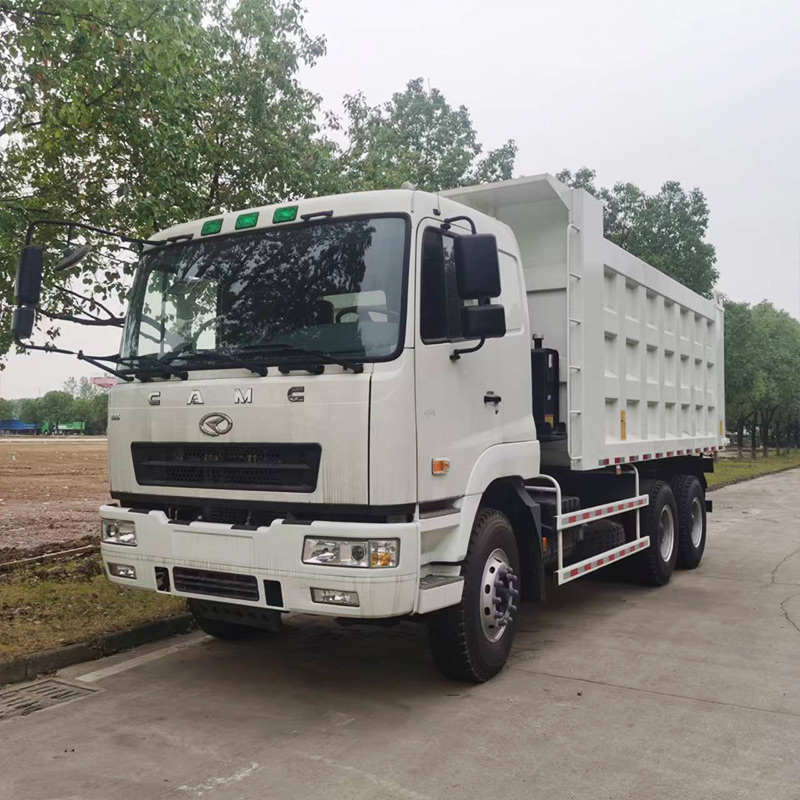
Urban hauling involves relentless stop-and-go traffic. Trucks face steep excavation inclines daily. Electric motors deliver instant maximum torque at zero RPM. This characteristic makes an 8X4 EV dump truck exceptionally capable. Drivers experience smooth, gearless acceleration. They easily handle heavy urban loads. Conversely, a diesel dump truck relies on building RPMs. It must reach a specific band for peak power. This traditional power curve often feels sluggish. The transmission hunts for gears under heavy initial strain.
Battery pack weight introduces a notable payload penalty. Current lithium-iron-phosphate batteries weigh thousands of pounds. This parasitic mass reduces your maximum legal hauling capacity. You must plan route volumes carefully. You will transport fewer cubic yards per trip. Fleet managers must account for this reduction. It alters daily material movement calculations significantly.
Power Take-Off (PTO) efficiency presents a major operational shift. Traditional hydraulic beds require continuous engine idling. This wastes energy and generates localized emissions. Electric PTO systems operate differently. They run bed-lifting hydraulics directly from the high-voltage battery. They consume energy exclusively during the lifting phase. This eliminates unnecessary idle times completely.
Let us address range predictability directly. We suggest mapping predictable, closed-loop routes. Most urban earthmoving projects involve short, repetitive trips. Trucks move between an excavation site and a local processing facility. A fully charged electric truck handles 120 to 150 miles easily. These localized daily loops match battery capacities perfectly. Regenerative braking captures kinetic energy during deceleration. It feeds power back into the battery. This system extends your operational range significantly.
Electric vehicles excel in descending scenarios. Fully loaded trucks driving downhill generate immense kinetic energy. Regenerative braking captures this energy efficiently. It routes power directly back into the battery pack. This process saves substantial wear on traditional friction brakes. Brake pad replacements drop significantly. A diesel dump truck relies heavily on exhaust brakes and friction pads. These components wear out quickly in urban environments. Frequent replacements cause unavoidable maintenance downtime.
| Specification Area | Electric Architecture | Traditional Combustion |
|---|---|---|
| Initial Torque Delivery | Instant peak torque at 0 RPM | Requires RPM buildup and gear shifts |
| Payload Capacity | Reduced by heavy battery mass | Maximum legal chassis allowance |
| PTO Operation | On-demand high-voltage draw | Continuous engine idling required |
| Route Profile Fit | Closed-loop, predictable short loops | Variable, long-distance capable |
| Braking System | High-efficiency regenerative braking | Heavy reliance on friction/exhaust brakes |
Infrastructure remains the largest hurdle for electric fleet adoption. Temporary urban construction sites rarely offer adequate charging solutions. You cannot rely on on-site power for heavy-duty commercial vehicles. Therefore, you must implement overnight Level 3 DC fast charging. This setup belongs at your primary operational depot. It centralizes your energy strategy effectively. However, it requires rigorous logistical planning.
Grid capacity dictates your overall deployment speed. Facility transformers often lack the necessary megawatt capacity. Multi-truck charging pulls immense electrical loads simultaneously. Upgrading this local infrastructure introduces significant timeline delays. You must coordinate closely with utility providers months in advance. Hidden infrastructural demands surprise unprepared fleet managers frequently. You need comprehensive site energy audits before purchasing vehicles.
Level 3 DC fast chargers require robust electrical infrastructure. Typical commercial chargers pull between 150kW and 350kW per unit. Charging five trucks simultaneously demands a massive power draw. Many older industrial parks lack this baseline capacity. You must trench new conduit lines across your facility. You need upgraded switchgear to handle the load safely. This represents a major logistical undertaking. We advise initiating utility discussions immediately. Do not purchase vehicles before confirming grid readiness. The process often takes longer than vehicle manufacturing lead times.
Depot layout modifications also require careful architectural planning. Heavy trucks need wide turning radii to park alongside charging pedestals. Planners must ensure cables reach charging ports without obstructing adjacent driving lanes. Poorly designed charging layouts cause daily operational bottlenecks. Drivers waste valuable shift time maneuvering around awkward charging stations. You must optimize traffic flow within your facility before installing hardware.
Weather variability heavily affects operational reliability. Freezing temperatures degrade battery performance noticeably. Chemical resistance inside cells increases during winter conditions. This reduces your effective daily hauling range. Operators must precondition batteries before leaving the depot. By contrast, a traditional combustion vehicle faces cold-start challenges. Operators deal with fluid gelling and block heaters. You must account for seasonal efficiency drops regardless of powertrain. Winter logistics require proactive fleet management.
Choosing the appropriate vehicle architecture requires a pragmatic assessment. We rely on your daily operations data. There is no universal heavy-duty solution. You must evaluate your specific route predictability carefully. Facility readiness also plays a critical role. We outlined a clear framework below.
Consider retaining a traditional combustion fleet if:
Your daily routes remain highly unpredictable across different municipalities.
Projects frequently require intercity highway travel between distant job sites.
Maximum payload capacity per trip serves as your absolute margin for success.
Facility grid upgrades appear unfeasible for your current depot location.
Utility companies quote transformer installation timelines exceeding 24 months.
Consider deploying electric fleet assets if:
Your operations consist strictly of regional, localized hauling routes.
Daily mileage stays well under the maximum rated battery range.
Your business model targets municipal contracts utilizing strict environmental scoring.
You possess immediate access to reliable overnight depot charging infrastructure.
You operate primarily within heavily regulated urban emission zones.
Route topology matters immensely for heavy-duty performance. Flat, predictable urban routes maximize battery efficiency. Steep, continuous highway gradients drain energy reserves faster. You must analyze elevation changes across your typical job sites. Telematics data from your current fleet proves invaluable here. Review average daily mileage across your entire operation. Identify routes that never exceed 100 miles daily. These specific operational loops serve as perfect electrification targets. You keep your traditional fleet for unpredictable, long-haul demands. This hybrid approach mitigates operational risk entirely.
Driver training also influences your deployment decision significantly. Operating electric heavy machinery requires specific driving techniques. Drivers must learn to maximize regenerative braking during descents. They must understand how aggressive acceleration depletes battery reserves prematurely. Fleet managers should evaluate their workforce's adaptability to new technologies. A highly trainable team maximizes the operational benefits of electric drivetrains. Resistance to new operational protocols can negate efficiency gains entirely.
The superior truck depends entirely on your specific operational environment. Unpredictable routes favor traditional internal combustion reliably. Conversely, stable loops and strict emission zones favor electric variants. Success requires honest, data-driven evaluations of your infrastructure readiness. You cannot force new technology into incompatible logistical frameworks.
The heavy-duty transport sector is evolving rapidly. We face unprecedented regulatory pressure from environmental agencies. Adapting requires a measured, analytical approach to fleet procurement. You must balance green initiatives with raw operational capability. The physics of moving earth remain unchanged. We just utilize different energy delivery mechanisms now. Embrace the transition through careful pilot programs. Document every operational metric during your initial trials. Share this data with your utility providers and dispatchers. Knowledge remains your greatest asset during this industry shift.
We highly recommend a strategic, phased rollout plan. Fleet managers should approach this transition systematically.
Audit your existing depot grid capacity alongside your local utility provider.
Pilot a single electric unit on a highly predictable urban route.
Track daily battery consumption against actual payload weights meticulously.
Monitor regenerative braking efficiency in heavy stop-and-go traffic conditions.
Refine your overnight charging protocols based on real-world energy depletion rates.
This methodical approach minimizes operational disruptions. It allows your drivers to adapt to new torque profiles safely. You build infrastructure confidence before committing to a larger fleet overhaul.
A: A standard battery pack typically supports 120 to 150 miles of localized urban hauling. Continuous stop-and-go traffic benefits the vehicle through regenerative braking. Frequent use of the electric Power Take-Off (PTO) for hydraulic lifting moderately drains the battery. Operators should plan for a full 8-to-10 hour shift on closed-loop routes before requiring a depot charge. Proper route mapping prevents unexpected downtime.
A: We evaluate operational efficiency rather than financial metrics. Electric models utilize highly efficient energy conversion compared to internal combustion engines. You eliminate fuel combustion entirely. You drastically reduce mechanical wear across the drivetrain. There are no diesel particulate filters to clean. There is no engine oil to change regularly. This fundamentally streamlines your daily maintenance workflows. It keeps the vehicle on the road longer.
A: Current high-density battery packs add substantial weight to the chassis. You can expect a payload reduction of roughly 10% to 15% compared to a comparable diesel model. A traditional diesel truck might haul 20 tons legally. Its electric equivalent might be restricted to 17 or 18 tons. Fleet managers must adjust material volume estimates accordingly to remain compliant with local weight restrictions.
A: Commercial vehicle batteries generally maintain optimal capacity for 6 to 8 years under heavy daily cycling. Most manufacturers provide robust warranties guaranteeing at least 80% capacity retention over this period. Once the battery degrades beyond commercial viability, it is repurposed for stationary energy storage. Replacement requires specialized technician support at an authorized service center. Routine thermal management extends this lifespan significantly.


