 English

Views: 0 Author: Site Editor Publish Time: 2026-07-15 Origin: Site


Fleet procurement decisions are fundamentally changing across the global logistics industry. Today, buyers prioritize route-specific performance and long-term financial viability over simple upfront capital expenditures. You can no longer rely solely on initial sticker prices to build a profitable fleet. Deciding whether to upgrade to an advanced commercial vehicle or scale operations with a conventional unit requires looking past basic brochure specifications. Procurement managers must carefully evaluate real-world applications, daily fuel economy, and available aftermarket support before committing vital capital. Without clear operational data, you risk significant profit leaks over the vehicle's entire lifespan. We will break down the critical technical, mechanical, and financial differences between these heavy-duty vehicle classes. You will gain an objective, evidence-based framework to guide your next major purchase order and optimize your routes effectively.
The primary ROI driver for an H9 tractor truck lies in high-mileage, heavy-duty long-haul scenarios where fuel efficiency and driver retention compound over time.
Standard tractor trucks maintain a distinct advantage in regional distribution and mixed-fleet scenarios due to lower upfront costs and universal aftermarket parts availability.
Buyers must evaluate drivetrain integration, chassis durability, and proprietary diagnostic requirements to calculate true lifecycle costs accurately.
Baseline models serve as the reliable backbone of many logistics operations. However, fleet managers eventually hit a harsh threshold of diminishing returns. You must identify the exact route distances, payload weights, and operational hours where these standard units begin to leak profitability. A basic truck operates perfectly well within local city limits. Yet, when pushed beyond its designed parameters on high-speed interstate routes, the initial purchase savings quickly evaporate. Payload weights drastically alter mechanical performance. Operating a truck at maximum gross vehicle weight demands a highly specialized powertrain. Short regional runs often mask these mechanical inefficiencies. High-speed, cross-country hauls expose them immediately. Fleet operators must calculate exactly when a basic asset transforms into a financial liability.
Driver retention serves as a critical financial metric in this evaluation. Recruiting and training a single new driver costs fleets thousands of dollars. High driver turnover destroys fleet margins almost instantly. Basic cab ergonomics contribute heavily to physical driver fatigue. Older drivetrain technologies require constant manual intervention and attention. A comfortable operator stays with your company longer and drives much safer. Upgraded interiors and advanced suspension systems directly reduce physical exhaustion. Investing in cab comfort yields tangible dividends through lower turnover rates and fewer safety incidents.
Fuel burn remains the most significant operational expense for any fleet. Cross-country, high-grade routes demand immense engine power. A basic aerodynamic profile creates massive wind drag at steady highway speeds. We must establish a clear baseline fuel consumption problem to evaluate specialized models effectively. Let us look closely at how a standard tractor truck handles steep mountain grades compared to premium aerodynamic alternatives under the same heavy stress.
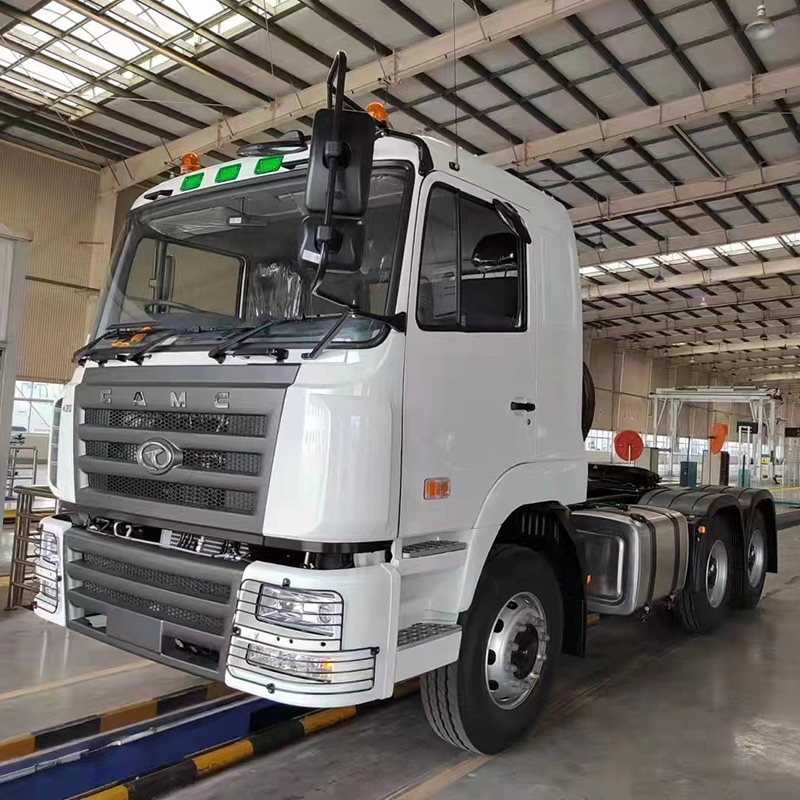
Modern logistics rely entirely on flawless mechanical engineering. Proprietary engine and transmission synchronization sets premium models apart from the pack. The engine in an H9 tractor truck communicates directly with its automated manual transmission. This seamless communication optimizes torque curves during every single gear shift. Legacy setups often rely on piecemeal components assembled from different external manufacturers. These mismatched systems frequently struggle to find the optimal gear on steep inclines. Seamless power delivery reduces internal engine strain significantly. Less mechanical strain means a much longer operational life for critical internal components.
Chassis construction dictates your strict legal payload limits. Every fleet wants to move more freight per trip. Advanced models utilize specialized lightweight alloys in their frame construction. These modern alloys provide immense torsional strength without the massive weight penalty. Traditional standard models rely on thick, heavy carbon steel frames. Every single pound saved on the vehicle chassis translates directly into increased trailer capacity. You can haul heavier loads without risking costly weigh-station fines. Better weight distribution also reduces uneven tire wear. This engineered balance extends the life of your expensive steer and drive tires.
Cab configurations play a massive role in operational efficiency. Day cabs suit local urban deliveries exceptionally well. However, sleeper cabs offer enhanced aerodynamic designs and superior interior space allocation. Sleeper upgrades ensure long-distance operational compliance across various jurisdictions. Drivers need adequate rest space to meet strict Hours of Service (HOS) regulations safely. Furthermore, the aerodynamic contours on modern sleeper roofs drastically cut wind resistance. Sloped hoods and side fairings guide turbulent air smoothly around the trailer gap. These structural design choices reduce the physical drag coefficient exponentially.
Fleet buyers face a constant upfront versus lifecycle equation during procurement. We must acknowledge the higher initial capital expense of premium vehicles. You must establish a clear break-even timeline based on your assumed annual mileage. High mileage accelerates your financial return on investment. If a truck runs constantly, fuel savings multiply rapidly. Low mileage operations stretch the break-even point considerably. You cannot justify a premium upgrade if the vehicle sits idle in a lot.
Aerodynamics heavily influence daily fuel economy. Manufacturers frequently claim specific fuel efficiency improvements in miles per gallon (MPG) or liters per 100 kilometers. You need steady-state highway speeds to actually achieve these advertised savings. Stop-and-go city traffic nullifies advanced aerodynamic advantages entirely. We evaluate these metrics strictly on real-world route topography. An aerodynamic fairing does nothing for a truck stuck in urban gridlock.
Preventative maintenance schedules vary wildly between tiers. Advanced mechanical components might require less frequent routine servicing. However, they often demand very expensive proprietary fluids and specialized synthetic filters. You must carefully balance longer service intervals against higher individual parts costs. A missed maintenance window on a highly tuned engine causes catastrophic failure faster than on a standard block.
| Comparison Metric | Standard Tractor Models | Premium H9 Models |
|---|---|---|
| Initial Capital Expense | Lower baseline pricing | Higher premium investment |
| Aerodynamic Profile | High drag (boxy, flat front) | Low drag (sloped, contoured fairings) |
| Maintenance Approach | Universal parts, shorter intervals | Proprietary parts, extended intervals |
| Financial Break-Even | Immediate (due to low entry cost) | Requires sustained high annual mileage |
| Drivetrain Integration | Piecemeal or legacy components | Synchronized proprietary systems |
No single vehicle fits every operational need perfectly. We must map mechanical capabilities to specific freight scenarios. Utilizing the wrong truck for a specific route destroys profit margins rapidly.
Heavy-Duty Long-Haul (Cross-Country): Advanced aerodynamic models dominate this category completely. High-speed routes maximize built-in fuel optimization features. Sleeper comfort keeps drivers rested and compliant during multi-day trips. Sustained highway speeds allow the synchronized drivetrain to shine, holding higher gears longer to sip fuel efficiently.
Regional Distribution and Short-Haul: Conventional standard trucks often win this specific category. Lower initial costs make perfect financial sense here. Slower average speeds reduce the desperate need for advanced aerodynamics. Smaller cab footprints provide much better maneuverability in tight urban loading docks and crowded distribution centers.
Specialized Loads vs. General Freight: The freight type dictates your precise torque requirements. Pulling a heavy refrigerated trailer requires entirely different power dynamics than pulling an empty flatbed. Enhanced torque handling benefits specialized, heavy-haul applications immensely. Drivers managing volatile liquid loads appreciate the advanced stability controls found in premium configurations.
Fleet upgrades introduce distinct operational risks that require careful mitigation. You must evaluate replacement parts availability critically. Sourcing proprietary parts for newer, advanced models often involves frustrating dealership wait times. Supply chain bottlenecks hit proprietary components hardest. Conversely, standard trucks enjoy universal parts availability. Independent diesel shops stock conventional standard components globally. A broken standard truck gets fixed on the highway. A broken premium truck often requires a tow to a certified dealership.
Mechanic training presents a significant hurdle for internal shops. In-house maintenance teams face steep learning curves with new technology. Advanced vehicles rely heavily on specialized, brand-specific diagnostic software. Standard units often utilize open-source fleet management tools and universal OBD-II scanners. Software licensing fees add up quickly. If your shop cannot read the engine codes, your mechanics cannot fix the truck. You must factor software subscriptions into your operational budget.
Fleet standardization risks remain hidden during initial purchases. Introducing a new vehicle tier disrupts previously standardized operations. Your shop now requires duplicate tooling and different fluid types. Inventory overlap consumes valuable warehouse space. Training your technicians on two completely different platforms doubles your educational expenses. Mixing fleet assets requires a highly organized maintenance director to prevent costly service errors.
Procurement requires actionable, data-driven frameworks. Follow these specific steps to evaluate your next major purchase objectively. Avoid making decisions based purely on driver preference or brand loyalty.
Audit Current Operational Data: Pull your historical telematics data immediately. Analyze your current fuel burn rates across different seasons. Track maintenance downtime carefully over a three-year period. Map your exact route topography to establish a solid baseline for comparison.
Calculate the ROI Threshold: Define specific diesel price markers. Determine the exact mileage required to justify a premium upgrade. Calculate driver turnover costs accurately. If turnover drops by ten percent, calculate that exact dollar value saved.
Pilot Testing Protocol: Request a physical demo unit from the dealership. Structure a short-term lease if a demo is unavailable. Verify the manufacturer data claims under your real-world fleet conditions. Do not rely entirely on closed-track testing data provided by sales representatives.
Fleet procurement requires careful route mapping and strategic capital allocation. Neither truck style is universally superior across all applications. Standard models offer predictable flexibility, universal repairability, and low entry barriers. Premium aerodynamic models offer optimized scale, massive fuel savings, and driver retention for high-mileage, long-distance operations. Look closely at your internal telematics data before signing a purchase order. Match your vehicle choice directly to your most common freight routes and payload weights. Contact your local commercial dealer for a rigorous technical specification review. Finally, request a pilot test to validate fuel economy claims directly on your own active routes.
A: Standard models often require major engine overhauls sooner due to higher operational strain. Premium models leverage optimized drivetrains, which drastically reduces overall chassis and engine fatigue. However, standard trucks hold very steady secondary market value because of their simple, universal maintenance appeal. High-mileage fleets typically cycle premium models out after five years to maximize resale value before the proprietary warranties expire entirely.
A: Yes. Drivers absolutely need familiarization with automated manual transmissions (AMTs) and advanced driver-assistance systems (ADAS). While these systems ultimately reduce driver fatigue, initial training ensures operators understand adaptive cruise control, lane departure warnings, and optimized shifting algorithms. Proper driver training guarantees you maximize the intended fuel economy benefits.
A: Depreciation curves differ significantly between tiers. Premium models experience steeper initial depreciation but maintain strong secondary value for buyers seeking late-model fuel efficiency. Standard units follow a much flatter, predictable depreciation curve. Secondary buyers often prefer standard models for their easy aftermarket repairability. Ultimate resale value depends heavily on verifiable engine hours and perfectly maintained service records.


