 English

Views: 0 Author: Site Editor Publish Time: 2026-07-05 Origin: Site


Fleet managers often view electric heavy machinery skeptically. Vendors frequently pitch these vehicles as simple sustainability initiatives. They highlight zero-emission targets and green corporate branding. However, the primary driver for adoption at the decision stage involves an aggressive reduction in long-term operating expenses. Volatile diesel fuel prices wreak havoc on annual budget projections. High-frequency maintenance on internal combustion engine (ICE) trucks eats into profit margins constantly.
In contrast, modern battery-electric equivalents offer highly predictable operational expenditures. They stabilize your financial planning for the next decade. Closed-loop, heavy-duty jobsites represent the perfect testing ground. Mines, quarries, and massive construction projects provide controlled routes. Replacing traditional fleets fundamentally changes margin structures in these environments. You achieve this profitability through energy regeneration, simplified maintenance, and maximized uptime. You will learn how precise energy modeling, route auditing, and targeted infrastructure investments guarantee a successful electrification rollout.
Upfront vs. OpEx: Initial capital expenditure (CapEx) is higher, but TCO parity is typically reached within 24 to 36 months on high-utilization routes.
Energy Recovery: Regenerative braking on downhill, fully loaded routes can recover significant daily energy, drastically lowering charging costs.
Maintenance Elimination: The removal of diesel engines and complex transmissions eliminates fluid changes, filter replacements, and significantly extends brake life.
Infrastructure Lead Times: Charging infrastructure requires early site evaluation and grid capacity planning to prevent deployment bottlenecks.
Energy cost modeling forms the foundation of any procurement strategy. You must compare per-ton-mile costs directly. Diesel fuel prices fluctuate wildly based on unpredictable global markets. Commercial electricity rates remain relatively stable and predictable. Fleet operators can easily leverage off-peak charging strategies. Charging truck batteries overnight takes advantage of drastically lower utility rates. This simple strategy slashes your daily energy footprint immediately.
An EV tipper truck requires a substantially higher upfront capital investment. However, you must map this initial expense against monthly operational savings. We typically see a realistic financial break-even point over a 5- to 7-year lifecycle. Diesel trucks demand constant cash injections for fuel, lubricants, and replacement parts. Electric variants stabilize your cash flow significantly over time.
You can accelerate this break-even point artificially through various incentives. Regional emission mandates often carry strict financial penalties for older diesel fleets. Carbon credits provide a lucrative secondary revenue stream for clean operators. Local fleet-electrification grants offset the initial purchase price heavily. These financial mechanisms make the transition mathematically logical much sooner than pure operational savings alone.
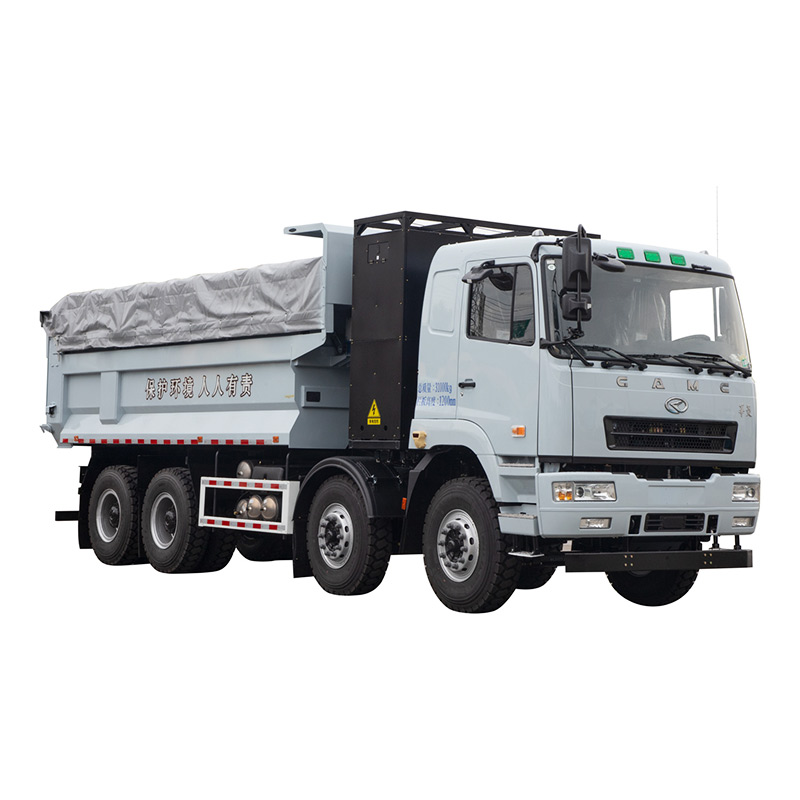
Kinetic energy capture transforms site economics entirely. Imagine a fully loaded 8X4 EV dump truck traveling downhill. It moves tons of material from a high-elevation excavation site to a lower processing plant. The electric motors reverse their primary function during descent. They act as massive electrical generators. They convert the vehicle's immense momentum back into usable power.
Gravity-assisted routes drastically reduce daily battery depletion. The truck effectively generates its own fuel while working. It captures enough power to operate for full shifts under ideal topological conditions. You minimize mid-day top-up charging requirements completely. This self-sustaining cycle maximizes active hauling time and boosts overall daily productivity.
You gain a massive secondary financial benefit from this process. Regenerative braking absorbs the vast majority of deceleration force safely. It handles the heavy lifting before traditional friction brakes ever engage. This dynamic exponentially extends the lifespan of standard brake pads and rotors. You reduce replacement downtime significantly. Your mechanics spend far less time servicing heavy axles in the shop.
Electric drivetrains deliver massive torque immediately. Diesel engines need time to spool up and reach optimal RPMs. Electric motors provide peak power instantly from a standstill. Independent axle motors in an 8X4 configuration drastically improve jobsite traction. They send precise, computer-controlled power to individual wheels. You conquer unpaved, high-grade terrain effortlessly. Muddy inclines rarely stall these advanced drivetrains.
Fleet managers constantly worry about massive battery weight. Heavy battery packs seem like they would reduce profitable cargo capacity. Modern high-density battery architectures solve this issue elegantly. Engineers integrate them deeply into the chassis frame. They remove the heavy diesel engine, massive transmission, exhaust systems, and fuel tanks. This direct weight swap maintains the gross vehicle weight rating (GVWR) perfectly. Net payload capacity remains fiercely competitive compared to diesel counterparts.
Instant acceleration creates profound operational advantages on site. Seamless power delivery eliminates clunky, momentum-killing gear shifts. These factors marginally decrease individual cycle times. Shaving just two minutes off a continuous round trip adds up quickly. You increase the total daily tonnage moved per vehicle. Better cycle times directly boost your site profitability metrics.
A traditional diesel engine contains hundreds of moving parts. Pistons, valves, connecting rods, and belts vibrate constantly. They operate under extreme heat and intense friction. An electric motor offers profound mechanical simplicity. It utilizes just a few primary moving components. Fewer parts mean significantly fewer potential failure points. Equipment reliability increases naturally.
You remove specific recurring costs from the balance sheet permanently. Maintenance budgets shrink drastically. Consider the exhaustive preventative maintenance schedules you eliminate entirely. You no longer purchase or stock these consumables:
Heavy-duty engine oil and frequent oil filters.
Diesel Exhaust Fluid (DEF) and associated dosing systems.
Traditional fuel filters and complex water separators.
Transmission fluid and heavy mechanical clutch replacements.
Expensive exhaust after-treatment components like DPF filters.
Modern telematics transform proactive fleet management. Over-the-air (OTA) monitoring tracks vehicle health in real-time. The system predicts motor temperature spikes or battery cell anomalies early. You fix minor software calibration issues remotely. This foresight prevents catastrophic, mid-shift jobsite breakdowns. Technicians order replacement components before the truck even enters the service bay.
You must evaluate your jobsite's existing electrical infrastructure first. Grid constraints pose a serious deployment bottleneck globally. Many remote sites lack sufficient power delivery from local utilities. You might face the need for substantial electrical substation upgrades. Early grid capacity planning prevents expensive project delays later. Transformer lead times often exceed twelve months.
You must choose the right charging hardware for your specific operational tempo. Decision-makers weigh upfront infrastructure costs against operational speed continually.
| Charging Technology | Hardware CapEx | Grid Capacity Impact | Optimal Deployment Scenario |
|---|---|---|---|
| Overnight AC Level 2 | Relatively Low | Minimal to Moderate | Single-shift operations with long nighttime dwell times. |
| High-Power DC Fast Charging | Extremely High | Requires Massive Capacity | Multi-shift operations requiring rapid mid-day turnarounds. |
Extreme cold or blistering heat impacts battery chemistry undeniably. Freezing temperatures slow down internal chemical reactions. Scorching heat stresses the battery cells prematurely. Robust thermal management systems mitigate these effects actively. They pump liquid coolant to heat or cool the battery pack continuously. However, you must model these mild efficiency losses into your operational planning objectively.
Map your most predictable, closed-loop routes first. Look for favorable topographies featuring downhill loaded runs. These specific routes serve as the ideal testing ground. Deploy a pilot electric dump truck here initially. Gather empirical data on exact energy consumption and cycle times. Real-world validation builds internal stakeholder trust quickly.
Demand strict terms in your Service Level Agreement (SLA). You must protect your high-value asset investment comprehensively. Evaluate vendors based on these critical metrics:
Require extended battery degradation warranties guaranteeing specific capacity thresholds over time.
Define strict replacement timelines for failed high-voltage components.
Ensure guaranteed local technician availability for rapid site dispatch.
Mandate continuous software update support for the vehicle's telematics system.
Avoid replacing the entire heavy fleet simultaneously. We recommend a hybrid adoption strategy instead. Replace just ten percent of the fleet initially. This phased rollout logic builds internal operator confidence safely. You establish highly accurate charging baselines. You resolve inevitable operational friction points before attempting a full-scale deployment.
The transition to heavy-duty electric equipment requires heavy initial planning. It demands significant upfront capital and robust infrastructure development. However, the operational math strongly favors electrification. High-cycle, heavy-payload environments benefit immensely from simplified drivetrains. You eliminate diesel fuel volatility from your budget completely. You slash preventive maintenance downtime aggressively, keeping trucks moving longer.
Start evaluating your fleet transitions today strategically. Conduct a comprehensive route telemetry audit on your existing diesel trucks. Install data loggers to capture precise baseline data. Track fuel use, route topography, and idle times. This empirical data serves as the undeniable mathematical foundation for your future procurement proposal.
A: Battery packs are undeniably heavy. However, profound chassis redesigns compensate for this specific weight penalty. Removing the massive diesel powertrain, complex transmission, and heavy fuel tanks saves thousands of pounds. This direct weight swap keeps the net payload highly competitive. Electric models often match traditional ICE equivalents perfectly within strict legal weight limits.
A: Shift duration depends entirely on route topography, carried payload, and regenerative braking opportunities. Downhill loaded routes extend operational hours dramatically. We strongly recommend opportunity charging for intensive multi-shift operations. Plugging into DC fast chargers during mandatory driver breaks ensures the truck runs continuously without depleting energy reserves entirely.
A: Commercial battery warranties mitigate this financial risk heavily. Manufacturers typically cover five to eight years or guarantee specific cycle counts. Advanced projection models factor in end-of-life battery salvage value. Degraded truck batteries often find lucrative second-life applications in stationary grid storage. This aftermarket demand offsets the eventual battery replacement expense significantly.
A: Electric motors provide continuous, instant torque directly to the driving wheels. This immediate power delivery is crucial in severe environments. It prevents the sudden wheel-slip normally associated with traditional transmission gear shifts. Independent motor controls offer superior traction management on steep, low-traction grades and thick jobsite mud.


