 English

Views: 0 Author: Site Editor Publish Time: 2026-07-14 Origin: Site


Heavy-duty fleet procurement remains a high-stakes arena. These investments are highly capital intensive. They directly impact your operational margins. They also remain extremely sensitive to unexpected downtime. Fleet managers face immense pressure to evaluate commercial vehicles correctly. Within the broader vehicle market, the H9 tractor truck occupies a specialized niche. Engineers tailor this platform specifically for long-distance, high-capacity freight. It tackles rigorous payload demands across challenging national routes.
This article provides a transparent, evidence-based evaluation framework. We help fleet managers and procurement directors assess these vehicles accurately. You will learn how to match powertrain specifications to route topography. You will also discover strategies to evaluate lifecycle expenses, driver retention impacts, and regional compliance factors. By the end, you can confidently determine if this heavy-duty workhorse aligns perfectly alongside your specific operational realities.
Matching powertrain specifications (horsepower, axle ratios) to actual route topography is more critical than maximizing engine output.
Evaluating a logistics tractor head requires moving beyond sticker price to calculate Total Cost of Ownership (TCO), heavily weighting fuel efficiency and maintenance intervals.
Driver retention is a measurable financial metric; cabin ergonomics and safety features directly impact operational consistency.
Regional emissions compliance and localized after-sales support are non-negotiable risk factors in the procurement decision.
Every successful fleet acquisition begins by analyzing the daily realities of your freight. You cannot select the right hardware without understanding the environment it operates within. Let us examine the core baseline metrics you must define.
Fleet managers must map out maximum and average load limits accurately. You must avoid both under-powering and over-specifying your fleet assets. Under-powering a vehicle causes severe component strain. The engine works too hard. The transmission overheats. Parts fail prematurely. Conversely, over-specifying wastes fuel. Running a massive engine for light payloads destroys your fuel economy. You must document your average GCW across a typical month. Use this average figure to guide your engine displacement choices.
Topography dictates powertrain requirements more than any other factor. Flat terrain demands different gearing compared to mountainous regions. When you evaluate gradient impacts, torque becomes your primary focus. High torque at low RPMs allows a fully loaded truck to climb steep grades efficiently.
Climate variables also heavily influence your technical requirements. You must assess the need for specialized environmental adaptations. Follow these essential climate evaluation steps:
Analyze temperature extremes: Determine if your routes cross desert climates requiring heavy-duty cooling packages.
Assess winter conditions: Evaluate the necessity for cold-start capabilities, block heaters, and heated fuel lines.
Review humidity levels: High humidity environments often require upgraded air dryers for the pneumatic braking systems.
Check altitude variations: High-altitude operations thin the air, demanding optimized turbocharger configurations.
Point-to-point long-haul distances dictate your chassis design. You must align fuel tank capacities alongside required hauling ranges. Frequent refueling stops destroy scheduling efficiency. However, unnecessarily large fuel tanks add dead weight. Aluminum alloy fuel tanks offer an excellent balance. They reduce chassis weight while providing sufficient volume. You should calculate the maximum distance between trusted fueling stations on your primary routes. Specify your tank capacity to exceed this distance by twenty percent. This buffer prevents stranding during unexpected detours.
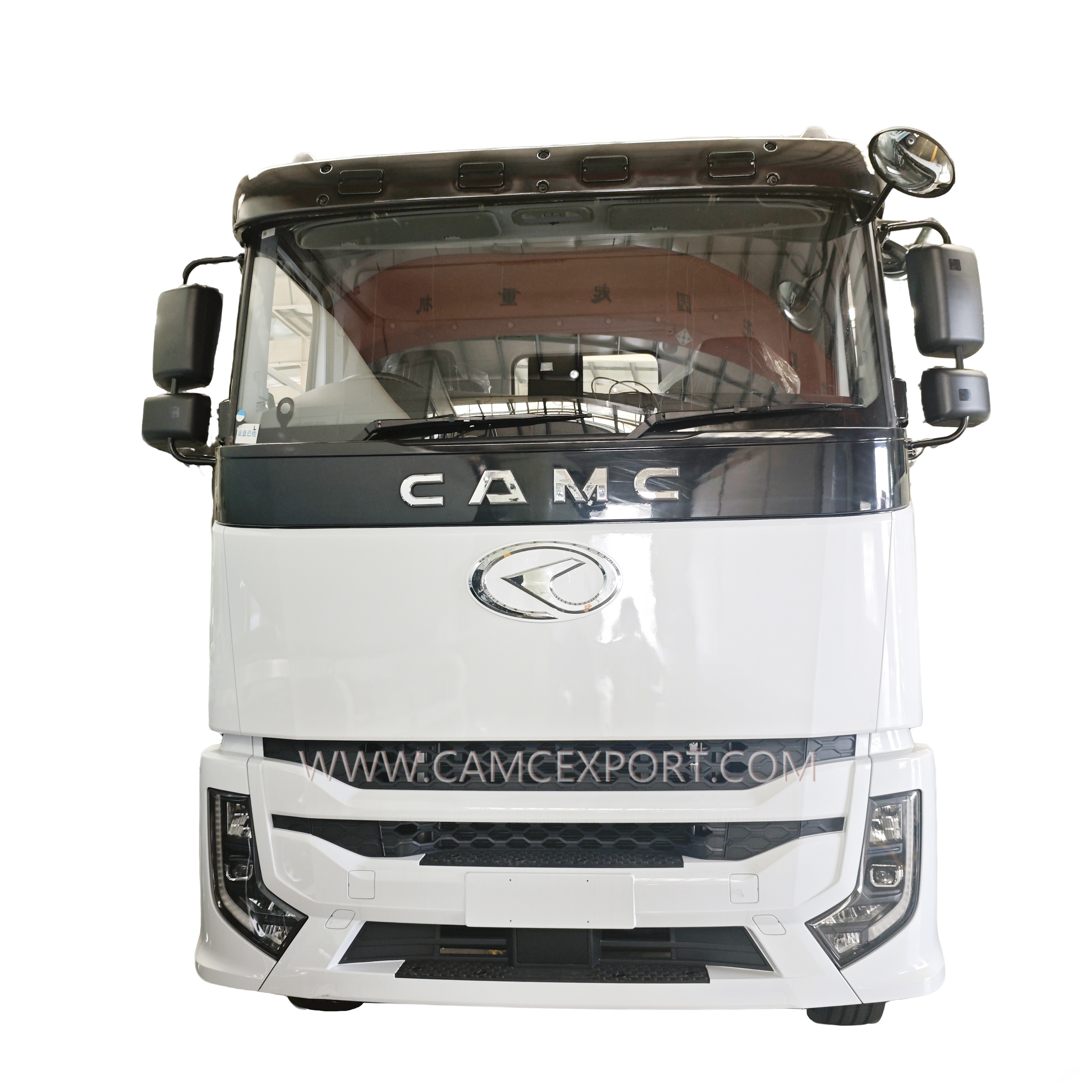
Once you define the operational baseline, you can translate those needs into hardware. The technical specifications determine how efficiently the vehicle performs its designated tasks. We will break down the essential mechanical systems.
You must analyze common engine configurations carefully. Consider popular 550HP outputs. High horsepower is genuinely necessary for heavy loads crossing steep gradients. However, 450HP often suffices for standard logistics on flat interstate highways. You must prioritize torque curves over peak horsepower.
Transmission choices dramatically impact fuel economy. You must compare Automated Manual Transmissions (AMT) versus traditional manual options. Manual transmissions require highly skilled drivers to maximize fuel efficiency. Finding these drivers proves increasingly difficult. AMT systems remove human error from gear shifting. They standardize fuel economy across your entire driver pool. They also reduce clutch wear. For modern fleets, AMT configurations generally offer superior long-term value.
Your drivetrain configuration dictates traction and load-bearing capacity. Fleet buyers primarily choose between 6x4 and 4x2 layouts. The 6x4 configuration remains essential for heavy loads. It provides crucial traction in poor environments. It also maximizes your allowable GCW limits under most highway regulations. The 4x2 layout suits lighter, volumetric freight on predictable, flat routes.
Axle gear ratios require precise calculation. Lower numerical ratios (like 2.64) excel at high-speed highway cruising. They keep engine RPMs low, saving fuel. Higher numerical ratios (like 3.73 or 4.10) provide aggressive gradeability. They deliver immense torque to the wheels for heavy-load hill climbing. You must match this ratio directly to your previously defined route topography.
| Configuration | Primary Use Case | Traction Capability | Fuel Economy Impact |
|---|---|---|---|
| 6x4 Layout | Heavy freight, steep grades, construction | Excellent (Dual drive axles) | Higher consumption due to weight |
| 4x2 Layout | Light freight, flat highways, volumetric cargo | Adequate (Single drive axle) | Excellent (Lower parasitic drag) |
Fragile logistics demand air suspension. Airbags isolate the cargo from harsh road vibrations. They also allow drivers to adjust chassis height for dock loading. Conversely, standard multi-leaf springs provide rugged durability. They suit aggressive environments where simplicity equals reliability.
Evaluate the integration of auxiliary braking systems. Engine brakes and hydraulic retarders save standard foundation brakes from overheating. They remain critical safety components on mountain descents. An integrated retarder extends brake pad life significantly. This directly improves your maintenance intervals.
Sticker price represents only a fraction of a commercial vehicle's financial impact. You must evaluate long-term financial performance. This section explores how fuel, maintenance, and depreciation affect your bottom line.
Fuel represents your largest ongoing operating expense. You must look beyond manufacturer claims. Review actual aerodynamic designs. Roof deflectors, side skirts, and bumper dams reduce drag coefficients significantly. You should also evaluate parasitic load reductions. Features like variable-speed fan drives and intelligent air compressors draw less power from the engine. Ask manufacturers for real-world fuel consumption data gathered from fleets running similar routes.
Downtime destroys profit margins. You must assess the required frequency for routine servicing. Look closely at oil change intervals. Extended intervals keep the truck on the road earning revenue. Furthermore, evaluate Diesel Particulate Filter (DPF) servicing requirements. Complex exhaust aftertreatment systems require regular cleaning.
You must perform an assumption check regarding replacement components. Factor in the cost of OEM parts versus aftermarket availability. A highly specialized logistics tractor head might rely exclusively on expensive OEM components. Ensure affordable consumables exist within your specific operational region.
Best Practice: Always request a scheduled maintenance cost matrix from the dealer before purchase.
Common Mistake: Ignoring the labor costs associated with difficult-to-reach engine components during routine servicing.
Consider the secondary market demand before purchasing. What is the vehicle worth after five to seven years of fleet service? Certain configurations hold their value better. Standardized wheelbases, popular engine models, and well-maintained service records boost resale value. A truck featuring highly proprietary, obscure systems often depreciates rapidly. You must research historical auction data for similar specifications.
Driver turnover costs fleets thousands of dollars annually. Providing a comfortable, safe working environment directly combats this issue. Cabin design is no longer a luxury; it is a financial strategy.
You must evaluate Noise, Vibration, and Harshness (NVH) levels. A loud, vibrating cabin fatigues drivers quickly. Look for four-point air cab suspensions. They isolate the driver from chassis impacts. Evaluate sleeper berth dimensions carefully. Wide mattresses, independent climate controls, and ample storage matter immensely to long-haul operators. A rested driver reduces accident risk drastically. They also exhibit much lower turnover rates.
Review the baseline safety requirements first. Anti-lock Braking Systems (ABS) and Electronic Stability Control (ESC) remain mandatory standard features. However, you must evaluate advanced systems carefully. Consider the following additions:
Collision mitigation systems: These automatically apply brakes when detecting stationary objects ahead.
Lane departure warnings: Audible alerts prevent sleep-deprived drifting on monotonous highways.
Blind-spot monitoring: Radar sensors protect vulnerable road users operating near the passenger side.
You must weigh the implementation cost against potential insurance premium reductions. Many underwriters offer discounts for fleets utilizing advanced driver assistance systems.
Assess the dashboard layout from the driver's perspective. Switches must remain easily reachable without leaning. Gauges must provide clear data at a glance. Visibility represents another critical factor. Sloped hoods and optimized mirror placements eliminate forward blind spots. Finally, evaluate the ease of daily inspection routines. Fluid dipsticks and air system drains should remain easily accessible. If pre-trip inspections are difficult, drivers will likely skip them.
Even the most perfectly specified vehicle becomes a liability without proper support. You must address regulatory compliance and local infrastructure before signing purchase orders.
Environmental policies dictate commercial vehicle operations globally. You must verify alignment with regional environmental policies. Determine if your market requires Euro V, Euro VI, or equivalent localized standards. Higher emission standards require complex aftertreatment systems. Address the realities of AdBlue or Diesel Exhaust Fluid (DEF) consumption. These fluids add to your per-mile operating expenses. You must also prepare for potential exhaust system maintenance bottlenecks. Sensors and dosing modules often require specialized diagnostic tools.
We advise viewing dealer networks through a skeptical lens. An affordable truck becomes a severe financial liability if a simple sensor takes three weeks to ship. You must evaluate the manufacturer and dealer Service Level Agreements (SLAs). Ask specific questions about local parts warehousing. Do they stock critical drivetrain components nearby? Do they offer mobile repair services for stranded assets? A robust, localized dealer network remains a non-negotiable procurement factor.
Modern logistics rely heavily on data. You must assess how easily onboard diagnostics integrate alongside your existing fleet management software (FMS). The vehicle should transmit fault codes, fuel consumption metrics, and GPS locations seamlessly. Open-architecture telematics systems prevent you from being locked into proprietary software. This data allows your maintenance team to schedule preventative repairs proactively. Predictive maintenance eliminates costly roadside breakdowns.
Selecting the right heavy-duty commercial vehicle requires methodical analysis. You must prioritize route-matching and localized dealer support over isolated technical specifications. A massive engine provides no value if it spends weeks waiting for parts. Evaluate lifecycle expenses rigorously, focusing on fuel economy and driver retention. Keep your operational baseline at the center of every configuration decision.
We recommend taking immediate, actionable next steps. First, initiate a comprehensive operational audit of your current routes. Map out your average payloads and gradient profiles. Next, request detailed specification sheets from verified regional dealers. Finally, secure a demo unit for a two-week trial. Run this unit on your most challenging route. Compare the real-world fuel data against your existing fleet averages. This evidence-based approach guarantees a successful, highly profitable fleet procurement process.
A: It excels in long-distance, high-capacity freight operations. Typical payloads include heavy construction materials, bulk liquids, and dense containerized logistics. It performs optimally on cross-country routes demanding 400 to 800 miles of daily travel.
A: A 6x4 consumes more fuel due to increased chassis weight and mechanical friction from the second drive axle. However, it provides necessary load capacity and traction. A 4x2 improves fuel economy significantly but only suits lighter, flat-route logistics.
A: Custom configurations typically require 90 to 120 days from factory order to delivery. Global supply chain fluctuations can extend this timeline. We strongly advise planning a four-month buffer into your fleet replacement schedule.
A: Compliance varies by target market and engine configuration. Manufacturers offer setups meeting Euro V, Euro VI, and equivalent global standards. You must verify local municipal and national regulations with your dealer before finalizing procurement.


