 English

Views: 0 Author: Site Editor Publish Time: 2026-07-04 Origin: Site


Heavy-duty fleet procurement is rapidly shifting from legacy diesel to zero-emission alternatives. Tightening global environmental regulations and increasingly volatile fuel costs drive this crucial industry change. Mining and construction operations face immense pressure to decarbonize. Moving massive materials requires tremendous energy. The 8x4 configuration represents the absolute upper tier of payload capacity. It routinely handles up to 60-ton gross vehicle weights for demanding on-road and off-road hauling. You need immense, reliable power to move this much earth, ore, or aggregate effectively.
Transitioning such a high-capacity fleet to electric power requires careful financial and operational balancing. High upfront capital expenses must offset projected long-term operational savings. This comprehensive guide evaluates how these advanced electric alternatives align with specific site realities. We will explore mechanical advantages, return on investment timelines, harsh weather performance limits, and critical infrastructure needs for modern mining and construction environments. You must understand these variables before committing to fleet electrification.
Best Use Case: 8x4 EV dump trucks deliver the highest ROI in closed-loop mining operations with downhill laden routes, maximizing regenerative braking.
TCO Shift: While initial CapEx is significantly higher than diesel equivalents, fleets often achieve TCO parity within 3 to 5 years due to lower energy and maintenance OPEX.
Payload vs. Battery Weight: Buyers must account for the heavy battery pack slightly reducing net payload compared to traditional ICE trucks, though advanced 8x4 configurations largely mitigate this.
Infrastructure Dependency: Successful deployment is entirely contingent on grid capacity, localized charging infrastructure, and proper thermal management systems.
The 8x4 configuration provides exceptional stability for massive loads. It features dual front-steer axles and dual rear-drive axles. This specialized layout supports superior weight distribution across eight wheels. Four of these wheels drive the vehicle forward. The design ensures structural integrity under extreme stress. It allows operators to maximize payloads safely. Navigating tight quarry switchbacks requires precision. The dual front-steer axles reduce the turning radius slightly. They also prevent front-end plowing under heavy loads. You gain superior maneuverability on narrow mining roads.
Electric powertrain integration radically changes vehicle dynamics. Dual or central electric motors replace heavy diesel engines. They deliver instant torque straight to the axles. You bypass the notorious power-band lag of traditional combustion systems. When evaluating an 8X4 EV dump truck, buyers often notice immediate acceleration improvements. This responsiveness proves invaluable on steep quarry inclines. Drivers maintain momentum easier. They do not lose speed during gear shifts because electric drivetrains operate smoothly.
Engineers must carefully manage battery placement. Large battery packs require robust structural armor. Designers place these power units high enough to clear rocky ground. High ground clearance prevents catastrophic rock strikes. Thick metallic shielding protects sensitive cells. It absorbs extreme vibrations common in rugged quarry environments. Proper armor prevents thermal events and extends overall battery life. Engineers also isolate the battery mounts. This isolation reduces the mechanical shock transferred from rough haul roads.
Purchasing electric heavy machinery requires substantial upfront capital. Buyers must acknowledge a high initial purchase price. An electric model often costs two to three times more than a diesel equivalent. You pay a premium for advanced lithium battery technology. Fleet managers must secure larger initial financing packages.
However, operational expenditure (OPEX) reductions quickly offset this initial sting. Electric operation eliminates costly diesel fuel consumption entirely. Maintenance teams no longer perform engine oil or filter changes. You skip fuel injector replacements, exhaust after-treatment servicing, and turbocharger rebuilds. You also experience significantly reduced brake pad wear. Regenerative braking handles most deceleration. This saves mechanical brake components and drastically reduces service downtime.
Many industry discussions highlight a "never recharge" concept. We must address this objectively. It sounds like a perpetual motion myth. However, basic physics validate the mechanism under strict conditions. Transporting heavy loads downhill generates significant kinetic energy. The electric motors capture this energy during descent. The induction motors act as generators.
They convert kinetic energy back into battery charge. This process dramatically extends daily operational range. Caveat: This near-zero net-energy usage requires highly specific topological profiles. It only applies to routes featuring uphill empty travel and downhill loaded hauling. Flat or uphill-loaded routes will drain the battery normally. You must analyze your route topography carefully before calculating energy savings.
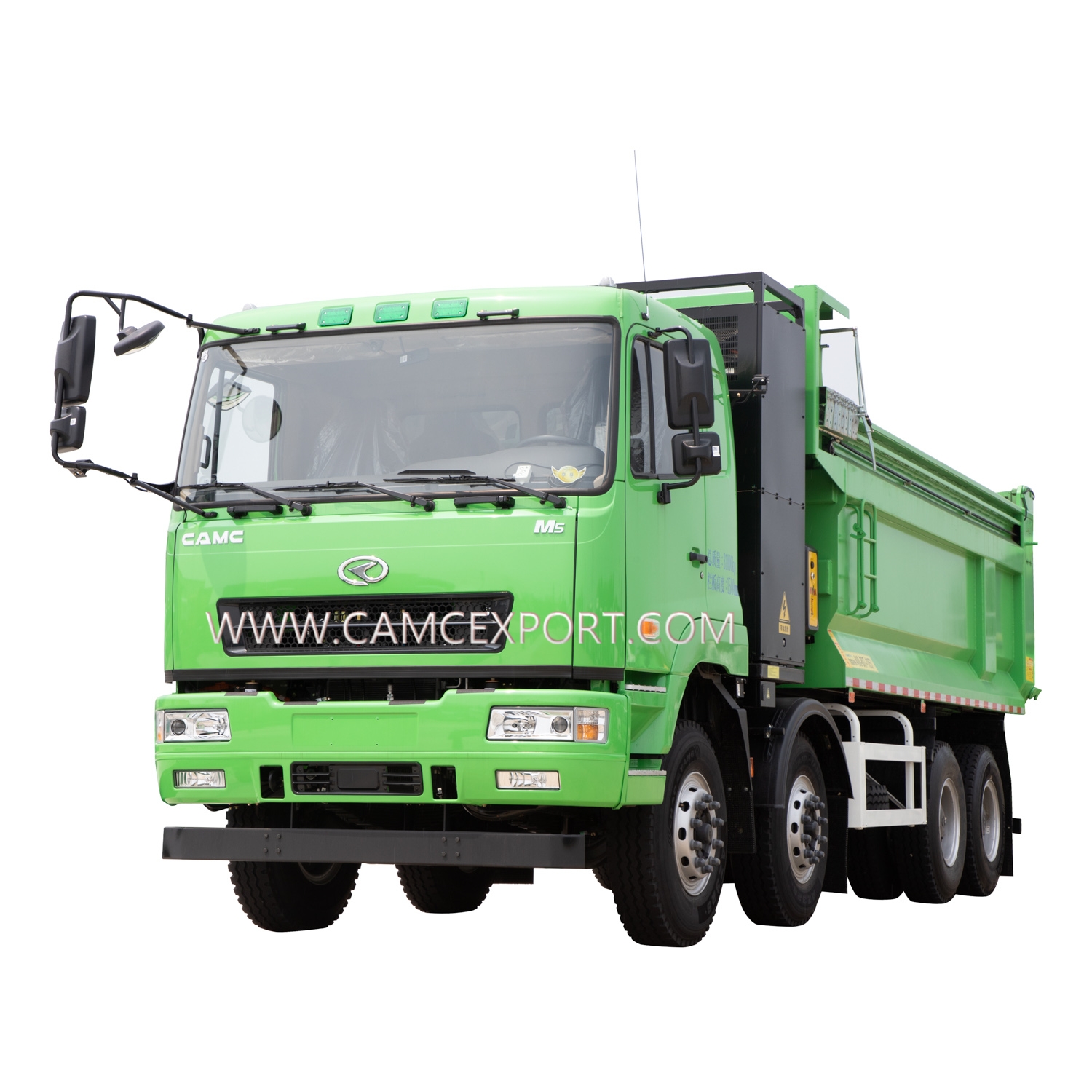
Diesel torque curves require engine revving to build power. Electric motors behave differently. They deliver instant torque at zero RPM. This characteristic transforms how vehicles navigate harsh terrain. The electric motors handle deep mud effortlessly. They power through steep inclines smoothly. Unpaved construction sites become easier to traverse. When categorizing the 8X4 EV dump truck,heavy duty dump truck classifications highlight its immense gross vehicle weight. Pushing this massive weight requires raw, immediate power output. Electric drivetrains excel precisely in these high-demand scenarios. Drivers experience less fatigue because the truck refuses to stall in deep ruts.
Extreme temperatures pose significant risks to battery performance. Sub-zero winters cause noticeable battery degradation. Operators often experience unexpected range reduction in freezing climates. Cold cells resist charge acceptance and output. You must park vehicles in heated bays during extreme freezes.
Conversely, high-temperature mining regions present overheating risks. Continuous uphill climbs generate immense internal battery heat. Active liquid cooling systems must work flawlessly to prevent system shutdowns. You must match the truck's thermal management system to your local climate. Routine maintenance checks must verify coolant levels and pump functionality.
We must transparently compare net payload capacities. A 60-ton gross vehicle weight (GVW) limits total mass. You must factor in the dead weight of a massive LFP (Lithium Iron Phosphate) battery pack. Engineers favor LFP chemistry for heavy machinery. It offers superior thermal stability and a longer cycle life. However, its lower energy density requires physically larger packs. These batteries add several tons to the empty vehicle weight.
Consequently, the electric version carries slightly less dirt or ore than its diesel counterpart. Advanced chassis designs use lightweight materials to close this gap. High-strength steel frames reduce unladen mass. Below is a simplified comparison chart illustrating typical payload differences.
| Vehicle Type (60-ton GVW Class) | Chassis & Powertrain Weight | Estimated Net Payload | Torque Delivery |
|---|---|---|---|
| Traditional Diesel 8x4 | 18 Tons | 42 Tons | Delayed (High RPM) |
| Electric 8x4 (LFP Battery) | 22 Tons | 38 Tons | Instant (Zero RPM) |
Note: Exact figures vary by manufacturer and specific battery size.
Fleet electrification extends far beyond buying new vehicles. It requires a complete operational overhaul. Successful deployment depends heavily on supporting infrastructure. You cannot simply park an electric hauler and plug it into a standard wall outlet.
High-capacity electric vehicles require megawatt-level charging infrastructure. Standard commercial chargers cannot handle these massive batteries quickly. Installing DC fast chargers on remote sites demands significant investment. The cost easily reaches hundreds of thousands of dollars per station. The timeline for grid connection and permitting often takes many months. You must plan charging installations well before truck delivery. Fleet managers should coordinate closely with local utility providers immediately after vehicle procurement.
We must evaluate the risk of localized grid unreliability. Remote mining regions rarely have robust power grids. A fleet of charging trucks can easily overload local substations. To mitigate this, many sites explore microgrids. Solar-plus-storage solutions provide off-grid reliability. Battery energy storage systems (BESS) buffer peak charging demands. They store solar energy during the day. They deploy this energy when trucks plug in simultaneously. These systems ensure your operations continue smoothly during local power outages.
The industry faces a severe gap in high-voltage certified technicians. Traditional diesel mechanics cannot safely service 600-volt battery systems. They need extensive retraining. High-voltage architecture presents lethal shock hazards if mishandled. Fleet managers must highlight the necessity of vendor training programs. You should negotiate comprehensive Original Equipment Manufacturer (OEM) service agreements. OEM support ensures quick repairs and minimizes costly operational downtime. Specialized insulated tools and heavy-duty lifts become mandatory shop upgrades.
Procurement teams need a clear framework to evaluate these vehicles. The decision relies heavily on your specific site conditions. You must analyze your daily operational loop. Consider these practical guidelines before committing capital to electrification.
Your site has a fixed, closed-loop route featuring highly predictable daily mileage.
The local topography includes loaded downhill hauls. This maximizes your regenerative braking potential and minimizes grid dependency.
You already have access to a stable, high-capacity electrical grid or a localized microgrid setup.
Corporate ESG goals mandate immediate Tier 1 emission reductions across your commercial fleet.
Your operational zone enforces strict noise pollution regulations.
Your operation relies on unpredictable, long-distance highway hauling across unmapped construction sites.
The primary site experiences extreme, prolonged cold weather without access to heated charging bays.
Upgrading site electrical infrastructure proves prohibitively expensive or logistically impossible right now.
Your fleet requires continuous 24-hour operation without any allowable downtime for battery recharging.
An 8x4 electric heavy hauler is not a universal drop-in replacement for diesel fleets. It operates as a highly specialized tool. It delivers exceptional economic and environmental returns under the right topographical and infrastructural conditions. When deployed correctly, the operational savings easily justify the steep initial purchase price. Success requires meticulous planning and site adaptation. You must view the vehicle and the charging station as a single integrated ecosystem.
Procurement teams should avoid rushing the transition. You need hard operational data before purchasing. Follow these actionable next steps to ensure a successful integration:
Conduct a comprehensive site-specific energy audit to verify local grid capacity.
Run digital route simulations to calculate exact regenerative braking potential for your haul roads.
Request detailed financial ROI analyses from OEMs comparing electric and diesel models over a five-year lifecycle.
Initiate a small-scale pilot program using one vehicle before upgrading the entire fleet.
Secure utility permits for fast chargers at least six months ahead of expected vehicle delivery.
A: A standard 8x4 electric model typically operates within the 60-ton gross vehicle weight (GVW) class. Because massive lithium battery packs add several tons of dead weight, the net payload usually hovers around 38 to 40 tons. This represents a slight decrease compared to a traditional diesel equivalent.
A: Sub-zero temperatures slow down chemical reactions inside lithium batteries. Operators typically experience a 15% to 30% drop in overall range during severe winters. Active liquid thermal management systems are crucial. They heat the battery pack to maintain optimal operating temperatures and preserve daily range.
A: Yes, but only under specific conditions. Regenerative braking captures kinetic energy when the truck travels downhill. If the truck hauls a fully loaded bed down a steep incline, the motors generate significant electricity. This recharges the battery, often recovering enough energy to drive back up empty.
A: Charging times depend heavily on the infrastructure used. Using high-capacity, dual-gun DC fast chargers, you can typically replenish a heavy-duty battery pack to 80% capacity in 1 to 2 hours. Standard commercial chargers take significantly longer, often requiring overnight charging sessions.


