 English

Views: 0 Author: Site Editor Publish Time: 2026-06-29 Origin: Site


Procuring heavy haulage fleets requires massive capital expenditure. Fleet managers constantly face a difficult operational conflict. You must maximize Gross Combination Weight (GCW) and traction. Simultaneously, you need to minimize drivetrain maintenance and avoid extreme fuel penalties. Lighter axle configurations certainly offer better baseline fuel economy for standard freight. However, the 6X4 tractor truck configuration becomes strictly non-negotiable under extreme conditions. Extreme payloads, uneven terrain, and high-torque demands require maximum mechanical grip. Without sufficient traction, your entire logistics operation risks costly downtime.
This article breaks down the core engineering principles of heavy towing. We explore exactly why the 6X4 axle configuration dictates hauling capacity. You will learn how tandem drive axles solve critical traction deficits. We will also detail the necessary specifications required to match chassis capabilities to your specific freight demands.
Superior Traction and Stability: Dual drive axles prevent wheel slip and jackknifing under heavy loads (50+ tons) and in low-grip conditions.
Compliance and Load Distribution: A 6X4 setup effectively spreads the fifth-wheel payload, preventing single-axle overloading and ensuring regulatory compliance.
Application-Specific ROI: While fuel and tire costs are marginally higher than a 6x2, the 6X4 mitigates the financial risks of vehicle recovery, drivetrain strain, and operational downtime in heavy haulage.
Spec-Matching is Critical: A 6X4 chassis must be paired with the correct torque-to-horsepower ratio, gear reduction, and heavy-duty suspension to realize its full hauling potential.
Pushing loads beyond 40 tons on a single drive axle creates mechanical chaos. You immediately face critical traction loss. The single driveshaft endures massive structural stress. The chassis takes on localized pressure, causing steering geometry instability. High weight over a single rear pivot point acts like a seesaw. It lifts the front wheels slightly. This reduces your steering authority. Drivers lose control rapidly in wet or compromised conditions. Heavy transport requires evenly distributed ground pressure to remain stable and predictable.
Heavy payloads do not sit still. Exceptional transport shifts weight aggressively during operation. Oversized machinery or liquid loads possess high centers of gravity. The payload pushes backward forcefully during acceleration. It surges forward aggressively when braking. Climbing steep grades multiplies these dynamic forces. You need distributed axle resistance to maintain control. Single axles cannot absorb this kinetic energy effectively. Tandem rear axles spread these forces over a much larger chassis area. This wider footprint keeps the vehicle planted securely during sudden speed or directional changes.
Fleet managers face a strict business problem regarding traction. High engine torque requires adequate contact patches on the road surface. Without enough rubber meeting the pavement, power becomes useless. Four driven wheels provide significantly more mechanical grip than two. If you apply massive low-end torque to a single drive axle under a heavy load, you induce tire slip. This translates your engine power into wheel spin rather than forward momentum. Reliable hauling demands sufficient traction-to-weight ratios. You need multiple driven axles to move exceptional loads from a dead stop efficiently.
A tandem drive setup offers a massive mechanical advantage. Power flows through inter-axle differentials to two separate drive axles. This setup transfers extreme engine torque to the ground highly efficiently. It prevents any single driveshaft or axle shaft from snapping under stress. Drivers can engage differential locks when surfaces become loose or muddy. This forces all four rear wheels to spin simultaneously. Drivetrain engagement maximizes pulling power in difficult environments. Your trucks avoid getting stranded on unpredictable work sites.
Proper weight distribution prevents catastrophic structural failure. The tandem rear setup allows optimal fifth-wheel positioning. Engineers place the fifth wheel slightly ahead of the tandem bogie center. This positioning absorbs massive pin weight effectively. It distributes the crushing downward load across two heavy-duty axles rather than one. Crucially, this prevents the steering axle from lifting off the ground. You maintain full steering control even under your maximum GCW. Proper load placement also ensures strict regulatory compliance across different regional bridge weight laws.
Heavy haulage rarely stays strictly on flat, paved highways. Operations often begin or end in highly challenging environments. Worksite access roads, quarry runs, and steep gradients demand superior grip. A 6X4 configuration provides necessary off-highway capability. It pushes heavy trailers up loose gravel inclines securely without losing momentum. Forestry and mining sectors rely entirely on this configuration. Expeditions and off-road transport cannot function without tandem drive traction. This setup guarantees your freight reaches remote destinations without requiring expensive heavy wrecker recoveries.
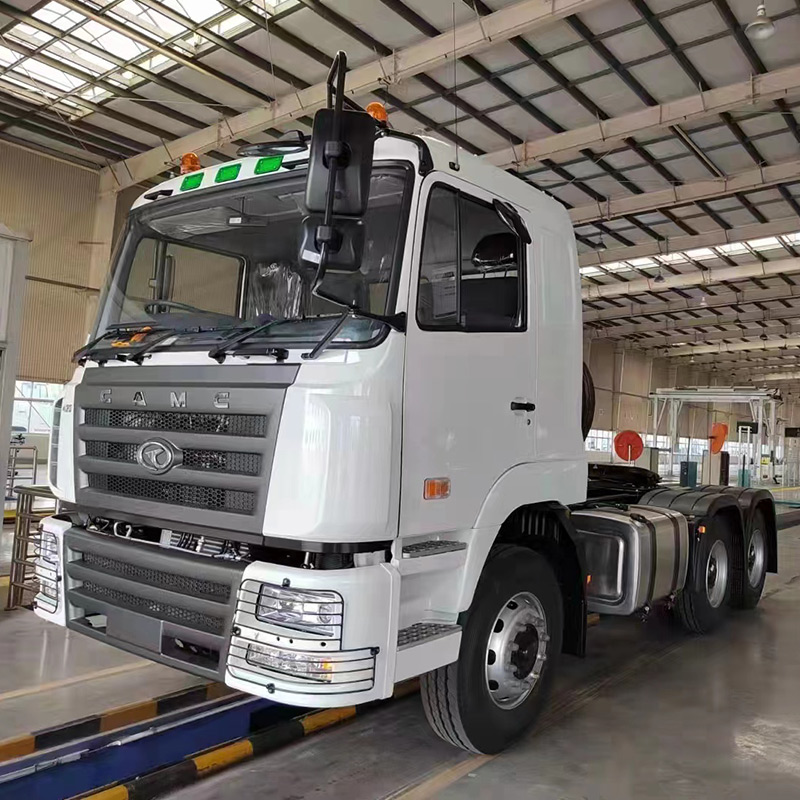
A standard 4x2 setup serves lightweight, high-volume logistics perfectly. However, it fails completely in heavy applications. You face strict payload limitations due to single-axle weight limits mandated by law. Traction deficits become obvious even on slight inclines. The 4x2 chassis lacks the structural rigidity needed for exceptional payloads. Overloading a 4x2 causes rapid component failure. It stresses the suspension and brakes beyond their design limits. It ultimately creates severe safety hazards for the operator and the public.
Many fleets mistakenly adopt 6x2 configurations for heavy tasks. A 6x2 utilizes one drive axle and one dead tag or pusher axle. They certainly save some tare weight. They also reduce fuel consumption slightly compared to dual drives. However, this creates a dangerous illusion of capability. Under heavy GCW exceeding 50 tons, a 6x2 lacks mechanical grip. It struggles severely on wet grades. The unpowered tag axle becomes dead weight during low-traction events. Wheel spin leads directly to stranding. You risk delaying critical deliveries and damaging client trust.
Fleet baselines must dictate your procurement strategy. Does your operation consistently exceed standard highway weights? Do your routes include compromised surfaces or steep grades? If you answer yes, the 6X4 remains the only mathematically sound choice. It provides guaranteed reliable transit under extreme stress. The initial hardware investment pays for itself by preventing operational failures.
| Configuration | Driven Wheels | Ideal GCW Range | Traction Capability | Best Application |
|---|---|---|---|---|
| 4x2 | 2 | Up to 40 Tons | Low | Standard volume logistics, flat highways |
| 6x2 | 2 | 40 - 50 Tons | Medium | Regional distribution, lightweight bulk |
| 6X4 | 4 | 50 - 100+ Tons | High | Heavy exceptional transport, off-highway, mining |
When procuring a heavy duty tractor head, specific mechanical specifications matter most. You cannot simply buy standard off-the-lot models. You must engineer the truck to match the task.
Buyers often ask, "Is 430 HP enough for 51 tons?" This question reveals a very common misconception. Peak horsepower dictates top speed on flat roads. Low-end torque actually moves heavy freight from a standstill. You must evaluate the engine's torque curve thoroughly. Furthermore, rear axle ratios dictate your pulling power. Hub reduction axles multiply torque directly at the wheel ends. This brilliant engineering relieves twisting stress from the main differential. Torque output and gear reduction ratios matter far more than high horsepower ratings when moving exceptional weight.
Suspension choices impact hauling capability heavily. Multi-leaf parabolic steel suspensions offer extreme durability. They handle massive physical abuse and high GCW effortlessly. They suit off-road mining or logging applications perfectly. Conversely, heavy-duty air suspensions provide excellent load equalization across multiple axles. Air setups offer better ride quality for the driver, reducing fatigue. They also allow drivers to adjust chassis height for different specialized trailers. You must choose your suspension based strictly on your primary operating terrain.
Extreme weights bend standard truck frames easily. You must specify chassis frame thickness carefully during procurement. Heavy haulage requires double-frame or sleeved chassis designs. These heavily reinforced frames prevent flexing and twisting under abnormal loads. An inner steel channel reinforces the primary frame rails from within. This structural rigidity prevents the truck frame from cracking over time. A strong foundation ensures the entire drivetrain stays properly aligned during heavy, sustained pulls.
We must remain transparent about operational inputs. A 6X4 configuration inherently consumes more fuel than lighter alternatives. Turning a second drive axle creates substantial mechanical drag. Powering extra gears, overcoming thicker oil resistance, and turning more rotational mass causes parasitic driveline loss. This loss reduces overall fuel economy. However, you should frame this expense as an operational insurance cost. This extra fuel buys guaranteed traction. It prevents your trucks from getting stuck in mud or snow. The slight fuel penalty costs much less than lost contracts or heavy wrecker recovery bills.
Tandem drive axles create unique maintenance demands. Tire scrubbing occurs frequently during tight, low-speed maneuvering. When the truck turns sharply, the dual rear axles resist the pivot point. This drags the tires sideways across the abrasive pavement. You will naturally experience accelerated tire wear on the drive axles. Fleets must implement strict, documented tire rotation schedules. Proper maintenance practices maximize tire lifespan. Ignoring this operational reality leads to premature tire replacements and unexpected expenses.
Advanced machinery requires highly skilled operators. Drivers must understand differential locks thoroughly. They need to know exactly when to engage them for maximum traction. More importantly, they must know precisely when to disengage them. Leaving diff locks engaged on dry, high-grip pavement causes severe axle binding. This operational mistake can shatter a driveshaft or destroy a differential internally. Comprehensive driver training prevents catastrophic mechanical failures. Proper education protects your hardware investments and keeps the fleet moving safely.
Purchasing a 6X4 tractor truck represents a strategic investment in operational certainty. You secure reliable traction for the most demanding heavy logistics. It solves the critical physics problems associated with extreme weights and dynamic load shifting. Tandem drive axles provide the necessary mechanical grip to keep your freight moving forward, regardless of terrain challenges.
To maximize this investment, follow these specific steps before finalizing any purchase:
Audit your typical transport routes for steep gradients and loose surfaces.
Calculate your absolute maximum Gross Combination Weight (GCW) accurately.
Identify the specific traction events your drivers encounter daily.
Proper spec-matching prevents costly vehicle breakdowns. We strongly encourage buyers to consult directly with engineering teams. Ask sales representatives to run advanced route-simulation software. This technology helps match axle ratios, engine torque, and chassis reinforcement to your exact heavy haulage requirements.
A: Towing capacity depends heavily on the specific engine torque, axle rating, and regional regulations. A standard 6X4 generally handles a Gross Combination Weight (GCW) ranging from 44 to 80+ tons. Specialized heavy-haul variants with hub reduction axles can exceed 120 tons under permit conditions.
A: Yes, based on the cost of downtime. A 6X4 consumes slightly more fuel due to mechanical drag. However, if a 6x2 gets stuck due to lost traction even once a quarter, the fuel savings are immediately negated by expensive wrecker recovery fees and delivery delay costs.
A: Yes, a 6X4 offers great operational flexibility for standard freight. However, fleets must account for the heavier tare weight of the 6X4 chassis itself. This extra mechanical weight slightly reduces your maximum legal payload capacity when hauling lightweight, standard volume goods.


