 English

Views: 0 Author: Site Editor Publish Time: 2026-07-17 Origin: Site


For fleet managers and logistics directors, tractor reliability is never just a marketing term. It operates as a rigid mathematical requirement. This metric directly impacts your daily uptime, profit margins, and overall contract fulfillment. Rapid advancements in drivetrains complicate fleet procurement immensely. Evolving emissions standards also blur the lines between proven durability and untested innovation. Buyers often struggle to evaluate modern commercial vehicles accurately. You need a rigorous, evidence-based framework for assessment. This article provides that exact framework to evaluate heavy-duty truck reliability. We examine critical engineering pillars, smart diagnostic tools, and compliance strategies. You will receive an objective look at modern models. We map their engineering features against real-world stress factors. By the end, you will know exactly how to secure the highest predictable operational hours for your business.
Reliable cargo transport requires evaluating three core pillars: mechanical endurance, preventative diagnostic technology, and total cost of ownership (TCO) predictability.
Modern fleet procurement must account for parts availability and driver-adoption friction, not just upfront specifications.
Assessing models like the H9 tractor truck requires mapping its engineering features against real-world long-distance stress factors.
Fleet future-proofing now necessitates comparing traditional diesel architectures against the emerging new energy tractor truck segment for compliance and lifecycle longevity.
Unplanned downtime quickly destroys logistics margins. A single roadside breakdown triggers massive emergency towing fees. Towing a fully loaded trailer costs thousands of dollars. It also causes immediate missed service-level agreement (SLA) penalties. Your clients expect just-in-time delivery. Late arrivals severely damage valuable business relationships. Furthermore, chronic equipment failure drives high driver turnover. Drivers earn money only when their wheels turn. They absolutely hate being stranded on the highway shoulder. High turnover forces you into constant, expensive recruitment cycles.
Success requires strict, unyielding metrics. A truly reliable truck achieves at least 95% planned uptime. It must maintain this efficiency while operating at its maximum Gross Combination Weight Rating (GCWR). Pushing heavy loads up steep grades tests the actual limits of any vehicle.
You must shift your procurement mindset immediately. Stop looking merely at the cheapest acquisition cost. Cheap upfront costs often mask fragile components. Instead, focus entirely on securing the highest predictable operational hours. This approach guarantees your fleet remains on the road generating revenue. Predictability allows your dispatchers to plan routes confidently. It keeps drivers happy and clients satisfied.
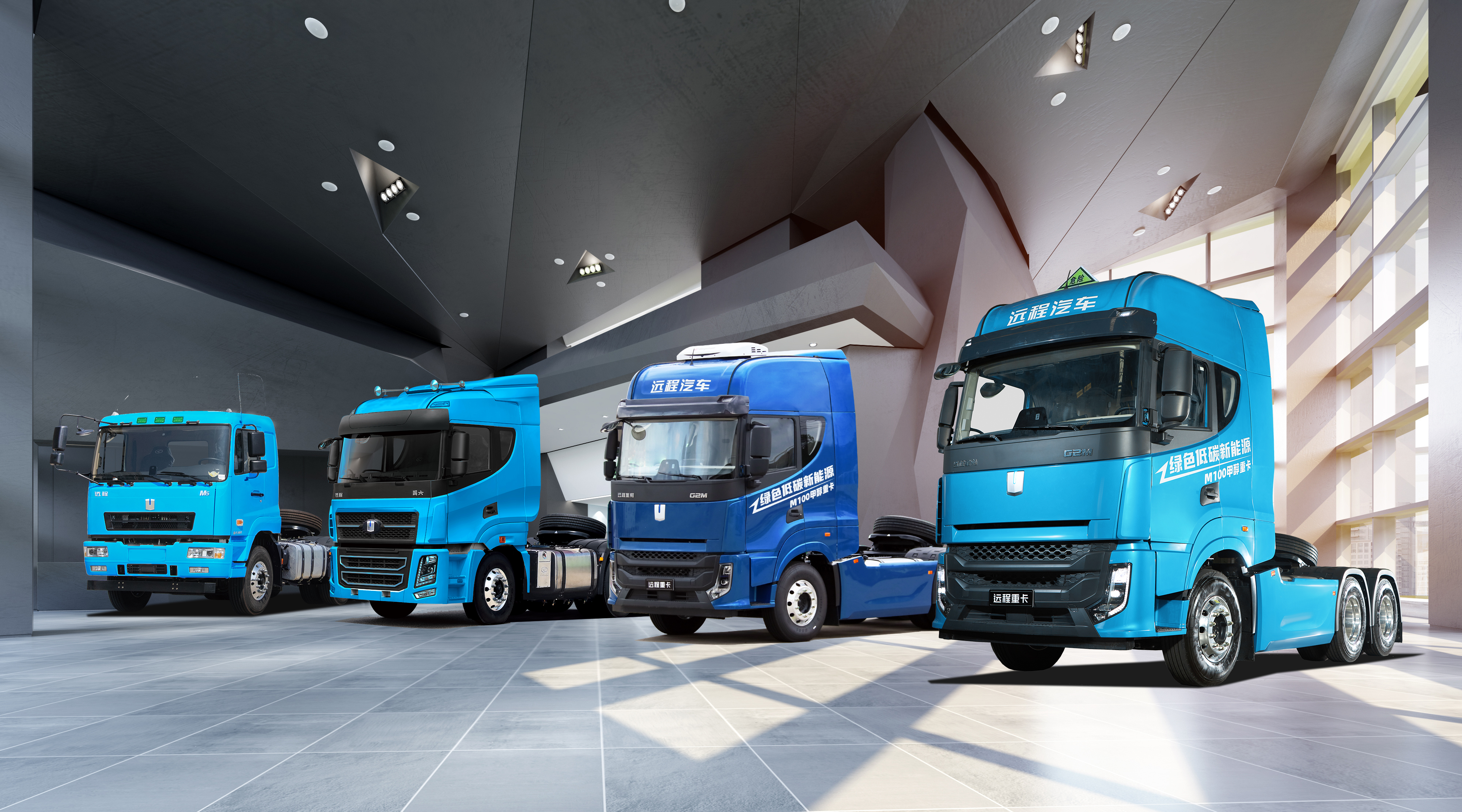
Powertrain synergy matters far more than isolated horsepower numbers. The engine, transmission, and axles must operate as a perfectly unified system inside a heavy duty tractor head. You need torque curves specifically tuned for heavy hauling. Peak torque at low engine RPMs prevents excessive strain. This synergy ensures smooth acceleration under heavy loads.
Chassis structural integrity is equally vital for long-term survival. High-tensile steel frames resist twisting forces over uneven terrain. You must also evaluate suspension systems carefully. Air suspensions protect fragile cargo from road vibrations. Mechanical setups offer raw, unyielding durability in harsh environments. Rust and corrosion resistance dictates longevity across diverse weather conditions. Factory-applied anti-corrosion treatments prevent structural decay from winter road salts.
You should always map technical specifications directly to business outcomes. A truck is a tool designed to produce profit.
Optimized gear ratios lower engine RPM at cruising highway speeds.
Lower RPMs significantly reduce long-term thermal wear on engine blocks.
Better thermal management translates directly into lower fuel consumption.
Heavy-duty drive axles prevent premature drivetrain failure under maximum payloads.
Telematics integration has completely transformed fleet maintenance strategies. OEM-installed sensors now track critical vehicle components continuously. They monitor engine temperatures, fluid degradation, and brake pad wear. This real-time tracking provides a massive operational advantage.
We see a distinct difference between basic dashboard warning lights and proactive alerts. A dashboard light means a component has already failed. You are now in a reactive, emergency repair situation. Fleet-manager-level predictive alerts warn you weeks before a failure occurs. The system analyzes data trends to flag abnormal component behavior. This allows you to schedule maintenance during planned downtime windows. You avoid roadside breakdowns entirely.
Scalability is another crucial evaluation factor. You must review the truck's software ecosystem thoroughly. It must integrate seamlessly into your existing Transportation Management System (TMS). Data silos cause missed maintenance windows. Open API architectures ensure your maintenance planners see exactly what the truck sees. They can order parts in advance based on telematics data. This cuts shop time drastically.
Let us assess a modern platform using our established criteria. The H9 tractor truck provides an excellent benchmark for objective evaluation. We map its engineering features directly against real-world highway stress factors.
The H9 includes specific design choices intended to mitigate common heavy-duty failure points. For example, engineers equipped it with an enhanced cooling system. This system prevents engine overheating during continuous steep-grade towing. The radiator core volume handles extreme thermal loads effortlessly. It also features reinforced cab safety structures. These structural enhancements meet strict international crash testing standards. They protect drivers during severe impact events.
We must address transparent assumptions regarding its operational environment. The H9 excels in continuous long-haul highway routing. Its aerodynamic exterior profile reduces wind drag significantly. The optimized highway gearing shines on predictable interstate paths. This truck thrives in high-mileage, paved-road scenarios. Conversely, specialized vocational builds might better serve off-road logging operations. A heavy construction environment often requires completely different frame rail dimensions.
Regulatory pressures are reshaping commercial logistics entirely. Tightening emission regulations directly impact traditional diesel engines globally. Standards like Euro VI and EPA 2027 force diesel architectures to adopt complex aftertreatment systems. Diesel Particulate Filters (DPF) and Selective Catalytic Reduction (SCR) systems require precise maintenance. This added complexity can affect lifecycle longevity. It occasionally complicates maintenance predictability for aging fleets.
You must actively evaluate alternative drivetrains to maintain fleet compliance. Introducing a new energy tractor truck offers a compelling solution. Battery Electric Vehicles (BEV) and Hydrogen Fuel Cell models fit perfectly into specific routes. They dominate regional hub-and-spoke delivery networks. They also provide unmatched efficiency for short-haul port drayage operations.
We have provided a simplified framework chart below to highlight these operational differences.
| Operational Dimension | Traditional Diesel Architecture | New Energy Architecture (BEV) |
|---|---|---|
| Optimal Route Type | Cross-country long-haul | Regional and port drayage |
| Mechanical Complexity | High (Engine, DPF, SCR) | Low (Fewer moving parts) |
| Refueling Infrastructure | Globally established network | Requires localized depot charging |
| Payload Capacity | Standard maximum payload | Reduced payload due to heavy battery packs |
| Emissions Compliance | Requires active aftertreatment | Zero tailpipe emissions |
However, you must candidly assess all implementation risks before transitioning.
Infrastructure requirements demand massive upfront grid upgrades at your local depots.
Heavy battery packs reduce your maximum legal payload capacity limits.
Route flexibility relies entirely on regional charging station availability.
Grid dependency exposes your operations to local power pricing fluctuations.
Smart procurement requires a structured evaluation matrix. We recommend utilizing a weighted shortlisting logic for all new buyers. Allocate 40% of your decision weight to performance specifications. This covers engine torque, chassis durability, and payload limits. Allocate 35% to dealership and parts network support. A reliable truck needs immediate access to replacement components. Assign the remaining 25% to driver comfort and retention features. A quiet, ergonomic cab keeps your best drivers employed.
Implementation realities often uncover hidden friction points during fleet adoption. You must manage driver-adoption friction proactively. Drivers require extensive retraining for new automated manual transmissions. They must learn how to maximize engine braking features. Mechanics also require fresh training certifications. Proprietary OEM technology demands specialized diagnostic software and tools.
Finally, review all warranty and Service-Level Agreements (SLAs) rigorously. Look for strict, written guarantees regarding parts availability. An authorized service center proximity clause is absolutely essential. A comprehensive warranty means nothing if the nearest dealer is three states away. Demand transparency from your OEM partners.
Heavy-duty reliability functions as a complete, interdependent ecosystem. It seamlessly combines robust physical hardware, predictive software, and post-sale OEM support. Standardizing your operations on a highly capable platform stabilizes long-term logistics planning. You might choose a proven diesel model or a compliant zero-emission variant. Both paths require rigorous vetting against your unique operational realities.
Take decisive action today to secure your fleet's future performance. Request comprehensive lifecycle data from your shortlisted dealers. Schedule a fully loaded-trailer demonstration immediately. This verifies actual performance claims under realistic, heavy-duty dispatch conditions. Demand excellence from your equipment.
A: Most modern heavy-duty engines expect to reach 750,000 to 1,000,000 miles before requiring a major overhaul. This standard mileage benchmark heavily depends on duty cycles. Preventative maintenance strictly extends this lifespan. Regular fluid analysis, timely filter replacements, and adherence to OEM service intervals keep the engine performing optimally for years.
A: It competes strongly by leveraging global supply chains and expanding regional dealer networks. Legacy brands often have older, denser service networks. However, modern platforms focus on strategic part stockpiling and rapid distribution hubs. Evaluating the specific authorized service center proximity to your primary shipping lanes remains the best approach.
A: Currently, they offer exceptional reliability for regional, predictable duty cycles. Electric drivetrains have fewer moving parts, reducing mechanical breakdowns. However, current battery range limitations and underdeveloped highway charging infrastructure restrict their long-distance viability. They remain ideal for port drayage and local routes rather than cross-country transport.


