 English

Views: 0 Author: Site Editor Publish Time: 2026-07-08 Origin: Site


Heavy industries face a massive operational transition today. Fleet managers increasingly replace diesel equipment with electric commercial vehicles. Tightening environmental, social, and governance (ESG) goals drive this rapid shift. Volatile diesel fuel prices also force operators to seek stable alternatives. However, evaluating a battery-powered machine introduces entirely new engineering challenges. You cannot simply apply standard diesel metrics here. Buyers must carefully assess depot grid capacities and strict charging schedules. You must also account for severe battery weight penalties. Heavy duty cycles drain energy much faster than standard logistics routes. Misjudging these specific operational factors destroys project viability. We created this comprehensive evaluation framework to help you navigate these hurdles. It provides strict, vendor-neutral criteria for heavy equipment procurement. You will learn how to verify usable battery capacities accurately. We also detail how to analyze complex payload constraints. Read on to prevent costly operational mistakes and secure a reliable fleet.
Payload Realities: Battery weight can impact net payload capacity; evaluating the Gross Vehicle Weight Rating (GVWR) is critical.
Infrastructure First: Vehicle acquisition must run parallel to charging infrastructure planning and grid capacity assessments.
Regenerative Advantage: Proper route mapping (especially downhill hauling) significantly offsets energy consumption.
TCO vs. Upfront Cost: Higher initial CapEx is justified only through precise modeling of fuel savings, reduced maintenance, and uptime guarantees.
Evaluating battery specifications requires looking past glossy marketing brochures. Manufacturers often advertise the nominal capacity of their battery packs. You cannot use nominal capacity in daily operations. Battery management systems (BMS) intentionally lock away a significant percentage of total power. This software buffer protects sensitive cells from deep discharge damage. Always require vendors to state the usable kilowatt-hour (kWh) figure. Usable capacity dictates your true working range.
You must also model your specific duty cycle accurately. Continuous hydraulic Power Take-Off (PTO) usage drains batteries incredibly fast. Cabin HVAC systems pull multiple kilowatts constantly during extreme weather. Steep inclines demand massive, sustained power surges from the drivetrain. Standard highway logistics routes never reflect these harsh industrial demands. Build a conservative energy model based on your worst-case operational loop.
Selecting the correct battery chemistry is equally vital for heavy equipment. We generally see two primary chemistries in the commercial market.
| Feature | Lithium Iron Phosphate (LFP) | Nickel Manganese Cobalt (NMC) |
|---|---|---|
| Energy Density | Moderate (Heavier physical footprint) | High (Lighter physical footprint) |
| Cycle Life | Excellent (Typically 3,000+ cycles) | Good (Typically 1,500 - 2,000 cycles) |
| Thermal Stability | Very High (Resists thermal runaway) | Moderate (Requires strict cooling) |
| Best Application | Heavy off-road hauling, continuous cycling | Weight-sensitive highway transport |
Thermal management systems dictate long-term battery survival. You must demand active liquid cooling and heating systems. Continuous heavy hauls generate severe internal cell heat. Liquid thermal loops maintain optimal battery temperatures during aggressive discharges. They also warm the pack before charging in freezing climates. Air-cooled systems simply fail under heavy industrial workloads.
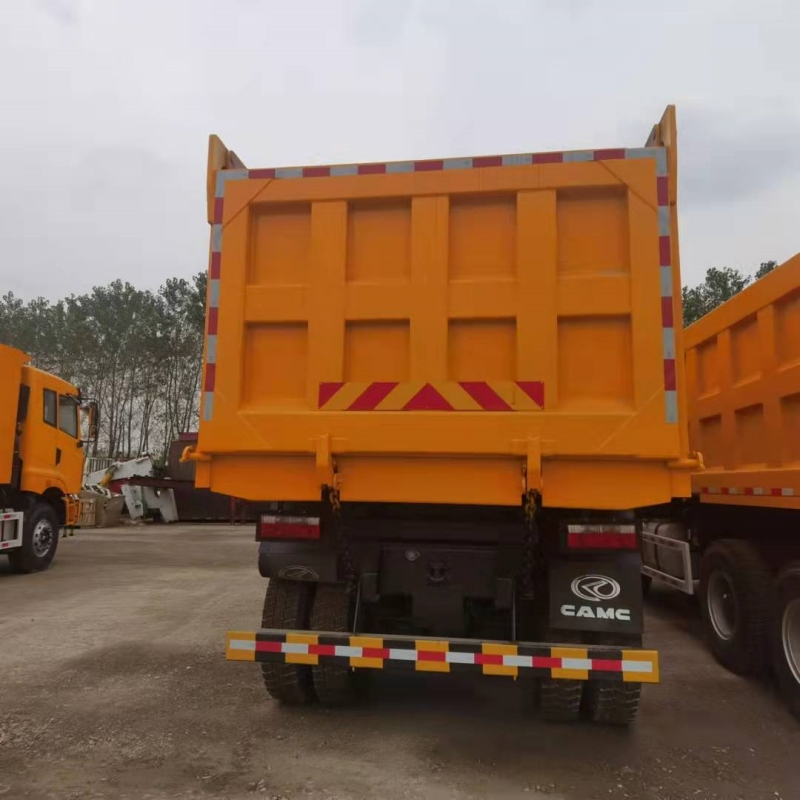
Electric powertrains introduce severe weight penalties. High-capacity battery packs add massive dead weight to the chassis. This added mass changes axle weight distribution entirely. An 8X4 EV dump truck requires specialized axle configurations to remain legal. You must verify compliance regarding local road weight limits. Overloaded front axles cause rapid tire wear and steering failures.
You must calculate net payload accurately before purchasing. Dealerships often highlight impressive gross vehicle weights. However, the true payload matters most to your bottom line. We recommend using a strict net payload calculation framework.
Identify the Gross Vehicle Weight Rating (GVWR) of the specific chassis.
Subtract the curb weight of the fully assembled electric tipper truck including all battery modules.
Subtract the combined weight of the driver, tools, and mandatory onboard safety gear.
The remaining number represents your absolute maximum net payload capacity.
Examine the frame and suspension durability closely. Battery modules concentrate mass in highly localized areas. The chassis requires immense high-tensile steel reinforcement. Dynamic stress amplifies this weight burden during off-road dumping. Torsional twisting on uneven ground can crack weak frames. Always confirm suspension ratings exceed your maximum load parameters.
Hydraulic system integration forms another critical checkpoint. Tipper hydraulics require substantial energy to lift heavy loads. Some manufacturers use an independent electric motor dedicated solely to hydraulics. Others draw power directly from the main traction motor via an electric PTO. Independent hydraulic motors generally provide superior reliability. They prevent hydraulic pressure drops while the truck maneuvers.
Vehicle procurement means nothing without robust charging infrastructure. Direct Current (DC) fast charging is non-negotiable for heavy fleets. However, depot grid capacity almost always presents the primary bottleneck. A fleet of ten trucks demands intense megawatt-level capabilities. You must consult local utility providers months before ordering vehicles. Upgrading transformers and running new high-voltage lines takes significant time.
Operators must build a framework deciding between opportunity charging and overnight charging. High-power opportunity charging occurs mid-shift. Drivers plug in during mandatory breaks or loading cycles. This approach allows fleets to purchase trucks utilizing smaller, lighter battery packs. Conversely, overnight charging utilizes slower, lower-power dispensers. It reduces immediate electrical grid spikes and avoids peak utility demand charges.
Charging hardware must survive brutal site environments. Standard commercial plugs fail quickly in heavy industries. You must enforce strict hardware durability standards.
Dust and Moisture Sealing: Demand IP67-rated charging connectors. They prevent fine silica dust and heavy rain from causing dangerous short circuits.
Mechanical Impact Resistance: Cables around a mining dump truck face constant abuse. Select thick, armored cables designed specifically for heavy equipment depots.
Thermal Ratings: High-power charging generates immense cable heat. Ensure your dispensers feature liquid-cooled cables to maintain safe operating temperatures during long sessions.
Electric motors deliver entirely different performance characteristics than diesel engines. An electric powertrain provides instant maximum torque from zero RPM. This instant power changes everything for heavy hauling. Getting massive loads moving on soft mud becomes significantly easier. Electric trucks conquer steep site gradients without struggling through mechanical gear hunts. Drivers experience smoother, more predictable acceleration under full load.
Regenerative braking serves as a primary performance advantage. Downhill runs with full loads recapture massive amounts of kinetic energy. The electric traction motors reverse function and act as generators. This process sends electricity directly back into the battery pack. Proper route mapping leverages this technology beautifully. Downhill hauling dramatically extends your effective daily range. It also practically eliminates mechanical brake wear, saving substantial maintenance capital.
Drivetrain configuration directly impacts vehicle durability. Manufacturers utilize two main designs for heavy trucks. Central drive motors connect to standard driveshafts and traditional axles. E-axles integrate the electric motor directly into the axle housing itself. E-axles save physical space and reduce total moving parts. However, central motors usually keep sensitive electrical components higher off the ground. This central placement offers easier maintenance access and better clearance over rough terrain.
Procuring electric machinery heavily shifts your financial models. Initial Capital Expenditure (CapEx) runs higher than traditional diesel equivalents. You must rigorously calculate your Operational Expenditure (OpEx) to find the break-even point. Electric drivetrains eliminate engine oil, transmission fluid, and diesel exhaust fluid (DEF). They operate utilizing a fraction of the moving parts found in combustion engines. Precise modeling of projected diesel savings and reduced fluid changes validates the higher upfront investment.
Maintenance facilities require immediate, serious upgrades. You cannot service high-voltage equipment in standard mechanic bays. Facilities need dedicated high-voltage safety zones with restricted access. Technicians require specialized insulated tooling and arc-flash protective gear. Furthermore, you must invest heavily in worker retraining. Staff must complete certified Level 1 and Level 2 high-voltage safety courses before touching these vehicles.
Software and telematics become the backbone of fleet management. You cannot operate electric fleets blindly. Evaluate the vendor’s proprietary software platform thoroughly. Real-time state of charge (SoC) tracking is absolutely non-negotiable. Dispatchers need exact battery levels to assign routes safely. Remote diagnostics allow engineers to read fault codes without dispatching a service truck. Predictive maintenance algorithms track battery health trends and prevent sudden, catastrophic downtime.
Battery warranties require intense legal scrutiny. Never accept vague degradation clauses. Batteries naturally lose capacity over time and heavy use. You must check the fine print for guaranteed capacity retention minimums. A solid commercial warranty guarantees at least 70% to 80% capacity retention. This guarantee should cover a specific period, typically five to seven years, or a set number of charge cycles. Demand a clear replacement policy if performance drops below this threshold.
Service Level Agreements (SLAs) determine your true operational uptime. Heavy trucks generate zero revenue sitting in a repair bay. Emphasize the need for strict, guaranteed uptime percentages in your vendor contract. Require local parts availability for critical high-voltage components. Inverters and cooling pumps must reside at local distribution centers, not overseas. Insist on guaranteed mobile service technician response times for on-site emergencies.
End-of-Life (EOL) planning mitigates future liabilities. Batteries eventually lose viability for heavy propulsion. However, these packs still hold immense energy storage value. Investigate the vendor's battery recycling policies before signing. Leading manufacturers offer second-life applications. They repurpose degraded truck batteries into stationary grid-storage units. Securing an EOL buy-back or recycling agreement prevents massive future disposal fees.
Successful electric truck adoption requires meticulous, data-driven planning. You must match the vehicle's specific usable capacity directly to verified route profiles. Planning your charging infrastructure parallel to truck procurement prevents disastrous deployment delays. Do not rely on nominal specifications or standard logistics models.
We strongly recommend running a single-unit pilot program first. Conduct a comprehensive site energy audit to understand your true grid limitations. Gather real-world telematics data on a single vehicle before committing capital to a fleet-wide purchase.
Take proactive steps today to secure your operational future. Contact technical engineering teams to request a custom duty-cycle analysis. Ask vendors for detailed, technical specification sheets outlining usable capacity and thermal management strategies.
A: Heavy battery packs generally reduce net payload by two to three tons. However, many jurisdictions now offer regulatory weight exemptions for electric commercial vehicles. These legal exemptions allow higher gross vehicle weights. This offset helps fleets recover the lost payload capacity. Always verify current local transportation regulations.
A: Yes, but only with strategic infrastructure planning. You must install megawatt-level DC fast charging stations. Drivers must perform high-power opportunity charging during every shift change. Active liquid thermal management is also strictly necessary. It prevents dangerous battery degradation during non-stop, high-intensity operational workloads.
A: Freezing temperatures reduce battery efficiency significantly. Cabin HVAC heating systems also drain substantial electrical power. Fleets can lose up to 30% of their expected daily range. To mitigate this drop, always pre-condition the battery. Warm the pack and cabin using grid power while the vehicle remains plugged in.
A: Most commercial electric truck batteries last between five and eight years under rigorous duty cycles. This lifespan equates to roughly 2,000 to 4,000 full charge cycles depending heavily on chemistry. Lithium Iron Phosphate (LFP) generally offers the highest cycle lifespan. Always secure a comprehensive warranty covering degradation.


