 English

Views: 0 Author: Site Editor Publish Time: 2026-07-16 Origin: Site


Fleet managers face intense operational friction today. Tightening emissions mandates push the heavy-duty sector toward zero-emission targets. Programs like CARB’s Advanced Clean Fleets force rapid procurement changes. However, battery electric vehicles struggle in long-haul applications. They carry heavy battery packs. They require massive charging infrastructure. This severely limits route flexibility and revenue payload. Diesel trucks bring their own financial headaches. Volatility in global fuel markets disrupts budget planning. Maintenance costs for complex diesel aftertreatment systems continue rising.
Advanced compressed natural gas platforms offer a highly practical alternative. Modern iterations shift natural gas from a niche fuel to a primary procurement strategy. They bridge the gap between legacy diesel and future electric fleets. You get reliable combustion power without the crippling emissions footprint. This article explores how modern gas engines integrate into heavy-duty operations. We will analyze performance metrics, payload realities, and maintenance shifts. You will learn how to evaluate these platforms for your specific long-haul routes.
Modern CNG engines deliver diesel-equivalent torque and payload capacity without the extreme weight penalties of electric batteries.
Renewable Natural Gas (RNG) integration allows fleets to achieve net-negative carbon footprints immediately, utilizing existing combustion-engine maintenance knowledge.
Adopting a platform like the H9 CNG tractor truck requires upfront route mapping and facility upgrades, but yields a predictable Total Cost of Ownership (TCO) advantage on high-mileage routes.
Strategic procurement should hinge on route density, fueling corridor proximity, and available state/federal grant offsets.
Procurement teams navigate a difficult dilemma. They must balance capital expenditure against long-term operational viability. Emerging electric and hydrogen technologies demand massive upfront investments. They also force fleets to overhaul their entire dispatch logic. Legacy diesel trucks offer cheap upfront costs but carry severe long-term risks. Diesel particulate filters plug up. Selective catalytic reduction systems fail. These repairs cause unpredictable downtime.
Natural gas engines solve this immediate compliance problem. They satisfy stringent ESG goals right now. They meet modern nitrogen oxide emission standards seamlessly. Fleet operators maintain their traditional route flexibility. Drivers pull into a station, refuel in minutes, and return to the highway.
Fuel price decoupling provides another massive advantage. Diesel prices fluctuate based on international oil markets. Geopolitical events spike fuel costs overnight. Natural gas enjoys domestic production stability. Fleets often secure long-term pricing contracts. Consider these strategic benefits:
Predictable Budgeting: Locked-in fuel rates protect profit margins from sudden market shocks.
RNG Integration: Renewable natural gas allows operations to achieve net-negative carbon emissions.
Regulatory Safety: Clean-burning engines bypass many local idle restrictions and port entry bans.
By adopting a CNG tractor truck, companies bridge the technology gap. They achieve zero-emission-like benefits using proven combustion mechanics. This sensible approach protects both the environment and the corporate balance sheet.
Skeptics often question the pulling power of alternative fuels. Modern engineering puts these doubts to rest. Today’s spark-ignited gas engines handle high-gross-weight applications effortlessly. They provide powertrain and payload parity when compared to traditional 15-liter diesel engines. Drivers experience familiar torque curves. The engine pulls heavy loads up steep grades without lagging.
Let us examine the financial outlay. Initial capital expenditure runs higher for natural gas vehicles. The high-pressure fuel tanks require specialized carbon fiber and robust mounting hardware. This drives up the initial purchase price. However, operational expenditures drop significantly. Natural gas costs less per diesel gallon equivalent. Furthermore, fleets eliminate diesel exhaust fluid entirely. Maintenance teams no longer deal with forced regeneration downtime. The exhaust system remains remarkably simple.
Residual value requires transparent analysis. The secondary market for natural gas assets continues maturing. Fleet lifecycles heavily impact depreciation models. Operators who run trucks for seven to ten years extract maximum value from the fuel savings. Early replacement cycles might complicate the resale process due to a smaller pool of used buyers.
| System Feature | Legacy Diesel Engine | Modern Natural Gas Engine |
|---|---|---|
| Ignition Type | Compression Ignition | Spark Ignited |
| Aftertreatment | DPF, SCR, and DEF required | Simple Three-Way Catalyst |
| Fuel Storage | Standard Saddle Tanks | High-Pressure Cylinders (3,600 PSI) |
| Cold Weather Starting | Prone to fuel gelling | No fuel gelling issues |
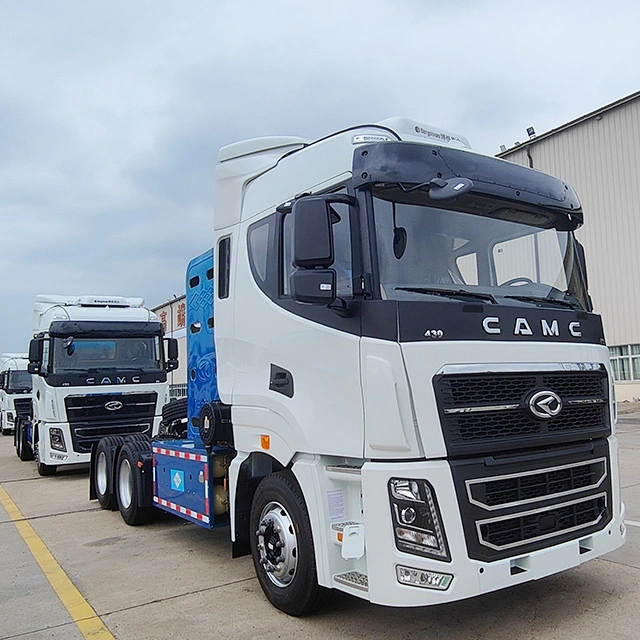
Success depends heavily on infrastructure planning. Route mapping becomes the most critical step in deployment. You must assess real-world range capabilities based on specific tank configurations. Back-of-cab cabinets hold massive amounts of fuel. Saddle mounts provide supplementary volume. Combined, these configurations easily deliver a 600-to-800-mile operating range.
The H9 CNG tractor truck utilizes optimized cylinder packaging to maximize range. Navigating the fueling network requires strategic dispatching. Public stations continue expanding along major freight corridors. Interstate 10 and Interstate 80 feature mature fueling availability. Fleet managers must identify these nodes before assigning long-haul routes. Many companies also invest in behind-the-fence private stations to guarantee supply.
Fill times directly impact driver Hours of Service. Understanding the difference between fast-fill and time-fill methods is essential. Fast-fill stations operate similarly to traditional diesel pumps. Compressors push high-pressure gas into the truck in roughly 15 to 20 minutes. This method suits over-the-road applications perfectly.
Time-fill systems serve return-to-base operations. Drivers park the truck at the end of their shift. They connect the dispensing hose. The station slowly fills the tanks overnight. This process reduces compressor wear and ensures a complete 3,600 PSI fill by allowing the gas temperature to stabilize. Fleet planners must align their dispatch schedules with these thermodynamic realities.
Transitioning away from diesel introduces new maintenance protocols. Facility compliance often represents a hidden cost of adoption. Natural gas behaves differently than liquid fuels. Methane is lighter than air. If a leak occurs, the gas rises to the ceiling. Traditional diesel shops feature ventilation near the floor to capture heavy fumes.
To safely maintain these vehicles, you must upgrade your indoor facilities. Ignoring these safety protocols creates massive liability. Standard facility modifications include:
Gas Detection Sensors: Install methane detectors at the highest points of your maintenance bays.
Specialized Ventilation: Implement high-capacity exhaust fans linked to the detection sensors to clear the room automatically.
Spark-Free Lighting: Upgrade all overhead light fixtures to explosion-proof, enclosed models.
Heating Source Adjustments: Remove open-flame heaters from the ceiling area where stray gas could accumulate.
Technicians face a distinct learning curve. They must shift their diagnostic thinking from compression-ignition to spark-ignited systems. The fuel system relies on spark plugs and ignition coils instead of high-pressure liquid injectors. Technicians must learn to inspect high-pressure lines safely. They must understand fuel receptacle O-ring maintenance.
Parts availability directly impacts uptime. Before deploying these assets, evaluate your local dealer network. Ensure they stock specialized fuel filters, ignition components, and engine sensors. Standardize your preventative maintenance intervals early. Proactive spark plug replacement prevents costly on-highway breakdowns.
Not every operation suits alternative fuels perfectly. You must identify the ideal operational profile for your business. Hub-and-spoke models stand out as the strongest candidates. Dedicated regional loops offer predictable daily mileage. Point-to-point long-haul routes work flawlessly if mature fueling corridors exist between the origin and destination.
Weight-out versus cube-out analysis plays a major role in shortlisting. High-pressure fuel cylinders weigh more than standard aluminum diesel tanks. This tare weight penalty affects fleets that haul maximum legal weights. If you transport steel coils or bulk liquids, you might lose a small fraction of revenue-generating payload.
Conversely, fleets hauling lighter freight rarely hit gross vehicle weight limits. If you transport electronics, parcel freight, or consumer snacks, your trailers cube out before they weigh out. In these scenarios, the heavier fuel system causes zero revenue loss. The H9 tractor truck mitigates weight concerns through advanced lightweight chassis engineering.
Procurement teams should take immediate next steps:
Conduct a rigorous route-by-route fuel parity audit. Identify exactly where your trucks run and where public stations exist.
Initiate discussions with local utilities. Explore potential behind-the-fence infrastructure partnerships.
Speak with renewable fuel providers. Securing RNG contracts dramatically improves your corporate sustainability reports.
Schedule an operational financial consultation. Run the numbers on fuel savings over a five-year lifecycle.
Natural gas engines represent a proven, deployable solution for the heavy-duty sector. They are no longer a transitional compromise. Fleets facing strict emissions targets need immediate answers. Modern platforms deliver diesel-like power while stabilizing volatile fuel budgets. By eliminating complex diesel exhaust fluid systems, fleets regain predictable maintenance schedules.
Successful deployment requires strategic planning. You must evaluate your payload dynamics and upgrade your maintenance facilities. Map your routes carefully to ensure robust fueling access. If your operations align with these requirements, alternative combustion offers massive competitive advantages. Fleet directors should request a customized operational analysis today. Review the technical spec-sheets to see exactly how these vehicles optimize your specific duty cycles.
A: Modern high-displacement natural gas engines provide near-identical torque curves to traditional diesel engines. Drivers will easily navigate steep grades with heavy payloads. While the overall pulling power remains strong, shift mapping and RPM management differ slightly. Drivers simply learn to operate the engine within a slightly different powerband to maximize performance.
A: Natural gas offers excellent cold-weather starting advantages because the fuel does not gel like diesel. You eliminate the need for block heaters and winter fuel additives. However, operators should note that extreme cold temperatures can cause minor pressure variances within the high-pressure cylinders, which might slightly alter the expected filling volume at the pump.
A: Yes, fleets can leverage multiple funding mechanisms to offset the higher initial purchase price. Programs like the Congestion Mitigation and Air Quality Improvement (CMAQ) program offer substantial subsidies. Many state-level clean air initiatives also provide aggressive voucher incentive programs specifically designed to lower the capital expenditure of heavy-duty alternative fuel vehicles.


