 English

Views: 0 Author: Site Editor Publish Time: 2026-07-03 Origin: Site


Bulk cargo transport operates on razor-thin margins everywhere. You move dry goods, aggregates, and volatile liquids across incredibly challenging terrains every single day. In this demanding sector, equipment reliability directly dictates your overall profitability. Every unexpected breakdown eats into your bottom line and disrupts delicate supply chains. Moving beyond basic vehicle definitions reveals a deeper, more complex truth about fleet management. Specific tractor head configurations severely impact payload capacity, route adaptability, and long-term viability.
We must look closely at how these mechanical elements interact with real-world environments. This comprehensive guide provides fleet managers and procurement teams with an objective, data-driven framework. You will learn exactly how to evaluate vehicles based on strict operational outcomes rather than flashy brochures. We cover essential payload adaptation strategies, core specification evaluation methods, and unavoidable implementation risks. Mastering these elements ensures your fleet remains productive, compliant, and highly profitable.
Configuration is Critical: A 6X4 tractor truck provides the necessary traction and weight distribution for unpaved sites and maximum payloads.
Spec Matching Drives ROI: Over-specifying engine horsepower wastes fuel; under-specifying increases wear and downtime.
TCO Over Purchase Price: True evaluation must factor in local aftermarket parts availability, fuel efficiency under load, and chassis durability.
Application Dictates the Build: Trailer compatibility (whether hauling tippers or operating as a container tractor truck) changes the required fifth-wheel height and braking systems.
Downtime destroys profit margins instantly. A single-vehicle failure in bulk logistics rarely stays isolated. It quickly cascades into massive operational headaches. You miss critical shipment windows at ports or processing plants. Facilities then hit you with severe demurrage charges. These penalties wipe out the revenue from multiple successful runs. Fleet managers know vehicle reliability anchors the entire operation.
Harsh operational realities compound this pressure every hour. Bulk transport involves a brutal physical toll on equipment. You deal with highly variable payloads constantly. Drivers navigate steep gradients under maximum weight. They transition through mixed-terrain environments daily. A truck might spend hours cruising on a smooth highway. Then, it turns into an unpaved, deeply rutted extraction site.
Defining success requires extreme pragmatism. The right heavy-duty machine balances multiple competing factors. It must offer maximum legal payload capacity safely. Simultaneously, it requires exceptional structural longevity. You need a chassis built for severe abuse. However, it must also deliver reasonable fuel efficiency. Finding this delicate balance separates profitable fleets from failing ones.
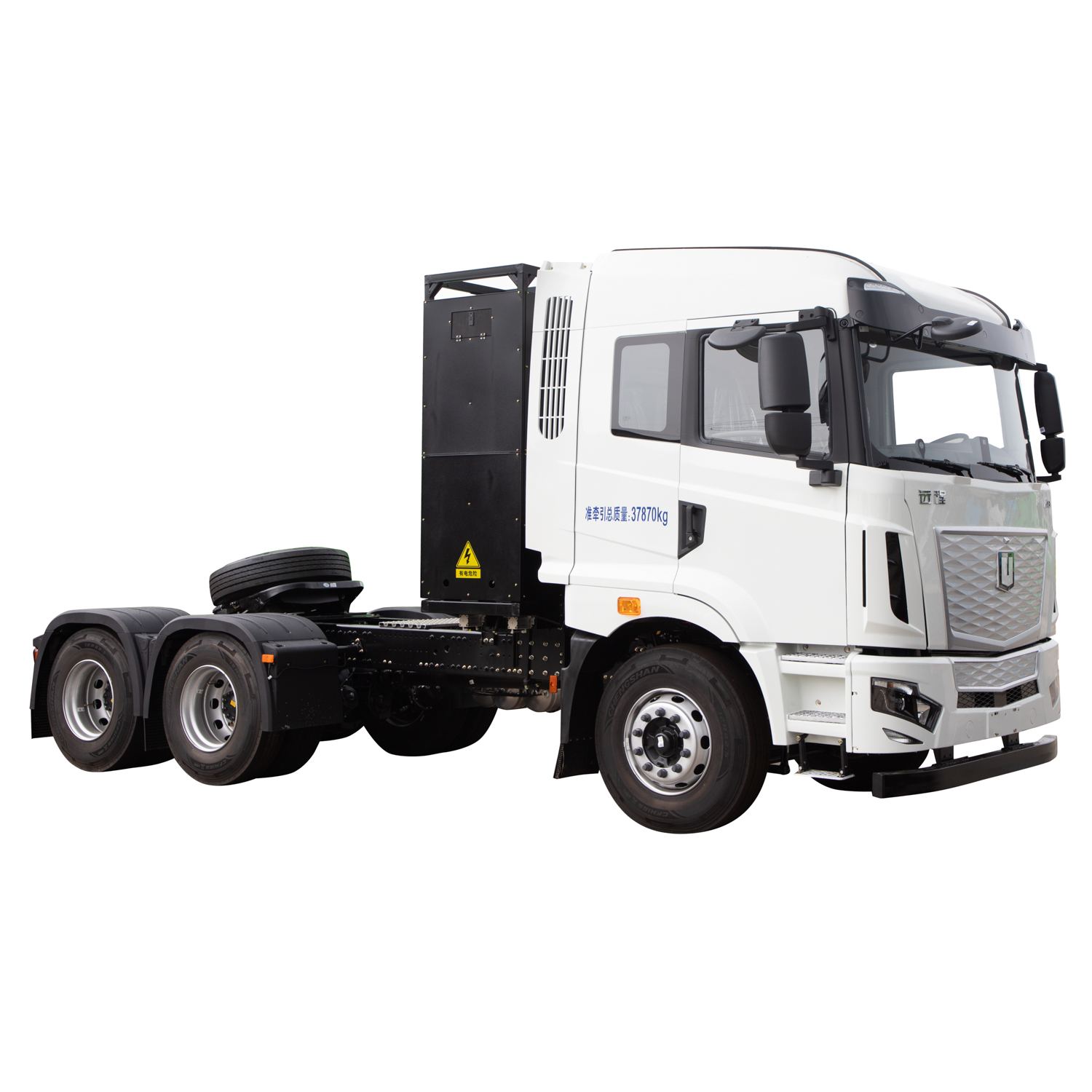
The physics of the 6X4 tractor truck configuration explain its dominance. Having two driven rear axles prevents dangerous traction loss. Bulk dry cargo sites feature slippery, uneven ground. Mud, loose gravel, and steep quarry ramps challenge every vehicle. A single drive axle simply spins out under load. Two driven axles grip the surface aggressively. They push the heavy load forward without hesitation.
Load distribution affects both legality and safety. Heavy trailers place immense pin weight on the tractor. The 6X4 chassis naturally distributes this crushing mass. It spreads the weight across a wider footprint effectively. This layout ensures you comply with strict regional axle-load regulations. Overloaded single axles attract massive fines. They also destroy road infrastructure quickly.
Performance trade-offs become clear when comparing chassis formats openly.
4x2 Configurations: These lack sufficient payload capacity for bulk materials. They suffer from poor off-road traction. You should avoid them for aggregate or quarry work.
6x2 Configurations: These offer better fuel economy on flat terrain. They utilize a dead trailing axle for highway cruising. However, they lack the crucial grip needed for unpaved sites.
6x4 Configurations: This format remains the gold standard globally. It handles extreme pin weights perfectly. It provides the necessary traction required to escape muddy loading zones.
Evaluate specific dimensions carefully before finalizing any purchase. These mechanical choices directly drive your operational outcomes. Right-sizing engine horsepower remains a vital first step. You must match horsepower closely to your typical payload.
Standard regional bulk requires 370 to 400 horsepower. Mountainous routes demand significantly more capability. Extreme gross combination weights need engines exceeding 460 horsepower. Over-specifying simply wastes fuel continuously. Under-specifying stresses the engine and increases costly downtime.
Shift your focus from horsepower toward low-end torque. Horsepower maintains speed on flat highways easily. Torque pulls massive payloads from a dead stop. You need high torque figures at low engine RPMs. This mechanical force allows the truck to climb out of steep pits.
Chassis and suspension durability determine vehicle lifespan. A true heavy duty tractor truck faces immense torsional stress daily. We recommend evaluating reinforced, double-layered steel frames. Multi-leaf spring suspensions handle brutal conditions best. Air suspensions offer highly comfortable rides. Yet, they often puncture or fail in rugged environments.
Transmission selection impacts fleet efficiency deeply. Manual transmissions offer proven reliability worldwide. Local mechanics repair them easily and cheaply. Automated Manual Transmissions (AMT) optimize fuel usage intelligently. They reduce driver fatigue significantly on long hauls. Carefully assess your primary routes before making this choice.
Core Specification Evaluation Chart
| Component | Under-Spec Risk | Over-Spec Risk | Optimal Bulk Setup |
|---|---|---|---|
| Engine Power | Overheating, premature wear | High initial cost, wasted fuel | Matched to local payload laws |
| Frame / Chassis | Cracking under torsion | Excessive unladen weight | Double-channel high-tensile steel |
| Suspension | Frequent spring breakages | Unnecessary mechanical complexity | Heavy-duty multi-leaf springs |
| Transmission | Clutch burnout on hills | High repair costs (complex AMTs) | AMT with off-road calibration |
Use cases dictate your final vehicle build strictly. You must match the tractor head to the trailer correctly. Dry bulk and tippers require specialized auxiliary systems. You need a reliable heavy-duty Power Take-Off (PTO) unit. This mechanism drives the hydraulic rams for tipping. Shifting loads demand highly robust braking configurations. Drum brakes often perform better in muddy environments.
Port-to-inland logistics follow entirely different rules. Operating a container tractor truck requires precise dimensions. You need standardized fifth-wheel heights to meet bridge clearances. Twist-lock integrations are mandatory for secure transit. Highway-optimized gear ratios keep cross-country trips efficient. The engineering focus shifts toward sustained cruising speeds rather than off-road grit.
Liquid logistics involve managing unique dynamic forces. Tankers transport heavy, unstable, or hazardous materials. Electronic stability control (ESC) becomes an absolute necessity here. Anti-roll configurations help manage aggressive liquid surge safely. A sloshing liquid payload easily rolls a standard truck. Your equipment must counteract these dynamic shifts actively. Baffled tanks paired with rigid chassis configurations save lives.
Procuring heavy equipment carries serious implementation risks. The "cheap asset" trap destroys many fleet budgets quickly. You might prioritize the lowest initial purchase price. This mistake always compromises long-term reliability. A cheap truck breaks down constantly. The cost of downtime rapidly exceeds any initial savings.
Fuel economy realities often differ from glossy brochures. Manufacturer claims rely on controlled, flat-track environments. Aerodynamic drag drastically affects your actual fuel consumption. Bulk trailers create massive wind resistance at speed. Extended idle times at loading docks burn fuel invisibly. You must calculate consumption under real-world, fully loaded conditions.
Aftermarket and parts availability dictate your uptime completely. A heavy-duty vehicle relies entirely on its regional service network. Accessible spare parts remain vital for continuous operation. This applies heavily to export markets and cross-border routes. If a critical water pump takes three weeks to arrive, you lose money.
Driver adoption risks affect safety and retention. Cabin ergonomics impact driver fatigue profoundly. Poor seating increases accident risks on long shifts. A comfortable, quiet cabin improves driver retention rates. Drivers naturally protect equipment they actually enjoy operating.
Shortlisting requires a methodical, data-driven approach. Fleet managers need actionable steps before signing contracts. We recommend using a strict vendor evaluation checklist. Demand total transparency from potential OEMs.
Request transparent payload charts mapped to your specific regions.
Verify standard maintenance schedules and fluid change intervals.
Clarify exact warranty inclusions versus specific off-road exclusions.
Secure written guarantees regarding local parts availability.
Customization to the route prevents disastrous investments. Conduct a thorough route analysis immediately. Measure typical road grades your fleet encounters. Assess average road quality and unpaved percentages. Factor in local climate extremes like severe heat or snow. Finalize the spec sheet only after completing this analysis.
Encourage buyers to request long-term fuel and maintenance estimates. Compare these projections against your current fleet data. Secure parts availability guarantees before requesting any formal quote.
Procuring a heavy transport vehicle requires strategic thinking. It represents a long-term infrastructure investment. It is never a simple, disposable commodity purchase. Aligning your exact operational needs protects your profit margins effectively.
Ensure you select the proven 6x4 configuration for tough sites. Match your engine horsepower perfectly to the actual payload. Adapt the fifth wheel and chassis to the trailer type. This comprehensive approach remains the most reliable strategy. It shields bulk transport operations from unexpected losses.
Take action to secure your operational future today. Consult with a technical sales engineer immediately. Ask them to audit your current fleet requirements. Request a tailored fleet durability and route analysis. Stop guessing and start optimizing your transport assets.
A: A 6x4 configuration consumes slightly more fuel due to increased drivetrain weight and mechanical drag. However, this minor penalty remains necessary for bulk loads. A 4x2 truck simply cannot handle heavy pin weights safely. It also fails to provide the off-road traction required for extraction sites.
A: Aim for roughly 8 to 10 horsepower per ton of gross combination weight. For a 50-ton payload, an engine delivering between 400 and 500 HP ensures adequate pulling power. This range prevents wasteful fuel consumption while ensuring the truck easily navigates steep gradients.
A: It can work, but trailer compatibility remains crucial. A container setup requires specific fifth-wheel heights to avoid violating regional bridge restrictions. Standard heavy haulers often sit too high. This height difference easily makes the mounted container exceed strict legal clearance limits.
A: Industry norms typically offer a comprehensive bumper-to-bumper warranty for the first year. Major drivetrain components, including the engine and transmission block, usually see extended coverage. This often lasts up to three years or a specific mileage limit. Always verify exclusions related to severe off-road usage.


