 English

Views: 0 Author: Site Editor Publish Time: 2026-09-30 Origin: Site


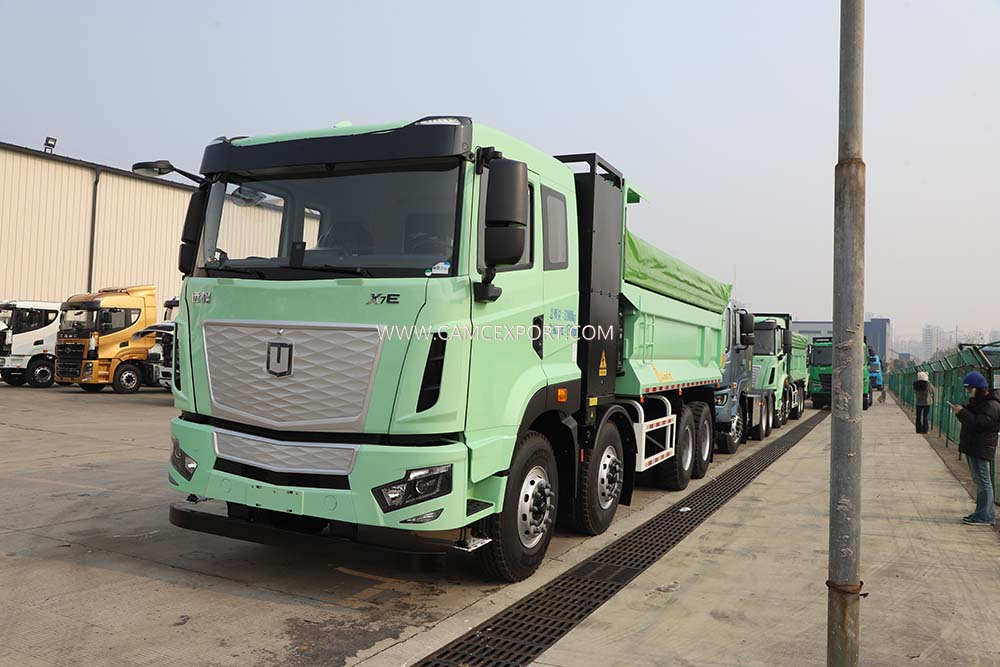
Electric dump trucks are widely used in mining, infrastructure construction sites, slag transportation, sand and gravel yards, and other scenarios due to their zero exhaust emissions, low noise, and controllable operating costs. CAMC electric dump trucks rely on mature three electric systems to adapt to heavy-duty conditions, but there are significant differences between electric vehicle models and traditional fuel dump trucks in terms of operating logic, battery management, and lifting operations. Many operators follow the habit of operating fuel vehicles, which can easily lead to problems such as rapid battery loss, lifting mechanism failure, and electronic control alarms. This article explains the complete usage process of electric dump trucks from five aspects: pre departure inspection, driving operation standards, unloading operation points, receiving inspection, and daily operation and maintenance. It helps operators to use electric dump trucks in a standardized manner, ensure operational safety, and extend the service life of the entire vehicle.
1、 Conduct a comprehensive inspection before driving and prepare for power on
Before starting the electric dump truck, it cannot be driven directly with power on. It is necessary to complete a detailed inspection of the vehicle's appearance, chassis, three electric systems, and hydraulic lifting system. Firstly, check the appearance of the vehicle, inspect the body and cargo box for any deformation or cracking, check if the tire pressure is normal, check if there are large stones or sharp foreign objects embedded on the tire surface, and check if the wheel rim fastening bolts are loose.
Next, focus on inspecting the three electrical components, checking whether the high-voltage wire harness sheath is damaged, whether there is water leakage or aging marks on the connector, and observing whether the battery pack shell is bumped or damaged. Then check the hydraulic lifting system to see if the hydraulic oil level is within the standard range and if there is any oil leakage in the oil pipes and joints. Safety devices such as lighting, reverse warning, and vehicle monitoring should also be tested one by one.
After confirming that the external inspection is correct, the operator should take insulation protection measures and start the vehicle power on process. After powering on, do not immediately start. Observe the dashboard information and confirm that the battery SOC, motor temperature, and high-voltage system have no fault alarms. If a fault code pops up on the instrument panel, it is prohibited to forcefully drive the vehicle. The problem must be investigated before operation can begin. Simultaneously confirm that the handbrake is in the locked state, wait for the system self-test to complete, and then prepare to start.
2、 Operating standards during the driving phase to protect the three electrical systems
The starting operation of CAMC electric dump truck is smoother compared to fuel vehicles. Engage in forward gear, slowly release the handbrake, lightly press the power pedal to start smoothly, and prohibit sudden acceleration by pressing the power pedal. Frequent rapid acceleration under heavy load conditions will instantly increase motor power, increase battery discharge current, and accelerate battery degradation.
When driving on unpaved roads such as construction sites and mining areas, it is necessary to control the speed, avoid large pits and protruding stones, and reduce the risk of chassis and battery pack scratches. Slow down in advance when turning, heavy vehicles have high inertia, and high-speed sharp turns are strictly prohibited. During driving, pay attention to instrument parameters and battery temperature changes. If the high-temperature environment continues to overload, the system will automatically limit power if the battery temperature is too high, which is a protective mechanism. At this time, the load should be reduced and the vehicle should be parked nearby for cooling.
Priority should be given to using the energy recovery function to slow down on downhill sections, and continuous braking should be minimized to avoid overheating of the brake pads. Pay attention to adjusting the energy recovery intensity according to road conditions, and do not rely on a single braking method. If you smell a burnt smell or hear abnormal noise while driving, you need to immediately pull over safely, turn off the power for inspection, and prohibit continuing to drive while sick.
3、 Key points for unloading and lifting operations to avoid the risk of overturning
Unloading is the most risky process in the use of electric dump trucks, and the operating procedures must be strictly followed. When the vehicle enters the unloading position, choose a flat and solid ground to park. It is forbidden to lift the cargo box on slopes or soft soil areas to prevent the vehicle from tipping over. After the vehicle comes to a complete stop, tighten the handbrake and if necessary, place the wheel stop blocks.
Confirm that there are no personnel or obstacles in the rear and surrounding areas before starting the lifting operation. Slowly operate the lifting handle and gradually lift the cargo box, do not push it to the maximum lifting speed at once. During the unloading process, observe the sliding state of the material. If the material gets stuck, it is strictly prohibited for personnel to stand under the cargo box to clean it. It is prohibited to move the vehicle while the cargo box is lifted, as it can easily cause damage to the lifting cylinder and hinge structure, leading to safety accidents.
After unloading the materials, confirm that there are no large pieces of material residue inside the cargo box, slowly operate the handle to retract the cargo box, wait until the cargo box is completely in place, confirm that the locking is complete, and then release the handbrake and drive away from the unloading area. Pay attention to the sound of the hydraulic system throughout the lifting operation. If there is any abnormal noise or shaking, stop the operation immediately.
4、 Complete the task of receiving the vehicle and standardize the process of power off and charging
After completing daily assignments, you cannot simply turn off the engine and leave. You need to complete the receiving process. First, park the vehicle in the designated parking area, keep the vehicle level, and tighten the handbrake. Reset all operating handles and lock the cargo box completely. Afterwards, perform the vehicle power-off operation and wait for the high-voltage system to completely disconnect.
Clean up the residual soil, sand and gravel inside the cargo box to avoid long-term corrosion of the cargo box bottom plate and the accumulation of hard objects that may affect subsequent lifting. Clean the soil attached to the chassis of the vehicle, and check whether there is dust accumulation on the surface of the battery pack and high-voltage components. Plan charging based on remaining battery life and try not to wait until the battery is completely depleted before charging; Do not store it fully charged for a long time.
The charging operation should use a matching charging station, check the charging gun and interface for water accumulation and debris, and then connect the charging. Pay attention to the charging data during the charging process, and stop charging immediately if there is an abnormal alarm.
5、 Daily maintenance and usage taboos to reduce the probability of malfunctions
In daily use, regular maintenance should be completed according to the maintenance manual. In addition to regular maintenance of the chassis and hydraulic system, the three electric system requires regular checks on the battery, motor, and electrical control status. Maintenance of high-voltage components must be carried out by certified professionals, and non professionals are strictly prohibited from dismantling battery packs and high-voltage wiring harnesses without authorization.
There are several taboos for daily use of vehicles: it is forbidden to soak the battery pack in water, and the vehicle's water immersion depth cannot exceed the manufacturer's specified limit; Overloading operations are prohibited as prolonged overloading can damage the frame, suspension, and motor; Do not charge the battery immediately at high temperatures, it needs to be left to cool down.
Standardizing the use of CAMC electric dump trucks can not only avoid safety accidents, but also maintain stable vehicle performance and reduce later maintenance costs. Operators need to be familiar with the electronic control logic of electric dump trucks, abandon the habit of operating fuel vehicles, implement inspections of the entire process of loading, unloading, and receiving vehicles, and ensure that the vehicles are continuously and stably put into heavy-duty transportation work.


