 English






| Quantity: | |
|---|---|


CAMC
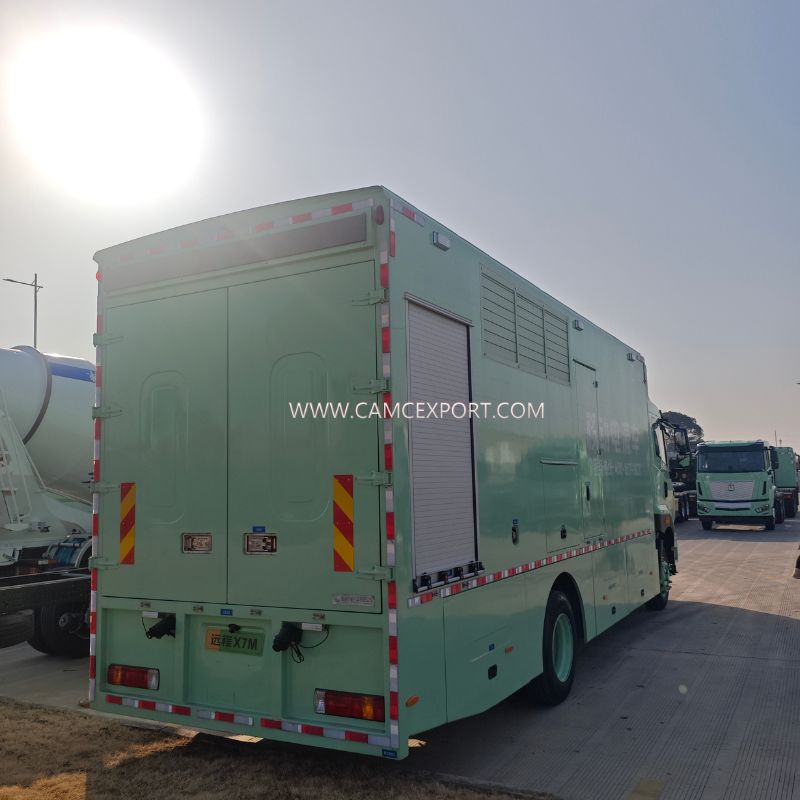
The CAMC X7M 4 × 2 methanol mobile charging vehicle is an efficient and clean energy mobile power supply solution specially designed by Valin Motors for emergency power supply and field operations. It uses methanol as the core fuel and is equipped with a 320kW high-power power generation system. It can operate continuously and stably for more than 12 hours at full load, accurately matching the high-power and long-term power demand of remote mining areas, emergency rescue, disaster relief and other scenarios. This vehicle deeply integrates environmental protection and high mobility advantages, with a 50% reduction in carbon emissions compared to traditional diesel powered vehicles, balancing green and low-carbon with operational efficiency; The whole vehicle has an IP54 protection level and can handle harsh working conditions such as high dust and high humidity with ease, adapting to complex and changing outdoor environments. It is equipped with an intelligent power regulation system that supports parallel and collaborative output of multiple devices. The voltage fluctuation rate is stably controlled at ≤ 1%, ensuring stable and reliable power supply quality; Adopting modular integrated design, the structure is compact and easy to maintain, which can quickly complete maintenance and greatly reduce operation and maintenance costs. As the core mobile power source for areas without grid coverage and temporary workplaces, it is particularly suitable for the green power supply needs of special working conditions such as Southeast Asian tropical rainforests and African mining areas. It has passed CHAdeMO 3.0 international certification, and its technical standards and safety performance are in line with international standards. It has high reliability, strong adaptability, and environmental economy, making it an ideal choice for outdoor emergency power supply and remote scene operations worldwide.
1. Green and environmentally friendly, low-carbon and efficient: With methanol as the core clean energy, compared to traditional diesel power generation vehicles, carbon emissions are directly reduced by 50% without significant pollutant emissions. This not only conforms to the global trend of green development, but also meets the requirements of environmental protection operations, achieving a dual consideration of efficiency and environmental protection.
2. High power and long endurance, stable power supply: Equipped with a 320kW high-power power generation system, it can operate continuously and stably for more than 12 hours at full load. Paired with an intelligent power regulation system, the voltage fluctuation rate is ≤ 1%, and it supports parallel output of multiple devices, easily meeting the high-power and long-term power supply needs of emergency rescue, remote mining areas and other scenarios.
3. High adaptability and fearlessness of harsh working conditions: The entire vehicle has reached the IP54 protection level and can easily cope with complex and harsh environments such as high dust and high humidity. It is suitable for special working conditions such as Southeast Asian tropical rainforests and African mining areas, and has high mobility, which can quickly respond to the power supply needs of various areas without grid coverage.
4. Convenient operation and maintenance, internationally certified: adopting modular and compact design, easy and efficient maintenance, can quickly complete fault diagnosis and component replacement, and reduce operation and maintenance costs; We have passed CHAdeMO 3.0 international certification, and our technical standards and security performance are in line with international standards, ensuring the reliability and compliance of our operations.
Pre-start Preparation: Check the methanol fuel level to ensure it meets the needs of this operation; carefully check that the charging gun and cable are free of damage and aging, and the grounding device is firmly connected; after driving the vehicle to the target location, pull the handbrake, shift to neutral, and confirm that the vehicle body is in a stable state.
Power Supply Operation: Turn on the main power switch of the equipment, start the methanol generator set, and wait 3-5 minutes until the equipment runs stably; accurately connect the charging gun to the interface of the vehicle to be charged and confirm the locking is in place; select the adaptive charging mode on the on-board operation screen, set the relevant parameters, and click "Start Charging"; monitor the equipment's current, voltage and temperature data in real time during charging, and click the "Emergency Stop" button immediately in case of abnormalities.
Shutdown and Finishing: After the charging is completed, first disconnect the connection between the charging gun and the vehicle to be charged, then turn off the methanol generator set; sort and store the cable in the special storage compartment of the vehicle body, and clean the surface of the charging gun and equipment; turn off the main power switch, check the equipment status again, and leave the site after confirming that the vehicle can drive safely.
1. The person in charge of a mining area in Zambia (African client): “Our mining area is far away from the power grid, and connecting to the city power requires a lot of cost and time. The CAMC X7M 4 × 2 methanol mobile charging vehicle has completely solved our power supply problem. The 320kW high-power power generation system can operate continuously at full load for more than 12 hours, fully meeting the needs of multiple mining cards charging simultaneously. The voltage is stable without fluctuations, and the IP54 protection level can also handle high dust environments in mining areas with ease. What's even more surprising is that it reduces carbon emissions by 50% compared to traditional diesel powered vehicles, which not only complies with local environmental policies but also reduces our environmental investment. The modular design makes maintenance and repair easier, and we will continue to purchase in bulk for future projects.”
2. An outdoor engineering service provider in Laos (a Southeast Asian client): “We conduct engineering operations in the deep mountains and tropical rainforest areas of Laos all year round. The humid and dusty environment requires extremely high requirements for mobile power supply equipment. The performance of this charging vehicle exceeds expectations. Its high mobility allows us to quickly deploy to work sites without grid coverage. The intelligent power regulation system supports parallel output of multiple devices, and the voltage fluctuation rate is controlled within 1%, ensuring the stable operation of engineering equipment. Methanol fuel supply is convenient, environmentally friendly and pollution-free. Combined with CHAdeMO 3.0 international certification for safety, it is the best choice for us to deal with outdoor emergency power supply and long-term field operations.”
CAMC International is a leading enterprise in China's heavy vehicle manufacturing industry. As a key national supported research and development production base for heavy vehicles and components, the company has maintained a leading position in the industry since its establishment in the 1970s. With a complete layout of the entire industry chain, CAMC has become the only truck manufacturer in China with the ability to independently produce core components such as engines, transmissions, axles, chassis, and cab, achieving full process autonomy and controllability from key components to the entire vehicle.
The company relies on the research and development strength of the national enterprise technology center, and its products cover a full range of commercial vehicles such as heavy-duty trucks, engineering dump trucks, and special transport vehicles, which are widely used in key areas of the national economy such as infrastructure, mining, and logistics. Through continuous technological innovation and intelligent manufacturing upgrading, CAMC not only maintains a leading position in the domestic market, but also sells its products to more than 80 countries and regions around the world, especially in the markets along the "the Belt and Road". As a representative enterprise of high-end equipment manufacturing in China, the company is actively promoting the application of new energy and intelligent technology in the commercial vehicle field, leading the industry to transform and upgrade towards green and low-carbon direction.

Q1: Is methanol fuel refueling convenient?
A: At present, professional methanol refueling stations have been built in most areas of China, and on-site refueling can also be realized through special fuel tank trucks. We will fully assist users in connecting with local methanol supply channels to ensure the stable and timely supply of fuel.
Q2: Can the 320KW output power be adjusted?
A: It supports flexible power adjustment, which can be freely set in the range of 50KW-320KW according to the actual operation needs, adapting to the power supply needs of equipment with different power and making the use more flexible.
Q3: What type of driver's license is required to drive this charging truck?
A: This vehicle is a heavy-duty special operation vehicle, which requires a Class A2 or higher driver's license to drive, fully complying with the relevant requirements of domestic road transportation regulations.
Q4: Is the daily maintenance cost of the vehicle high, and is there any after-sales guarantee?
A: The methanol engine has a stable structure and low failure rate. Daily maintenance only requires regular filter replacement and pipeline inspection, and the maintenance cost is about 80% of that of traditional diesel vehicles; we provide users with a 1-year free warranty, and at the same time have a professional after-sales team to provide lifelong technical support and maintenance guidance.


