 English

Views: 0 Author: Site Editor Publish Time: 2026-07-24 Origin: Site


The heavy-duty equipment sector is undergoing a massive powertrain shift. Stringent emissions regulations, environmental mandates, and advancements in high-capacity battery technology drive this rapid change. Fleet managers, owner-operators, and procurement teams face a high-stakes equipment allocation problem. They must balance the proven reliability and range of traditional internal combustion engines against the zero-emission compliance of modern alternatives. Selecting the right equipment requires moving beyond manufacturer marketing claims. Operators must rigorously evaluate duty cycles, payload requirements, and infrastructure readiness. A standard dump truck operates in brutal conditions, demanding absolute durability. This guide provides a technical evaluation framework for comparing traditional and battery-powered hauling equipment, ensuring your fleet remains operational, compliant, and efficient.
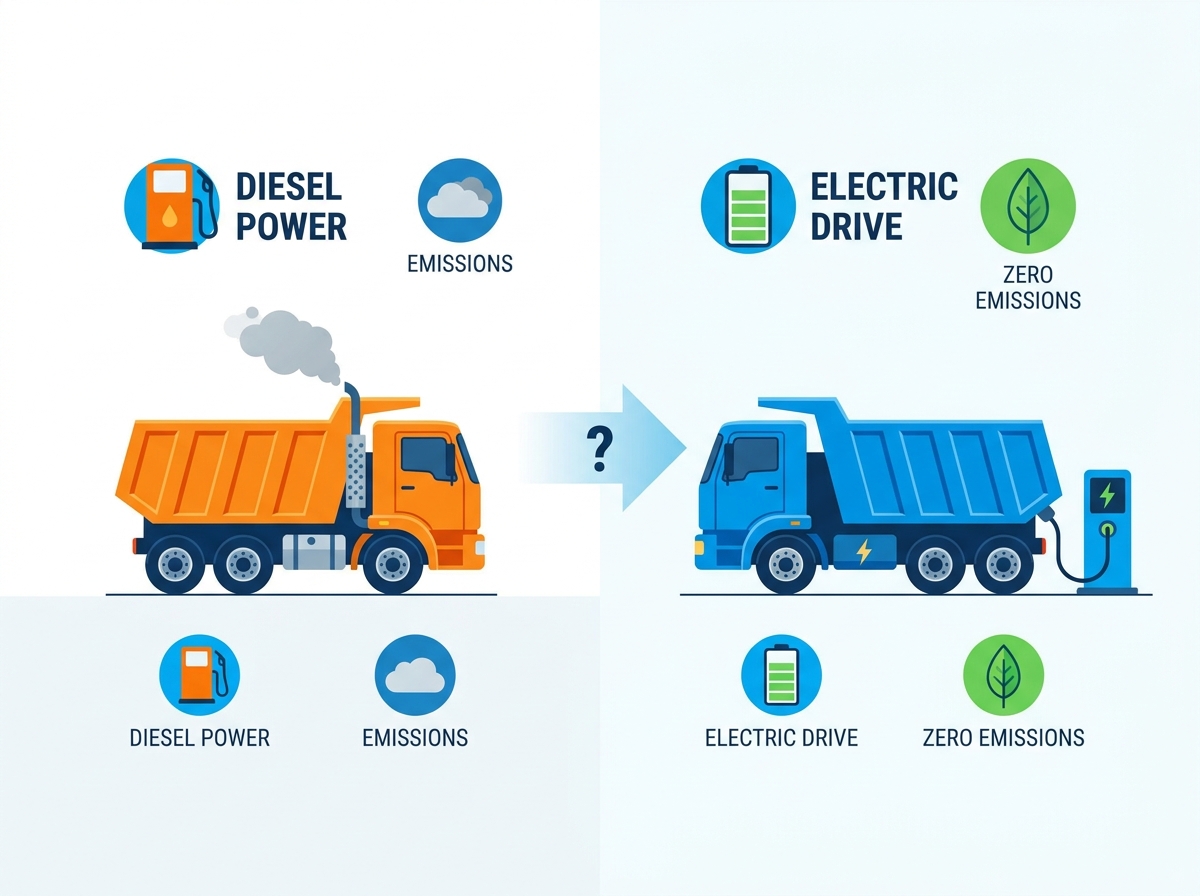
Application Dictates Powertrain: A diesel dump truck remains the standard for remote sites, long-haul routes, and multi-shift continuous operations, while an electric dump truck excels in urban environments, short-haul repetitive routes, and enclosed spaces (like tunneling).
Lifecycle Timelines Vary: Electric models require significantly higher upfront Capital Expenditure (CapEx) and infrastructure investment, but offer lower Operational Expenditure (OpEx) through reduced fuel and maintenance requirements over a 5-to-10-year horizon.
Payload vs. Battery Weight: Current battery energy density means electric trucks often carry heavier powertrains, which can reduce maximum legal payload capacity on public roads compared to diesel equivalents.
Drivetrain Scaling Rules: For operations under 90 tons, mechanical-drive diesel dump trucks offer the most efficient power transfer; however, ultra-class mining applications rely on diesel-electric hybrid drives to overcome mechanical drivetrain limits.
Infrastructure is the Bottleneck: The primary barrier to electric adoption is not truck capability, but the availability of megawatt-level charging infrastructure and grid capacity at the depot or job site.
Evaluating powertrains requires establishing the exact vehicle class. The equipment spectrum ranges from compact site dumpers used in utility work to Class 8 vocational trucks operating on and off-highway. At the extreme end sit ultra-class rigid mining haulers. Each category demands specific power delivery mechanisms. A solution that works for a municipal road crew will fail in an open-pit copper mine. Understanding the scale ensures you match the powertrain to the physical demands of the job site. You cannot apply on-highway logic to an off-highway articulated hauler. The structural frame, axle ratings, and suspension geometries change drastically as payload increases. When evaluating these machines, you must look at the gross vehicle weight rating (GVWR) and the specific bridge laws governing your operating routes.
Site managers often underestimate the impact of powertrain selection on auxiliary systems. The hydraulic pumps that lift the dump bed rely on power take-off (PTO) units. In traditional setups, the engine drives the PTO directly. In battery-powered units, dedicated electric motors drive the hydraulic pumps. This fundamental shift changes how operators interact with the machine during the dumping cycle. You must account for these architectural differences when training operators and scheduling maintenance.
The standard diesel dump truck relies on an internal combustion engine paired with a mechanical transmission. This setup dominates the construction industry. The technology is exceptionally mature. Parts availability spans the globe, and established mechanic networks exist in almost every jurisdiction. Mechanical drives transfer power directly from the engine through a torque converter and driveshaft to the axles. This direct mechanical link provides predictable, robust performance in mud, snow, and steep off-road grades. Mechanics understand how to diagnose a slipping clutch or a failing planetary gear. The diagnostic tools are universal, and the repair procedures are well-documented.
Modern internal combustion engines utilize advanced variable geometry turbochargers and high-pressure common rail fuel injection. These systems maximize low-end torque, allowing the truck to pull heavy loads out of deep excavations. However, this mechanical complexity introduces multiple failure points. You have engine oil, transmission fluid, differential gear oil, and engine coolant to monitor. The exhaust aftertreatment systems, including diesel particulate filters (DPF) and selective catalytic reduction (SCR) units, require constant attention. Ignoring a DPF regeneration cycle leads to engine derating, stranding the truck on the job site.
An electric dump truck replaces the internal combustion engine with large-scale lithium-ion or lithium iron phosphate (LFP) battery packs. These batteries power electric traction motors mounted on the axles or integrated into the drivetrain. A critical feature of this architecture is regenerative braking. The electric motors reverse function during deceleration, capturing kinetic energy and feeding it back into the battery. This system proves highly beneficial in heavy-haul downhill scenarios, significantly reducing physical brake wear while extending operational range. The absence of a traditional multi-speed transmission eliminates shift shock, providing smooth, continuous acceleration.
Battery chemistry dictates performance. LFP batteries offer superior thermal stability and longer cycle life, making them ideal for heavy vocational use. Nickel Manganese Cobalt (NMC) batteries provide higher energy density, reducing the physical footprint of the pack but requiring more aggressive thermal management. These trucks utilize complex liquid cooling loops to maintain optimal battery temperatures during high-draw events, such as climbing a steep grade fully loaded. The high-voltage architecture, typically operating between 600V and 800V, requires specialized training for maintenance personnel. You cannot send a standard diesel mechanic to diagnose a high-voltage inverter fault without proper certification and personal protective equipment.
Ultra-class mining trucks weighing over 90 tons rarely use mechanical transmissions. Instead, they utilize diesel-electric drives. In this configuration, a massive internal combustion engine acts solely as a generator. It produces electricity to power independent wheel motors. Mechanical driveshafts and gearboxes simply cannot handle the sheer torque required to move 300-ton payloads up steep pit walls without catastrophic failure. Diesel-electric systems eliminate these mechanical weak points, providing smooth, infinite speed control and superior reliability in extreme mining applications.
This hybrid approach isolates the engine from the shock loads of the drivetrain. The engine runs at a constant, optimized RPM, maximizing fuel efficiency and longevity. The electric wheel motors deliver massive torque directly to the ground. When descending into the pit, these trucks use dynamic braking. The wheel motors act as generators, converting kinetic energy into electricity, which is then dissipated as heat through massive resistor grids mounted on the truck deck. This prevents the mechanical service brakes from overheating and failing under the immense weight of the payload.
Electric motors provide instant, maximum torque at zero RPM. This characteristic offers superior launch performance under heavy loads. A battery-powered truck can pull away from a standstill on a steep grade effortlessly. Conversely, internal combustion engines must build RPM to reach peak torque. Both powertrains must manage intense thermal loads under maximum strain. Traditional engines rely on massive radiators, while battery systems require sophisticated liquid cooling loops to prevent thermal derating during long climbs. If an electric motor overheats, the vehicle control unit will automatically reduce power output to protect the components, slowing the truck to a crawl.
Battery pack weight directly impacts maximum legal payload limits for on-highway operations. Federal and local bridge laws strictly regulate gross vehicle weight. Because high-capacity battery packs weigh significantly more than a full fuel tank, electric trucks often sacrifice payload capacity to remain street-legal. Every ton of battery equals a ton of lost aggregate per trip. For operations under the 90-ton threshold, mechanical drives remain highly efficient. Above that weight, electric drive systems become necessary to manage extreme torque without mechanical failure. You must calculate the exact payload penalty based on your specific axle configuration and local weight restrictions.
| Performance Metric | Mechanical Drive | Battery Electric Drive |
|---|---|---|
| Torque Delivery | Builds gradually with engine RPM | Instant maximum torque at 0 RPM |
| Gradeability | Strong, requires proper gear selection | Excellent, seamless power delivery |
| Payload Impact | Maximum legal capacity maintained | Reduced due to heavy battery packs |
| Thermal Management | Radiator and fan cooling | Active liquid cooling loops |
| Braking System | Engine brake and friction brakes | Regenerative braking and friction brakes |
Operational range dictates job site viability. A traditional truck is limited only by its fuel tank, typically holding over 100 gallons. Refueling takes minutes, allowing for 24-hour continuous operation across multiple shifts. Electric range degrades under heavy payload and steep inclines. Fleet managers must account for operational downtime required for charging. Relying on Level 3 DC Fast Charging requires massive grid access, while overnight depot charging limits the vehicle to a single daily shift. You cannot simply dispatch a battery-powered truck on a 300-mile round trip without mapping out compatible high-voltage charging stations along the route.
Duty cycles determine the feasibility of battery power. A truck hauling gravel from a quarry to a local asphalt plant on a 20-mile loop is an ideal candidate. The predictable route allows for precise energy consumption calculations. The driver can charge the truck during mandatory rest breaks or while waiting in line at the loader. Conversely, a truck dispatched to random residential construction sites across a tri-state area requires the flexibility of liquid fuel. You must analyze telematics data from your existing fleet to understand the true daily mileage and energy demands of your specific operations.
Electric powertrains thrive in stop-and-go urban traffic and closed-loop, predictable short-haul routes. These environments maximize regenerative braking, constantly topping up the battery. Municipal public works and local quarry-to-plant runs fit this profile perfectly. Traditional engines excel in unpredictable routing. Remote construction sites lack grid access. Long-distance hauling requires the energy density and rapid refueling capabilities that only liquid fuel currently provides. When operating in deep mud or soft sand, the instant torque of an electric motor can cause wheel slip if the traction control system is not properly calibrated. Operators must learn to modulate the accelerator pedal differently to maintain traction in adverse conditions.
Operator comfort directly impacts safety and driver retention. Internal combustion engines generate significant cabin noise and low-frequency vibration, contributing to operator fatigue over a 10-hour shift. Battery-powered alternatives operate in near silence with zero engine vibration. However, operators face a learning curve with regenerative braking. One-pedal driving changes how the truck handles on steep descents. Drivers must adapt to the aggressive deceleration profile to maintain traction and load stability on loose gravel. The lack of engine noise also requires heightened situational awareness on busy job sites, as ground workers may not hear the truck approaching.
The primary barrier to fleet electrification is infrastructure. The hidden realities of depot electrification include extensive trenching, upgrading transformers, and overhauling utility grid connections. A fleet of heavy-duty trucks requires megawatt-level power. Most industrial parks lack this baseline capacity. Lead times for installing heavy-duty charging infrastructure often span 12 to 24 months. Fleet managers must coordinate with local utilities years in advance before taking delivery of battery-powered equipment. You cannot simply plug a Class 8 truck into a standard wall outlet. You need dedicated DC fast chargers capable of delivering 150kW to 350kW of power.
Conduct a comprehensive site energy audit to determine current electrical capacity.
Engage your local utility provider to discuss transformer upgrades and peak load demands.
Design the depot layout to accommodate heavy-duty charging dispensers and cable management systems.
Secure necessary permits for trenching and high-voltage electrical installations.
Establish a charging schedule to avoid peak utility rates and minimize grid strain.
Freezing temperatures severely impact battery chemistry. Cold weather slows the chemical reactions within lithium-ion cells, leading to temporary range degradation. Furthermore, heating the cabin draws substantial energy directly from the traction battery, further reducing operational range. Traditional engines face their own cold-weather challenges, such as fuel gelling and cold starts. However, the industry has established reliable mitigation strategies, including block heaters, winterized fuel blends, and ether injection systems. Battery-powered trucks utilize active thermal management systems to condition the battery pack before operation, but this process consumes grid power if the truck is plugged in, or battery power if it is not.
Equipment lifecycle planning relies on predictable resale values. The secondary market for used traditional equipment is highly liquid and global. An operator can easily sell a 10-year-old mechanical truck. The residual value for first-generation battery-powered heavy equipment remains uncertain. Battery degradation curves and the potential need for expensive high-voltage pack replacements make secondary buyers hesitant. This lack of historical data complicates long-term fleet rotation strategies. You must factor in the potential cost of battery recycling or repurposing at the end of the vehicle's operational life.
Specify a mechanical internal combustion powertrain for operations requiring maximum payload on weight-restricted public roads. Remote job sites lacking robust electrical infrastructure demand liquid fuel. Fleets requiring 24-hour continuous operation across multiple shifts cannot afford charging downtime. Heavy-duty remote work, forestry, and unpaved highway construction remain the domain of traditional mechanical drives. If your trucks frequently travel off-road into deep mud or traverse steep, unpaved grades, the proven durability of a mechanical drivetrain provides peace of mind. The ability to carry spare fuel and perform field repairs keeps the operation moving in isolated environments.
Invest in battery-powered equipment for operations in urban centers with strict noise ordinances and zero-emission zones. Predictable, short-haul, return-to-base duty cycles maximize the technology's strengths. Local aggregate delivery, tunneling operations, and municipal public works benefit greatly from zero tailpipe emissions and regenerative braking. Companies with aggressive corporate environmental targets will find these vehicles essential for compliance. Operating indoors or in deep tunnels makes battery power a safety necessity, eliminating the need for massive ventilation systems to clear exhaust fumes.
Neither powertrain is universally superior. The optimal choice depends entirely on duty cycle predictability, payload sensitivity, and infrastructure access. Treat traditional internal combustion as the default for versatility and heavy-duty remote work. Treat battery power as a specialized tool for high-efficiency, localized, and environmentally regulated operations.
Audit your daily route energy requirements using existing fleet telematics data.
Contact your local utility provider to evaluate depot power capacity and transformer upgrade timelines.
Calculate the exact payload penalty based on local bridge laws and specific battery pack weights.
Assess secondary market liquidity in your region before committing to a new powertrain platform.
A: Daily operational hours depend entirely on the duty cycle, payload, and grade. Heavy uphill hauling depletes the battery rapidly, while downhill runs extend range via regenerative braking. The physical battery pack typically lasts 7 to 10 years before significant degradation requires replacement.
A: Yes, electric motors generate massive instant torque capable of moving extreme loads. However, the heavy physical weight of the battery packs reduces the maximum legal payload capacity on public roads to comply with strict gross vehicle weight regulations.
A: It is a hybrid system used primarily in heavy mining. A large internal combustion engine acts solely as a generator to produce electricity. This electricity powers independent electric wheel motors, completely eliminating mechanical transmissions and driveshafts.
A: Above 90 tons, mechanical transmissions, torque converters, and driveshafts face extreme physical stress and wear. Electric-drive systems manage high-torque loads much more reliably, preventing catastrophic mechanical failures in ultra-class mining applications.
A: They generally require less routine maintenance. They eliminate engine oil changes, exhaust aftertreatment systems, and transmission fluid. Regenerative braking also significantly reduces physical brake pad wear, keeping the truck out of the shop.
A: Charging times vary based on infrastructure. Standard overnight AC depot charging takes 8 to 12 hours. High-power DC fast charging can replenish the battery in 1 to 2 hours, but requires massive, specialized grid infrastructure.


