 English

Views: 0 Author: Site Editor Publish Time: 2026-07-10 Origin: Site


Tightening emissions mandates and strict urban noise restrictions push modern construction fleets toward electrification. Agencies like the EPA and US DOT rigorously enforce new environmental standards. You might feel skeptical about adopting new drivetrain technologies. We completely understand your hesitation. Transitioning your fleet to an electric concrete mixer truck requires balancing bold sustainability goals against harsh operational realities. Heavy battery packs directly affect vehicle payload limits. Construction environments also demand extreme vehicle durability. These advanced vehicles must perform flawlessly under intense pressure.
This comprehensive guide provides a pragmatic, data-driven framework. We will help you evaluate whether an electric model fits your daily batch plant operations. You will learn how to analyze route profiles effectively. We cover how to assess infrastructure needs thoroughly. Finally, you will understand how to manage specific payload changes safely. Adopting electric trucks involves a steep learning curve, but the operational benefits prove substantial when executed correctly.
Payload Constraints: Heavy battery packs currently reduce maximum concrete payload; operators must calculate the exact yardage trade-off per trip.
TCO Shift: High initial capital expenditure (CapEx) is offset by drastically lower fuel and maintenance operational expenditures (OpEx) over a 5-to-7-year horizon.
Infrastructure Dependency: Successful deployment relies as much on depot charging infrastructure and grid capacity as the truck itself.
Application Fit: EV mixers excel in dense urban routes with short, predictable round-trips from the batch plant, utilizing regenerative braking.
Transitioning to electric power opens new doors for your business. Zero-emission vehicles unlock access to strictly regulated construction zones. Many urban centers now mandate low-emission equipment for city projects. A quiet electric drivetrain also gives you a massive bidding advantage. You can secure lucrative night-pour contracts in dense residential neighborhoods. Diesel engines often violate local noise ordinances during overnight operations. An electric truck operates at a fraction of the decibel level, keeping regulators and residents happy.
You must factor the current regulatory and grant landscape into your purchasing decision. Heavy-duty electric vehicles carry a high premium. However, federal and state incentive programs offset these initial expenses. Programs like the Hybrid and Zero-Emission Truck and Bus Voucher Incentive Project (HVIP) in California provide massive financial relief. You should actively hunt for local municipal grants designed to accelerate green fleet adoption. These grants transform a daunting capital purchase into a highly competitive investment.
Operational predictability makes the ready-mix industry perfect for electrification. Long-haul logistics struggle with unpredictable routes and sparse public charging. In contrast, a ready-mix mixer truck operates on a strict "return-to-base" model. They drive a short radius from the batch plant and return predictably. This cyclical routing eliminates range anxiety. You can schedule charging sessions systematically between loads or overnight at your own depot.
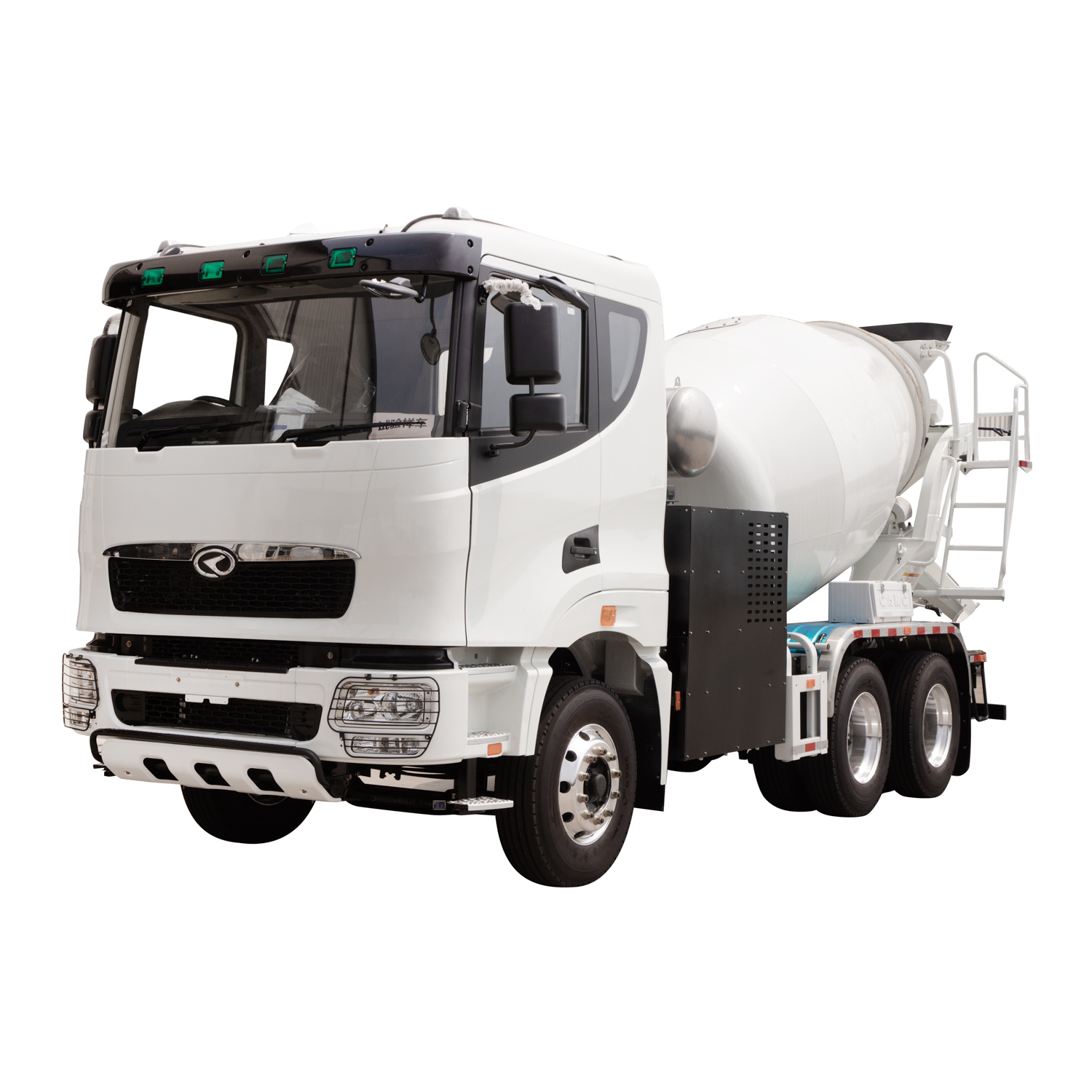
Commercial battery packs introduce a severe weight penalty. You must address how these massive power units impact your Gross Vehicle Weight Ratings (GVWR). Federal and local bridge laws strictly govern maximum allowable axle weights. Every extra pound of battery means one less pound of deliverable concrete. You cannot ignore this physical limitation. Exceeding weight regulations results in severe fines and potential fleet grounding.
You will likely face drum capacity adjustments when ordering an EV concrete mixer truck. Fleet managers typically step down from standard sizes to remain compliant. For example, replacing a traditional 11-yard diesel drum with a 9-yard or 10-yard electric drum represents a common compromise. This reduction impacts daily revenue directly. You need to dispatch more trucks or run additional trips to pour the same total yardage. We highly recommend calculating the exact yardage trade-off per trip based on your regional weight laws.
Drum Capacity and Payload Comparison Chart
| Specification Metric | Traditional Diesel Mixer | Electric Mixer (Current Tech) |
|---|---|---|
| Standard Drum Capacity | 10 to 11 cubic yards | 8.5 to 9.5 cubic yards |
| Average Empty Weight | 26,000 - 28,000 lbs | 32,000 - 35,000 lbs |
| Power Source for Drum | Mechanical PTO | Electric PTO (ePTO) |
| Route Range Profile | Unlimited (Quick Refuel) | 100 - 150 miles (Application Dependent) |
The Electric Power Take-Off (ePTO) introduces another critical operational variable. In diesel trucks, the engine turns the drum mechanically. In electric variants, the main traction battery powers the drum rotation continuously. The battery supplies energy during transit, while idling in traffic, and during the final discharge. This dual-draw scenario affects overall vehicle range heavily. You must account for the energy consumed by mixing, not just the energy used for driving. Mixing stiff concrete drains the battery significantly faster than rotating a highly fluid mix.
You will encounter a steep premium for the cab and chassis compared to diesel equivalents. Battery manufacturing remains expensive. The heavy-duty electric motors and specialized cooling systems add significant upfront costs. Do not let the sticker shock deter your initial analysis. Grant funding frequently absorbs a large portion of this premium.
Facility upgrades represent the second major upfront expense. You cannot simply plug a heavy-duty truck into a standard wall outlet. Your depot requires commercial-grade charging hardware. You must budget for extensive site trenching to lay heavy-gauge cables. Installing new switchgear and transformers is often mandatory. We advise securing contractor quotes for facility upgrades before you finalize any vehicle purchase orders.
Energy costs offer a massive advantage for electric fleets. You must compare the highly volatile price of diesel fuel per gallon against commercial kilowatt-hour (kWh) rates. Electricity pricing remains far more stable. You can maximize savings by charging your fleet overnight during off-peak hours. Utilities offer steep discounts for nighttime energy consumption. Over thousands of miles, these fuel savings accumulate rapidly.
Maintenance reductions deliver the most noticeable day-to-day relief for your mechanics. Electric drivetrains possess a fraction of the moving parts found in diesel engines. You permanently eliminate diesel particulate filters (DPF) and diesel exhaust fluid (DEF). Routine engine oil changes vanish completely. Transmission wear practically disappears because electric motors utilize direct drive or simplified gearing systems.
Regenerative braking drastically extends your brake pad lifespan. Heavy stop-and-go traffic usually destroys brake pads on fully loaded concrete trucks. Regenerative systems reverse the electric motor to slow the vehicle down. This process captures kinetic energy and sends it back to the battery. The mechanical friction brakes only engage during the final moments of a complete stop. Fleet managers report replacing electric truck brakes far less frequently than diesel counterparts.
Grid capacity assessments represent the critical first step in your electrification journey. You must audit your batch plant’s local utility grid before ordering a single vehicle. Many older industrial parks lack the raw electrical capacity to fast-charge multiple heavy-duty trucks simultaneously. Contact your utility provider early. They often need months or even years to upgrade local substations and pull new high-voltage lines to your property.
You need to implement structured charging strategies based on your daily operations. A mixed-charging approach usually yields the best results:
Level 2 AC Charging: This method works perfectly for overnight charging. It supplies steady, slow power while the fleet rests. Level 2 hardware is cheaper to install and reduces thermal stress on the vehicle's battery packs.
DC Fast Charging (DCFC): You need DCFC for "opportunity charging." When trucks return to the batch plant for their next load, they plug into a fast charger. A quick 20-minute burst provides enough range for the next sequential short-distance pour. DCFC hardware costs significantly more but keeps your trucks moving during busy daylight hours.
Weather and topography dictate your route feasibility every single day. Extreme cold reduces battery chemical efficiency. Expect a noticeable drop in range during freezing winter months. Extreme heat requires the battery thermal management system to work overtime, which also drains power. Topography matters immensely. Driving a fully loaded truck up steep inclines drains the battery exponentially faster than driving on flat terrain. You must dispatch electric trucks on routes that align with their realistic, loaded capabilities.
Selecting the right vehicle requires a methodical approach. You are buying an integrated technological system, not just a rolling chassis. Use this specific criteria checklist when evaluating different manufacturers.
OEM Reliability & Support: Prioritize manufacturers with established heavy-duty truck pedigrees. Start-ups might offer flashy technology, but you need a robust dealer network. Fast parts availability prevents catastrophic downtime. If a truck breaks down, the drum must keep turning. You cannot risk concrete hardening inside the drum while waiting weeks for proprietary replacement parts.
Battery Thermal Management: Evaluate the active liquid cooling and heating systems. Air-cooled batteries degrade quickly under heavy commercial loads. Liquid systems ensure consistent battery performance in harsh construction environments. They maintain optimal cell temperatures during heavy discharge on steep hills and during rapid DC fast charging.
Telematics and Software: Integration is non-negotiable. You must have access to real-time State of Charge (SOC) monitoring from the dispatcher's desk. The software should also track drum rotation speed and energy consumption. Route optimization integration helps dispatchers assign electric trucks to the most energy-efficient jobs.
The Pilot Strategy: Do not transition your entire fleet at once. We recommend rolling out a single-unit pilot first. Use this pilot truck to benchmark real-world performance against your local topography. Test it in various weather conditions. Train your drivers to maximize regenerative braking. A pilot program uncovers hidden infrastructure bottlenecks before you commit massive capital.
Watch out for overly optimistic range estimates from sales brochures. Always ask the manufacturer for range data based on a fully loaded drum driving in stop-and-go traffic. Real-world testing remains the only way to validate marketing claims.
The transition to an electric powertrain is not a simple 1-to-1 replacement for your legacy diesel assets. It represents a fundamental strategic operational shift for your entire business. You must adapt dispatching habits, maintenance routines, and payload expectations. Electric mixers shine in urban environments where noise restrictions and emission regulations severely limit diesel operations.
We advise fleet managers to start immediately with an infrastructure audit. Speak with your local utility provider before finalizing any vehicle specifications. Map out your typical daily route profiles and calculate exact payload differences. Research available state and federal grant funding carefully to offset initial hardware costs. Your success depends on meticulous planning and data analysis.
If you feel ready to explore the transition, consult with an infrastructure specialist today. Conduct a localized energy cost analysis. Prepare your facility, train your personnel, and take the first calculated step toward a cleaner, quieter concrete delivery fleet.
A: Real-world range typically spans 100 to 150 miles. A fully loaded outbound trip heavily drains the battery, while the empty return journey consumes much less power. You must also account for the electric Power Take-Off (ePTO). Continuously rotating 60,000 pounds of stiff concrete during transit and discharge reduces the effective driving range significantly.
A: Yes, they are completely safe to wash down. Commercial electric vehicles use heavily shielded, IP67-rated enclosures for all high-voltage components. These strict sealing standards prevent water and acidic concrete wash-out chemicals from penetrating battery packs, motors, and electrical connectors during rigorous daily cleaning routines.
A: Extreme cold can reduce effective range by 20% to 30%. Cold temperatures slow down the battery's internal chemical reactions. To combat this, fleets use battery pre-conditioning. While the truck remains plugged into the depot charger overnight, grid power warms the battery pack to its optimal operating temperature before the shift begins.
A: Yes. The main traction battery has massive reserves designed specifically for this scenario. Operating the ePTO to rotate the drum draws relatively little power compared to moving the vehicle's dead weight. Standard safety protocols ensure the truck prioritizes auxiliary drum power to prevent concrete curing, even if driving range is critically low.


