 English

Views: 0 Author: Site Editor Publish Time: 2026-07-09 Origin: Site


Urban construction faces tightening regulatory environments worldwide today. Municipalities increasingly enforce strict noise ordinances daily. They also establish aggressive zero-emission zones across major city centers. Traditional diesel mixers are rapidly becoming a massive liability. These legacy vehicles suffer from heavy PTO (Power Take-Off) emissions. They also generate severe noise complaints from local residents. Standard engines waste expensive fuel during long idle times. Adopting an electric concrete mixer truck changes everything. It transitions fleet operations from a compliance risk to a competitive advantage. You can secure more urban bids through certified green credentials. Fleet managers just need to carefully navigate initial infrastructure variables. They must also calculate payload differences accurately. We will explore how decoupled power systems improve operational efficiency. You will learn strategies to manage battery weight constraints effectively. Finally, we provide actionable steps for depot charging implementation.
Regulatory Compliance: Electric mixers bypass urban emission restrictions and allow for extended operational hours (night/early morning pours) due to near-silent operation.
Operational Efficiency: Independent electric drum drives eliminate the need for engine idling during mixing and waiting, drastically reducing energy waste.
TCO Realities: Higher upfront Capital Expenditure (CAPEX) is offset by lower Operational Expenditure (OPEX) in fuel and drivetrain maintenance, though ROI timelines depend on local electricity rates and grants.
Deployment Constraints: Successful adoption requires careful evaluation of payload capacity (accounting for battery weight) and depot charging infrastructure.
City planners aggressively expand Low Emission Zones (LEZs). They implement these zones across dense metropolitan areas globally. The Department of Transportation (DOT) sets stringent environmental targets continuously. These ambitious mandates systematically phase out older diesel commercial vehicles. Fleet operators face massive fines for violating these clean air boundaries. You risk losing lucrative municipal contracts completely.
Standard mixers burn massive amounts of fuel in heavy traffic. The diesel engine must idle continuously to maintain drum rotation. Concrete drums typically spin at two to six revolutions per minute. This constant idling accelerates internal engine wear significantly. It also wastes expensive fuel while trucks sit in urban gridlock. Engine hours accumulate rapidly without adding actual mileage. This inefficiency drains operational budgets month after month.
High decibel levels severely limit your available working hours. Diesel engines violate municipal noise codes during early morning shifts. They also disrupt residential neighborhoods during nighttime operations. Standard combustion engines frequently exceed ninety decibels under heavy load. Quiet electric operation unlocks off-peak concrete pours effortlessly. Contractors can bid on restricted urban projects easily. You gain a massive competitive edge during the bidding process. Municipalities prioritize contractors utilizing zero-emission construction equipment.
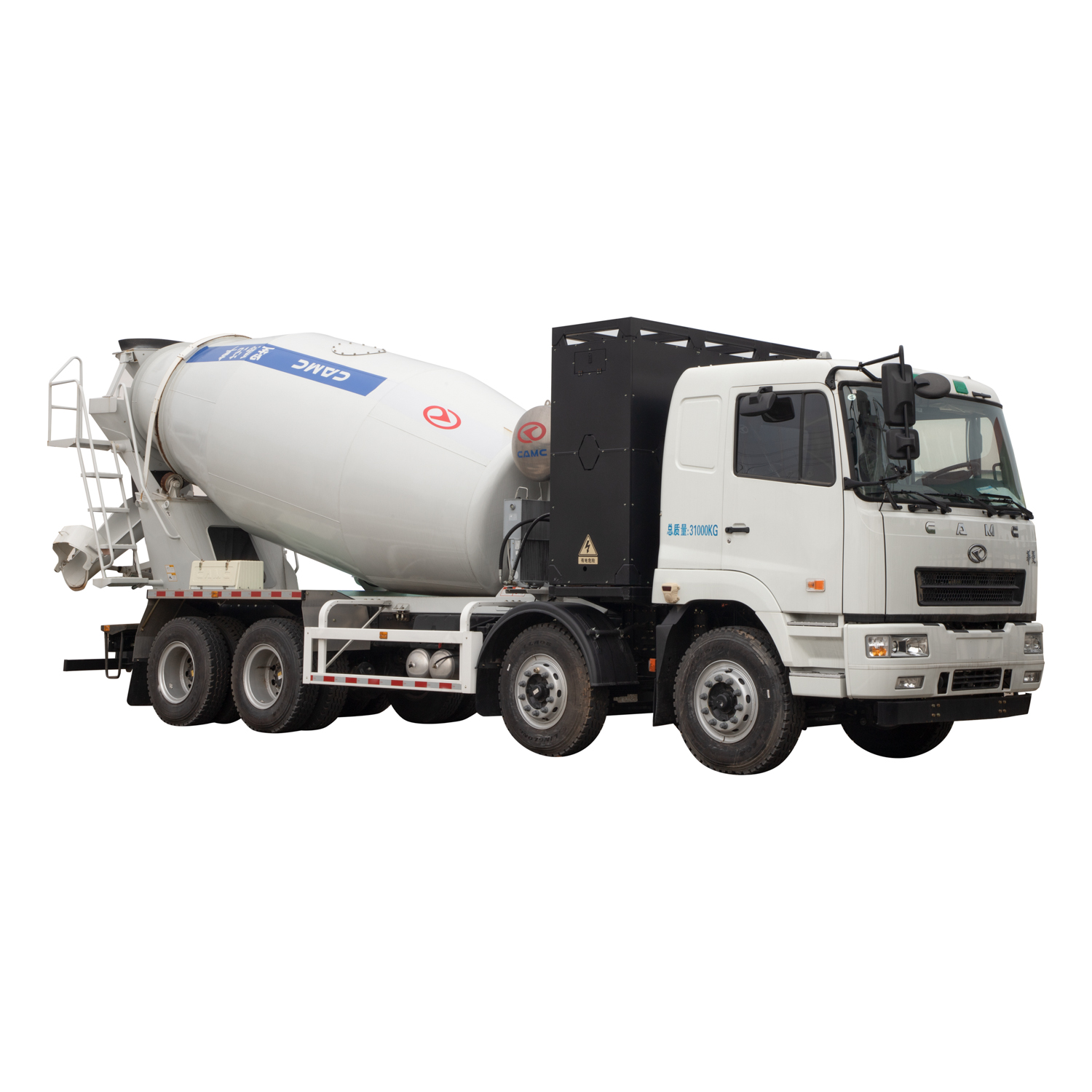
An electric drivetrain transforms how mixer fleets operate fundamentally. Traditional trucks use the main combustion engine for drum rotation. An electric mixer separates chassis propulsion from drum turning. The electric motor drives the drum efficiently and independently. It never relies on a loud, revving combustion engine. You save massive amounts of energy during stationary discharging. The vehicle remains completely silent while pumping concrete.
Urban congestion actually becomes a slight advantage here. Frequent stop-and-go traffic activates advanced regenerative braking systems. The electric traction motor reverses function during deceleration. It acts as a heavy-duty generator instead. Frequent braking recovers kinetic energy seamlessly on city streets. This captured energy flows directly back to recharge the battery. You improve overall driving range heavily during heavy traffic. Mechanical brakes also last much longer due to this regeneration.
Maintenance reductions directly lower fleet vehicle downtime. Electric trucks eliminate complex diesel particulate filters (DPF). They remove exhaust gas recirculation (EGR) systems entirely. You no longer need traditional engine oil changes. You avoid purchasing expensive diesel exhaust fluid (DEF). Fleet mechanics spend far less time on routine drivetrain repairs. They focus on suspension and hydraulic upkeep instead. Vehicle availability increases dramatically across your entire delivery fleet. You keep more trucks on the road daily.
Many operators express deep skepticism regarding electric vehicle power. Electric drivetrains actually deliver massive instant torque to the wheels. Diesel engines require time to build necessary RPMs. Electric motors deliver peak torque at zero RPM. Heavy load launches on steep urban inclines feel incredibly smooth. They outperform their traditional diesel counterparts significantly in acceleration. Drivers experience far less cabin vibration during transit.
However, you must carefully evaluate the payload reality. Heavy commercial battery packs add substantial weight to the chassis. Fleet managers must calculate exact cubic yardage trade-offs strictly. You must ensure you never exceed legal gross vehicle weight limits (GVWR). A heavy battery might slightly reduce maximum concrete capacity. Concrete weighs approximately four thousand pounds per cubic yard. You might haul slightly less product per trip safely. You must balance this reduction against operational savings.
Range anxiety often deters major fleet equipment upgrades. However, an urban construction mixer truck rarely requires long-haul range. Battery capacity perfectly matches short urban batch-plant-to-site loops. Vehicles return to the central plant multiple times daily. This structured routing makes these vehicles structurally ideal for EV adaptation. You can easily charge the vehicle between scheduled pours.
Urban Environment Performance Comparison
| Operational Feature | Traditional Diesel Equipment | Electric Equipment Alternative |
|---|---|---|
| Torque Delivery Method | Requires slow RPM build-up | Instantaneous maximum torque output |
| Drum Rotation System | Tied directly to engine idling | Independent electric drive motor |
| Environmental Noise Output | High decibel (restricts working hours) | Near-silent (enables night pours) |
| Stop-and-Go Traffic Efficiency | High fuel waste and engine wear | Regenerates battery energy actively |
Successful rollout demands serious depot charging infrastructure upgrades. Level 3 DC Fast Charging technology is absolutely necessary. Fleet managers often overlook hidden construction timelines. Local grid capacity upgrades take several months to complete. Utility company permitting processes also delay physical installations frequently. You must plan infrastructure improvements well ahead of truck delivery. You cannot charge a heavy commercial vehicle on standard grids. You need robust 480-volt, three-phase power connections.
Route planning and daily dispatch optimization fundamentally change. Dispatchers must adapt their daily strategies immediately. Planners must now account for state-of-charge (SOC) metrics. Ambient temperature significantly affects overall battery life. Cold weather reduces overall operational range noticeably. Dispatchers must schedule designated charging windows between daily pours. They monitor telematics dashboards to track energy consumption actively. Intelligent software routes trucks based on current battery levels.
Workforce adoption requires comprehensive new driver training. Drivers must transition away from diesel RPM management habits. They learn to monitor electric torque delivery instead. They must also master various regenerative braking modes. Proper braking maximizes energy recovery during urban transit. Training prevents drivers from depleting the battery unnecessarily. Fleet managers must address initial driver resistance through education. Drivers quickly appreciate the quiet, vibration-free cabin environment.
Procurement requires strict and thorough vendor evaluation. You must define clear success criteria upfront. Equipment buyers should never rely on marketing brochures alone. You must analyze specific hardware components for durability. We recommend checking several critical hardware specifications before purchasing.
Evaluate the core battery chemistry for thermal safety.
Review the specific warranty terms covering the electric drum motor.
Test the proprietary software telematics integration capabilities extensively.
Verify the immediate availability of local dealer maintenance support.
Analyze the specific chassis gross vehicle weight ratings closely.
We highly recommend piloting vehicles before scaling up. Start your transition using a single-unit pilot program. You need to validate assumptions in the real world. Theoretical range often differs from actual urban traffic performance. Follow these steps to execute a successful pilot program.
Deploy the pilot truck on your busiest urban route.
Gather daily real-world data regarding actual battery consumption.
Collect direct driver feedback regarding handling and comfort.
Adjust your dispatch scheduling based on actual charging times.
Analyze overall operational efficiency before buying more units.
Capital costs remain noticeably higher for electric equipment models. Procurement officers must factor in available financial incentives. Local and federal clean energy grants offset initial purchasing shocks. Many municipalities offer substantial subsidies for zero-emission commercial vehicles. You should research programs similar to California's HVIP framework. These public funds make green fleet upgrades highly viable financially. You transition your fleet while maintaining healthy capital reserves.
The electric mixer represents a massive strategic necessity today. It helps your company secure future urban construction contracts. Municipalities will continue banning diesel equipment from city centers. Proactive fleets will dominate the competitive bidding landscape shortly. Infrastructure and payload adjustments certainly require careful engineering upfront. Proper planning ensures long-term operational success for your fleet. The environmental compliance benefits make this a highly viable solution.
Actionable Next Steps:
Review manufacturer spec sheets to check accurate battery weights.
Schedule a commercial dealer consultation to evaluate chassis options.
Model your specific batch-plant routes for daily energy demands.
Contact local utilities regarding depot grid power capacities.
A: A fully charged battery easily handles a standard daily shift. The PTO draws power during stationary discharging. However, electric drum motors are highly efficient. A typical urban shift lasts eight to ten hours. The battery provides sufficient energy for continuous mixing and pouring throughout this period.
A: Yes, large battery packs add significant weight to the chassis. This extra weight slightly reduces your maximum legal payload. You must obey gross vehicle weight rating (GVWR) regulations strictly. Fleet managers should calculate route-specific payload reductions carefully. You might carry half a cubic yard less per trip.
A: Manufacturers design emergency redundancies to prevent concrete hardening. The trucks feature separate battery reserves dedicated solely to drum rotation. Advanced telematics provide early low-battery warnings. Dispatchers monitor state-of-charge actively. If the drive battery depletes, the reserve keeps the drum turning until rescue equipment arrives safely.
A: Charging times depend heavily on your depot infrastructure. A Level 2 overnight charger takes eight to twelve hours to fully replenish the battery. Level 3 DC fast charging provides a much quicker turnaround. Fast chargers can refill the battery in about ninety minutes to two hours between shifts.


