 English

Views: 0 Author: Site Editor Publish Time: 2026-07-27 Origin: Site


Yard throughput bottlenecks often stem from a compounding issue where seconds lost during repetitive trailer connections translate to hours of lost productivity and increased trailer wait times per shift. In high-volume distribution centers, the operational drag of using standard road trucks for yard spotting becomes painfully obvious. Manual cranking of landing gear, exiting the cab to connect airlines, and static fifth-wheel limitations inflate cycle times, increase trailer idle time, and cause driver fatigue. These inefficiencies disrupt the flow of goods and create unnecessary safety hazards for operators working in busy environments.
The solution lies in specialized equipment designed specifically for these repetitive tasks. The purpose-built coupling mechanisms of a modern terminal tractor, alongside the emerging role of the electric terminal tractor, serve as the primary mechanical solution for optimizing dock utilization. By streamlining the connection process, these vehicles reduce trailer wait times and scale yard throughput efficiently.
Hydraulic Fifth Wheels Drive ROI: Eliminating the need to manually crank trailer landing gear reduces individual coupling time by up to 50%, directly increasing moves per hour.
In-Cab Operations Enhance Safety: Keeping operators inside the cab of the dock tractor during the coupling and uncoupling process drastically lowers the risk of slip-and-fall injuries and repetitive strain.
Powertrain Impacts Spotting Speed: The instant torque delivery of an electric terminal tractor accelerates the positioning and coupling phase of the spotting cycle compared to traditional diesel engines.
Automation is the Next Frontier: Emerging automated tractor-trailer coupling technologies (aligned with TMC task force standards) are setting new baselines for future yard efficiency and equipment lifecycle planning.
Establishing baseline metrics for yard efficiency requires a focus on specific performance indicators. Moves per hour stands as the primary metric, directly reflecting the speed of spotting operations. Trailer idle time and trailer wait times indicate how long assets sit unproductive, while dock door turnaround rates measure the speed at which trailers are loaded or unloaded and swapped. Improving these metrics requires addressing the mechanical bottlenecks in the spotting cycle. When a yard operates at peak capacity, every single movement must be calculated and optimized. The difference between a profitable shift and a delayed one often comes down to how quickly a driver can secure a load and move it to the designated dock door without unnecessary physical intervention.
Yard managers track these metrics rigorously. They look at the time a trailer enters the gate to the time it hits the dock. If the spotting equipment is inadequate, the entire schedule falls behind. Standard road trucks simply do not have the mechanical design to keep up with the rapid pace required in modern logistics hubs. The suspension, the fifth wheel setup, and the cab layout are all optimized for highway driving, not for moving trailers a few hundred yards fifty times a day.
The manual CDL sequence using standard road trucks involves a labor-intensive process. The operator must perform a series of physical tasks that consume valuable time.
The driver backs the truck up to the trailer, aligning the fifth wheel with the kingpin.
The driver performs a visual check to ensure proper alignment.
The driver secures the kingpin, often requiring multiple attempts if alignment is slightly off.
The driver exits the cab and manually winds the landing gear up or down, a physically demanding task that takes significant time.
The driver climbs behind the cab to manually connect the gladhands and electrical cords.
The driver returns to the cab, secures their seatbelt, and prepares to move the trailer.
Conversely, the streamlined sequence is designed for rapid execution. The operator backs under the trailer, engaging an automatic kingpin locking mechanism. The hydraulic fifth wheel lifts the trailer, leaving the landing gear intact. Integrated in-cab controls manage the entire process, eliminating the need for the driver to exit the vehicle. This fundamental shift in mechanics changes the entire dynamic of yard management.
Using standard semi-trucks for yard moves introduces significant time-motion penalties. Drivers lose exact minutes per cycle when they must exit the cab, manually connect or disconnect gladhands, and crank landing gear. Over a standard shift, these minutes compound into hours of lost productivity. The physical toll on drivers also leads to fatigue, further slowing down operations as the shift progresses. A tired driver is a slower driver, and in a yard where hundreds of moves are required daily, fatigue translates directly to lost revenue and delayed shipments.
Furthermore, the wear and tear on standard road trucks used for yard spotting is immense. The clutches, transmissions, and brakes take a beating from the constant stop-and-go motion. This leads to higher maintenance costs and more frequent breakdowns, further disrupting yard operations. The hidden costs extend beyond just time; they encompass equipment degradation and increased labor expenses due to inefficiency.
Slow coupling creates a ripple effect throughout the yard. Delayed trailer swaps lead to yard congestion, as incoming trucks wait for available space. This bottleneck delays inbound receiving and stalls outbound shipping. Efficient dock utilization depends on rapid turnover; when coupling is slow, the entire supply chain experiences friction. A congested yard is a dangerous yard, with trucks maneuvering in tight spaces, increasing the risk of accidents and further delays.
To illustrate the difference, consider the following comparison between manual and streamlined operations:
| Operation Phase | Standard Road Truck (Manual) | Purpose-Built Spotter (Streamlined) |
|---|---|---|
| Kingpin Alignment | Requires precise backing, often multiple attempts. | Enhanced visibility allows for single-attempt alignment. |
| Landing Gear | Manual cranking (2-3 minutes per move). | Hydraulic lift (0 minutes, gear remains down). |
| Airline Connections | Driver exits cab, climbs behind to connect. | Automated or easily accessible from rear door. |
| Total Cycle Time | 8-12 minutes per move. | 3-5 minutes per move. |
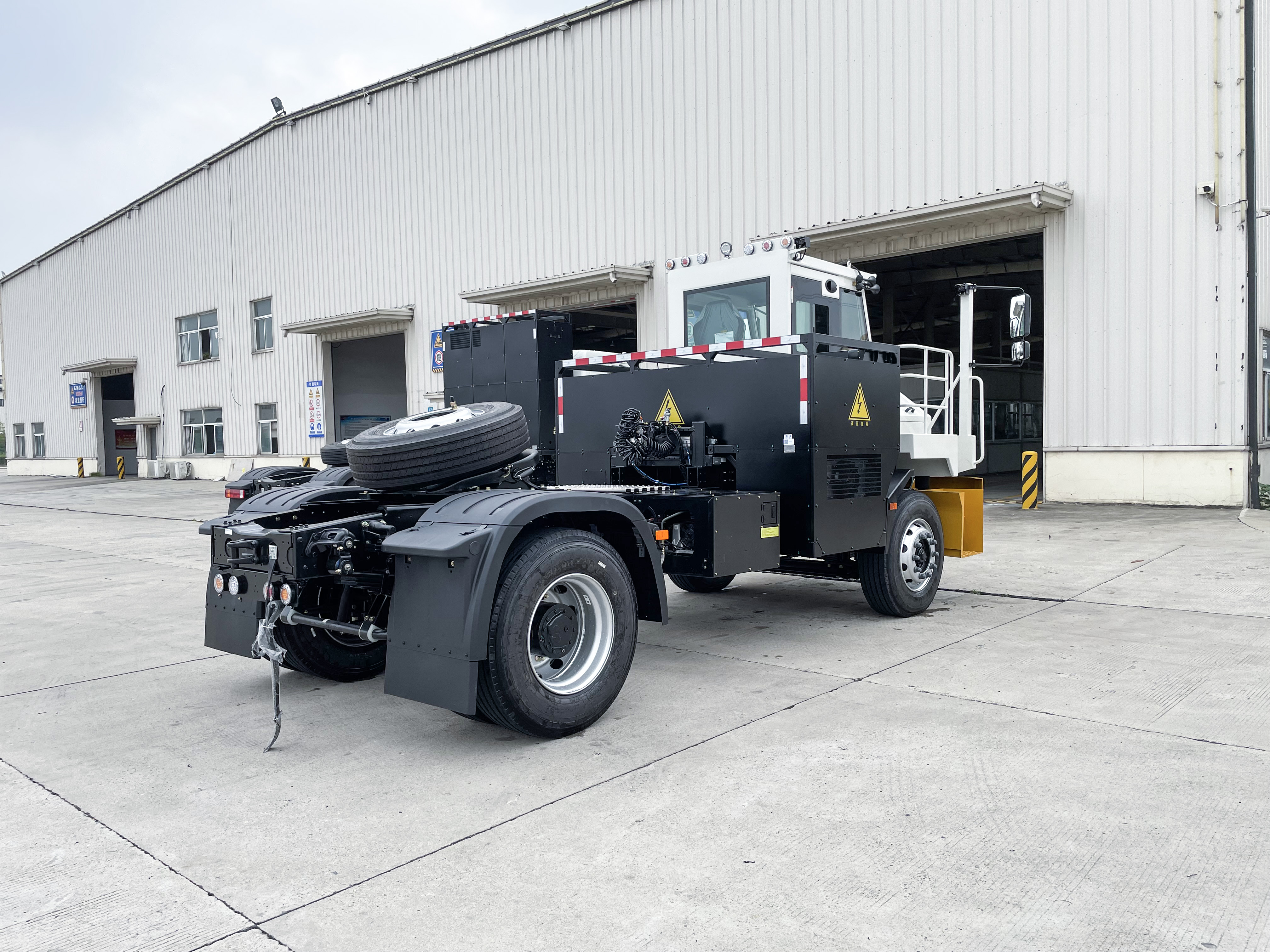
The engineering behind the hydraulically raised fifth wheel fundamentally changes the spotting cycle. Unlike traditional static mounts, the hydraulic system lifts the front of the trailer, allowing it to be moved without adjusting the landing gear. This mechanical advantage eliminates the most time-consuming physical task of the coupling process, significantly increasing the speed of each move. The hydraulic cylinders are designed to handle immense weight, lifting fully loaded trailers with ease. This capability is the cornerstone of efficient yard operations.
When a driver uses a static fifth wheel, they must ensure the trailer is at the exact right height before backing under it. If it is too low, they must crank the landing gear up. If it is too high, they risk jumping the kingpin. The hydraulic system eliminates this guesswork. The driver simply backs under the trailer, engages the fifth wheel, and uses the hydraulics to lift the trailer to the necessary height for transport. This single feature saves countless hours over the course of a week.
Connecting and disconnecting trailers without leaving the cab optimizes operator workflow. Modern units feature automated airline connections, pneumatic unlatching mechanisms, and rear-sliding cab doors. These integrations allow the operator to manage the entire coupling sequence from a seated position, reducing physical exertion and minimizing the time spent on each trailer swap. The rear-sliding door is particularly crucial, as it provides immediate access to the trailer connections without the driver having to climb down from the cab and walk around the vehicle.
The pneumatic unlatching mechanism allows the driver to release the kingpin with the push of a button inside the cab. This eliminates the need to manually pull the release handle, which can often be stiff and difficult to operate, especially in cold weather. By keeping the driver in the cab, the entire process becomes smoother, faster, and significantly safer.
Industry evaluations, such as the TMC's Future Chassis & Brake Systems Task Force position papers, highlight the viability of fully automated coupling. The integration of automatic pneumatic and electrical connections, alongside sensor-guided alignment systems, aims to eliminate physical driver intervention entirely. These advancements promise to further reduce cycle times and enhance operational safety. While still in the early stages of widespread adoption, these technologies represent the future of yard management.
Sensor-guided alignment systems use cameras and radar to guide the driver perfectly under the trailer, eliminating the need for steering corrections. Automatic connections use specialized gladhands that mate automatically when the fifth wheel engages. These systems require standardized equipment across the fleet, but the potential efficiency gains are massive. Facilities that adopt these technologies early will have a significant competitive advantage in throughput and operational speed.
The mathematical difference in daily throughput between a standard road truck and a purpose-built dock tractor is substantial. Over a standard 8-hour shift, specialized equipment can perform significantly more moves per hour due to the streamlined coupling process. This increased throughput directly translates to higher operational efficiency and reduced asset idle time. If a standard truck completes 4 moves per hour, and a specialized unit completes 8, the facility has effectively doubled its yard capacity without adding additional personnel.
This increase in throughput allows distribution centers to handle higher volumes of freight, reducing the backlog of trailers waiting to be unloaded. It also ensures that outbound shipments leave on time, improving customer satisfaction and reducing detention fees. The ROI on specialized spotting equipment is often realized within the first year of operation simply through the increase in moves per hour.
High-frequency, repetitive spotting cycles compound efficiency gains in multi-shift distribution centers. A two-minute savings per move scales dramatically across hundreds of daily trailer swaps. This cumulative time savings allows facilities to handle higher volumes without increasing their fleet size or labor costs. In a facility that operates 24/7, saving two minutes on 500 moves per day equates to over 16 hours of saved time every single day.
This scaled efficiency means that fewer spotters are needed to handle the same volume of freight, reducing capital expenditure on equipment and lowering ongoing maintenance and fuel costs. It also provides a buffer against unexpected surges in volume, allowing the facility to absorb extra work without falling behind schedule.
Safety functions as a direct ROI driver in yard operations. Eliminating manual cranking and frequent cab exits reduces workers' compensation claims and operator downtime. Improved ergonomics keep drivers healthier and more productive, minimizing the hidden costs associated with workplace injuries and staff turnover. Climbing in and out of a standard truck cab 50 times a shift puts immense strain on a driver's knees and back. The specialized step-in height and rear door access of yard equipment eliminate this strain.
Furthermore, the risk of slip-and-fall injuries is drastically reduced when the driver does not have to navigate icy or wet yard surfaces to connect airlines. By keeping the driver in a safe, climate-controlled environment, facilities can significantly lower their insurance premiums and maintain a more stable and experienced workforce.
Specialized cab designs enhance spotting precision. Features like 360-degree visibility, rear-facing windows, and sliding doors allow operators to align the fifth wheel with the trailer kingpin faster and with fewer steering corrections. Better visibility reduces the risk of collisions and speeds up the alignment phase of the coupling cycle. A standard road truck has massive blind spots directly behind the cab, making it difficult to see the kingpin during the backing process.
The specialized cab is designed specifically to eliminate these blind spots. The driver can look directly out the back window and see the exact position of the fifth wheel relative to the trailer. This precision reduces the time spent maneuvering and lowers the risk of damaging the trailer or the spotting equipment during the coupling process.
The immediate torque of an electric drivetrain improves the low-speed, high-resistance maneuvering required to slide under heavy trailers. Electric motors deliver full torque at zero RPM, providing the necessary power for smooth and rapid positioning. This eliminates the transmission lag often experienced with traditional diesel engines during the frequent stop-and-go motions of yard spotting. When a driver presses the accelerator on an electric unit, the response is instantaneous, allowing for precise control during the critical coupling phase.
This instant torque is particularly beneficial when moving fully loaded trailers on uneven yard surfaces. A diesel engine must rev up to build torque, which can cause jerking and wheel slip. The electric motor provides smooth, consistent power, reducing wear on the tires and the drivetrain while ensuring a faster and safer coupling process.
Continuous coupling operations require high energy output. While diesel engines offer established refueling routines, electric models require strategic charging plans. Evaluating the operational differences involves comparing refueling downtime with recharging schedules, including opportunity charging during shift breaks. Effective management of these factors ensures that the net cycle time gains achieved by faster coupling are maintained.
Opportunity charging allows electric units to plug in during driver breaks and shift changes, keeping the battery topped up without taking the vehicle out of service for extended periods. Facilities must design their yard layout to accommodate these charging stations in convenient locations. When managed correctly, the operational uptime of electric units can match or exceed that of diesel units, while providing the added benefits of lower maintenance costs and zero emissions.
Hydraulic fifth wheels, automated locking mechanisms, and electronic sensors introduce new maintenance requirements. To mitigate downtime, facilities must implement preventative maintenance schedules focusing on hydraulic cylinders, pivot pins, structural lubrication, and pneumatic lines. Proactive maintenance ensures these specialized systems remain reliable under heavy use. A failed hydraulic cylinder can take a spotter out of commission for days, severely impacting yard throughput.
Maintenance teams must be trained on the specific requirements of these systems. Regular inspections of hydraulic hoses for leaks and wear, greasing of the fifth wheel pivot points, and testing of the pneumatic release mechanisms are critical. By staying ahead of wear and tear, facilities can maximize the uptime of their specialized equipment and ensure consistent coupling efficiency.
Transitioning operators from standard trucks to specialized yard equipment involves a learning curve. Training programs must focus on the unique controls and dynamics of the equipment. Additionally, yard surface grading is critical, as hydraulic lifting alters the center of gravity during trailer transport, requiring smooth and level surfaces for safe operation. Potholes and uneven pavement can cause a lifted trailer to sway dangerously, increasing the risk of a rollover.
Drivers must learn how to operate the hydraulic lift smoothly and how to utilize the rear door for airline connections. They must also adapt to the different steering geometry and braking characteristics of the specialized equipment. Comprehensive training ensures that drivers can operate the equipment safely and efficiently, maximizing the return on investment.
Conduct a comprehensive time-motion study of your current yard moves to establish a baseline for cycle times and identify specific bottlenecks in the coupling process.
Evaluate your yard infrastructure to ensure surfaces are graded properly to support the altered center of gravity when transporting trailers with hydraulic lifts.
Schedule an on-site equipment demonstration to quantify the exact minute reductions possible in your specific operational environment.
Develop a strategic charging or refueling plan that aligns with driver shift changes to maximize equipment uptime and maintain continuous spotting operations.
A: A hydraulic fifth wheel can save an average of two to three minutes per cycle by eliminating the need for the driver to exit the cab and manually crank the landing gear up and down.
A: A dock tractor features specialized coupling mechanisms, a hydraulically raised fifth wheel, and rear-facing doors, allowing for rapid trailer connection without the driver leaving the cab, unlike standard semi-trucks.
A: Yes, with adequate battery capacity and strategic opportunity charging during shift changes, an electric terminal tractor provides the instant torque needed for heavy lifting and continuous spotting operations.
A: While early versions exist, fully automated systems are still evolving. Current market availability is limited, but future standardization by task forces like TMC will increase viability and adoption.
A: Faster coupling reduces the time required for trailer swaps, increasing warehouse loading and unloading windows. This directly improves dock utilization and significantly decreases trailer wait times in the yard.
A: Core maintenance points include regularly checking fluid levels, inspecting cylinder seals for leaks, and ensuring consistent structural lubrication of pivot pins and moving parts.


