 English

Views: 0 Author: Site Editor Publish Time: 2026-07-30 Origin: Site


Mismatched fleet equipment drains operational resources and compromises safety. Accelerated mechanical wear, poor fuel efficiency, and regulatory weight violations frequently plague operations that fail to properly align their assets. The core problem lies in the complex task of matching power unit specifications with trailing equipment demands. Fleet managers must carefully balance engine torque, axle ratios, and wheelbase dimensions against the specific requirements of the payload type, aerodynamic profile, and weight distribution.
Failing to understand these variables leads to equipment that either struggles to perform or carries unnecessary dead weight. You must account for these factors while maintaining strict compliance with federal bridge laws and local weight restrictions. Navigating these requirements demands more than guesswork. We will explore a systematic, engineering-based framework for evaluating and pairing power units with semi-trailers. This approach ensures you optimize operational efficiency, maximize legal payload, and maintain the highest standards of highway safety.
Capacity dictates configuration: Gross Combination Weight Rating (GCWR) and specific payload types must drive the baseline specifications for any diesel tractor truck.
Axle geometry is critical: The choice between a 4x2 and a 6x4 tractor truck fundamentally alters weight distribution, traction, and legal load limits.
Coupling dynamics impact handling: Fifth-wheel placement directly influences steering axle weight, turning radius, and the driver's ability to safely maneuver and back up the rig.
Over-spec'ing carries hidden costs: Purchasing excess horsepower or unnecessary drive axles reduces payload capacity and increases lifetime fuel consumption.
Establishing baseline metrics is the first step toward a successful equipment match. You cannot evaluate a combination without knowing what success looks like for your specific route. Optimal fuel economy stands as a primary metric. A well-matched rig minimizes aerodynamic drag and prevents the engine from overworking on standard grades. Maximized legal payload is equally important. Every pound of unnecessary tractor weight steals a pound from revenue-generating cargo. Minimized driver fatigue serves as a primary safety metric. A properly matched combination tracks straight, resists trailer sway, and provides predictable braking responses.
Gross Combination Weight Rating represents the absolute maximum allowable weight of the loaded power unit and its loaded attached trailer. Manufacturers determine this rating based on the structural integrity of the chassis, engine braking capacity, drivetrain strength, and suspension limits. It differs significantly from the Gross Vehicle Weight Rating (GVWR), which only applies to the maximum weight of a single, unattached vehicle.
The mathematical relationship between pulling capacity and fully loaded weight dictates your equipment choices. If your trailer and cargo weigh 60,000 pounds, and your power unit weighs 18,000 pounds, your total weight hits 78,000 pounds. Your GCWR must exceed this number. Operating above the specified GCWR guarantees accelerated drivetrain wear and creates severe liability risks during braking events. You will tear up U-joints, overheat transmissions, and stress the frame rails beyond their yield strength.
Understanding how weight is borne explains the fundamental design of modern freight equipment. A semi-trailer lacks front axles. It relies entirely on the power unit to support its forward weight. It transfers a significant portion of its total mass directly to the power unit via the fifth-wheel coupling. In contrast, a full trailer supports its own weight entirely on its front and rear axles, connecting to the towing vehicle only for pulling force and directional control.
These configurations place vastly different mechanical stresses on the chassis. Pulling a semi-trailer applies massive downward vertical force onto the drive axles. This improves traction but requires heavy-duty rear suspensions. Pulling a full trailer applies horizontal stress to the rear crossmember and pintle hitch, requiring a completely different structural reinforcement strategy.
The fifth-wheel hitch acts as the structural bridge between the two vehicles. It secures the kingpin and facilitates the transfer of thousands of pounds of trailer weight directly onto the drive axles. This coupling must allow for articulation during turns while remaining rigidly locked against forward and backward forces. Proper lubrication and jaw adjustment keep this connection secure.
The choice between sliding and stationary fifth wheels impacts weight distribution and combination length. A stationary fifth wheel is lighter and mechanically simpler, ideal for fleets hauling consistent loads. A sliding fifth wheel allows the driver to shift the pivot point forward or backward. Moving it forward transfers more weight to the steer axle, while moving it backward shifts weight to the drive axles. This adjustability proves essential for balancing uneven loads and meeting strict axle weight regulations at weigh stations.
Selecting the correct engine requires analyzing torque requirements based on terrain and maximum payload. Flat highway operations demand different specifications than mountainous grades. High horsepower looks impressive, but low-end torque actually moves heavy freight up steep inclines. You must match the engine's peak torque curve with the transmission's gear ratios to keep the engine operating in its most efficient RPM band.
Modern powertrain selection involves choosing between automated manual transmissions and traditional manual gearboxes. Automated manuals dominate modern fleets because they shift perfectly every time, reducing driveline shock and improving fuel efficiency. When configuring a tractor truck, ensure the engine displacement aligns with your GCWR. A 13-liter engine excels in regional haul applications, while a 15-liter block provides the necessary durability for maximum-weight, long-haul operations.
Drive axle configuration fundamentally dictates what a truck can legally and safely haul. The industry standard revolves around two primary setups: the 4x2 and the 6x4.
| Configuration | Primary Use Case | Advantages | Disadvantages |
|---|---|---|---|
| 4x2 (Single Axle) | Urban delivery, LTL freight, light volume loads | Lower tare weight, better turning radius, higher fuel economy | Limited traction, lower maximum legal weight capacity |
| 6x4 (Tandem Axle) | Long haul, heavy haul, flatbed, adverse weather | Maximum traction, higher legal weight limits, better stability | Heavier tare weight, increased tire wear, lower fuel economy |
A 6x4 tractor truck is mandatory for heavy haul applications, off-highway logging, and navigating adverse weather or soft terrain. The tandem drive axles distribute the immense pin weight over a larger surface area, preventing axle overload and ensuring adequate grip. Conversely, a 4x2 configuration offers superior fuel economy and lower tare weight, making it the perfect match for pulling lightly loaded pup trailers in urban environments.
Wheelbase length dictates ride quality and maneuverability. A long wheelbase smooths out highway bumps, provides ample frame space for Auxiliary Power Units (APUs), and accommodates larger fuel tanks. However, it severely restricts urban maneuverability and increases the turning radius. A short wheelbase allows the driver to navigate tight loading docks and city streets but delivers a harsher ride and limits frame packaging space.
Cab design also influences equipment matching. Day cabs weigh significantly less than sleeper units, allowing for heavier payloads. They also provide better rear visibility. Sleeper configurations add thousands of pounds to the tare weight and extend the wheelbase. When matching a sleeper, you must carefully calculate the trailer swing clearance to ensure the front corners of the trailer do not strike the rear of the cab during tight turns.
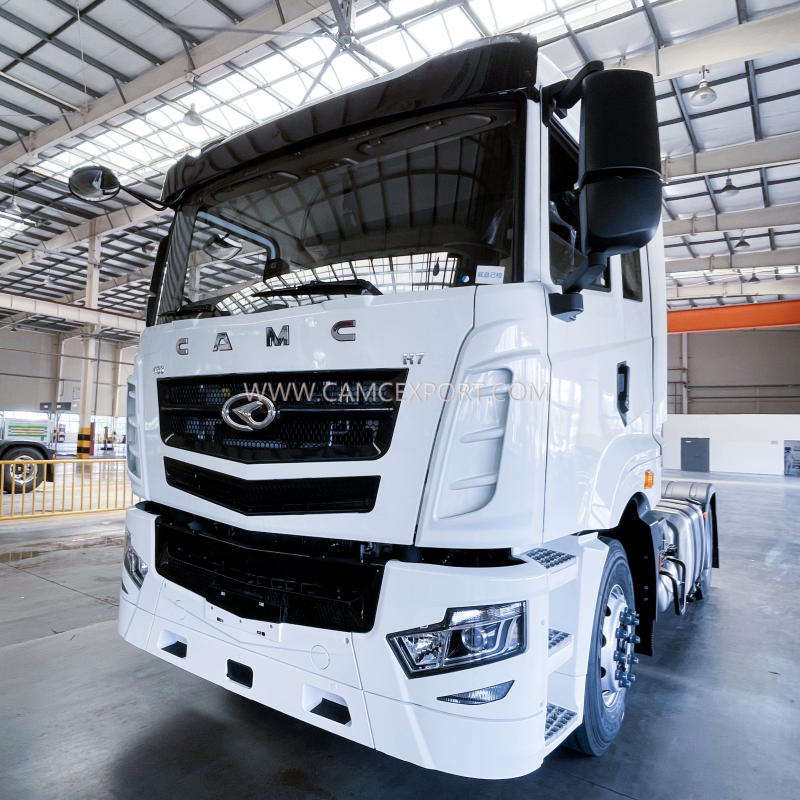
Enclosed trailers present distinct matching challenges based on whether the freight will volume-out or weigh-out. Dry vans hauling lightweight consumer goods typically fill up all available cubic space before reaching maximum weight limits. In these volume-out scenarios, a lighter power unit maximizes efficiency.
Refrigerated trailers introduce complex weight distribution issues. The heavy cooling unit mounted on the front wall significantly increases the kingpin weight. This forces more mass onto the power unit's drive and steer axles. Proper fifth-wheel positioning becomes critical when pulling reefers to prevent overloading the steer axle and causing premature tire wear or steering component failure.
Open-deck trailers handle concentrated loads like steel coils, concrete barriers, and heavy machinery. Unlike dry vans that distribute weight evenly across the floor, flatbeds endure massive point loads. This requires heavy-duty suspensions and appropriate frame ratings on the pulling unit.
When matching equipment for step decks and heavy haul, you must account for the structural demands placed on the chassis. The power unit needs a reinforced frame, higher capacity drive axles, and specialized gearing to initiate movement with extreme payloads. Standard highway specifications will fail rapidly under the stress of heavy haul operations.
Liquid and bulk transport requires specialized equipment matching due to the unique physics of the cargo. Tankers suffer from liquid surge—the violent shifting of fluid during braking and acceleration. They also possess a high center of gravity, making them highly susceptible to rollovers.
Matching a power unit to a tanker requires advanced stability control systems. Electronic stability programs (ESP) and roll stability control (RSC) are non-negotiable safety features. The suspension must be stiff enough to resist body roll while cornering, and the fifth wheel must be perfectly maintained to prevent lateral slop that could exacerbate trailer sway.
Compliance with weight regulations requires a strict understanding of the Federal Bridge Gross Weight Formula. This formula dictates the maximum allowable weight based on the number of axles and the distance between them. It prevents heavy vehicles from overstressing highway bridges by ensuring weight is spread over an adequate distance.
You must calculate axle loadings accurately. A standard tandem-axle setup typically allows 34,000 pounds, while a single steer axle generally handles 12,000 pounds. You must use certified scales to verify that neither the steer, drive, nor trailer axles exceed their legal limits. Sliding the fifth wheel or the trailer tandems allows you to shift weight between axle groups to achieve legal compliance.
Aerodynamic drag consumes a massive portion of a fleet's fuel budget. The tractor-to-trailer gap represents a major source of turbulence. Mismatched cab heights and trailer roofs create a wall of air resistance. Pulling a tall dry van with a flat-roof day cab destroys fuel efficiency.
Properly aligned equipment yields a high return on investment. Aerodynamic fairings, side skirts, and cab extenders only work effectively when the power unit and trailer act as a cohesive aerodynamic shape. Minimizing the gap between the cab and the trailer reduces crosswinds and smooths the airflow over the entire combination.
The operational realities of handling a combination vehicle require understanding tracking differences and tail swing. The trailer wheels do not follow the same path as the steer wheels. They cut the corner tighter, a phenomenon known as off-tracking. Drivers must compensate by steering wide. Significant rear overhang on a trailer creates tail swing, where the rear of the trailer swings outward in the opposite direction of the turn.
Trailer length and cab structure create temporary and permanent blind spots. A longer trailer increases the blind spot on the passenger side during right-hand turns. Proper mirror alignment and the integration of fender-mounted convex mirrors are essential strategies for mitigating these visibility constraints.
Backing a combination vehicle is a complex exercise in geometry and physics. Wheelbase length, trailer overhang, and pivot points dictate the difficulty of backing maneuvers. When steering a diesel tractor truck in reverse, turning the steering wheel left pushes the rear of the power unit right, which in turn pushes the front of the trailer right, causing the rear of the trailer to pivot left.
Executing a 45-degree alley dock requires different spatial awareness than a 90-degree jackknife maneuver. A 45-degree back allows for better visibility in the driver's side mirror and requires less aggressive steering inputs. A 90-degree back forces the driver to lose sight of the rear of the trailer temporarily and demands precise timing to catch the pivot point. Proper setup techniques involve aligning the drive axles with the trailer tandem pivot points before initiating the reverse movement, ensuring a smooth and controlled arc into the loading dock.
Equipment procurement carries significant financial risks if the specifications miss the mark. Under-spec'ing results in frequent breakdowns, premature engine wear, and the inability to pull legal grades at safe speeds. An underpowered engine will run constantly at maximum load, destroying its lifespan and causing catastrophic thermal failures.
Over-spec'ing carries equally damaging financial penalties. Purchasing a 15-liter engine and heavy-duty axles for hauling lightweight foam insulation results in a higher upfront capital cost. It reduces your legal payload capacity due to the heavier tare weight. You burn more fuel to move unnecessary iron, eroding profit margins on every single dispatch.
Standardizing specifications across your fleet allows for seamless interchangeability. In a drop-and-hook operation, any power unit must be able to safely connect to any trailer in the yard. Standardization reduces parts inventory complexity and ensures mechanics can service the equipment efficiently.
You must evaluate the electrical and pneumatic compatibility between older trailers and new power units. Ensure that ABS pigtails provide adequate voltage to modern trailer braking systems. Air line gladhands must seal perfectly, and the air compressor must generate sufficient volume to quickly pressurize the trailer's air tanks. Incompatible connections lead to brake drag, ABS faults, and DOT inspection failures.
Transitioning to a new equipment combination requires dedicated driver familiarization. A driver moving from a standard dry van to a liquid tanker faces a completely different set of physics. Training must focus on altered braking distances, roll stability thresholds, and modified swing clearances.
Incorporate real-world professional driver tips into your safety protocols. Standardize the G.O.A.L. (Get Out And Look) safety system during all coupling and backing operations. Relying solely on mirrors in tight spaces leads to preventable collisions. Stepping out of the cab to visually verify clearances, fifth-wheel jaw engagement, and tandem pin locking remains the most effective risk mitigation strategy available.
Matching a power unit to a semi-trailer is a strict mathematical and operational equation, not a matter of subjective preference or brand loyalty. Ignoring the physics of weight distribution, aerodynamics, and drivetrain capacity leads to unsafe operations and accelerated equipment failure. You must approach procurement with a clear understanding of your specific freight demands.
The shortlisting logic follows a rigid sequence. Define the payload first. Determine the required trailer to move that payload. Calculate the necessary GCWR to remain legally compliant. Finally, spec the powertrain, axle configuration, and cab layout to move that specific combination efficiently.
Take these immediate actions to finalize your equipment matching process:
Consult with OEM engineering teams to verify that your proposed drivetrain specifications align with your intended route topography and GCWR.
Utilize fleet simulation software to model weight distribution and aerodynamic drag before committing to a purchase order.
Conduct physical pilot tests with demo equipment to evaluate turning radiuses and dock clearances at your most restrictive customer locations.
Audit your existing trailer fleet to guarantee electrical and pneumatic compatibility with next-generation power units.
A: A full trailer supports its own weight entirely on its front and rear axles, connecting to the towing vehicle only for pulling force. A semi-trailer lacks front axles and transfers a significant portion of its total weight directly to the power unit via the fifth-wheel coupling.
A: No. Limitations regarding Gross Combination Weight Rating (GCWR), fifth-wheel height, gladhand compatibility, electrical connections, and swing clearance dictate compatibility. Mismatched equipment can lead to structural failure, brake system malfunctions, and severe handling issues.
A: A tandem drive axle setup provides superior traction distribution and increased load-bearing capacity on the drive axles. This configuration is essential for complying with federal bridge laws when moving heavier gross weights and maintaining grip on steep grades.
A: Moving the fifth wheel forward increases weight on the steer axle and shortens the combination length. This alters the pivot point, tightening the turning radius but changing the geometry required for backing, making the trailer react differently to steering inputs.
A: A shorter wheelbase reacts faster to steering inputs, making it highly maneuverable but less forgiving during corrections. A longer wheelbase reacts slower, requiring more physical space to maneuver but offering greater stability and control during 45-degree and 90-degree backing operations.
A: Indicators include premature steer tire wear, frequent clutch or transmission failure, exceptionally poor fuel economy, severe trailer sway at highway speeds, and structural stress cracks appearing on the power unit's frame rails.
A: Subtract the combined tare weight of the power unit and the empty trailer from the manufacturer's Gross Combination Weight Rating (GCWR). The resulting number is your maximum legal payload, provided it does not cause any individual axle to exceed its legal weight limit.


