 English

Views: 0 Author: Site Editor Publish Time: 2026-07-28 Origin: Site


Modern distribution yards operate under intense pressure. Congested spaces, tight turnarounds, and constant pedestrian-to-vehicle proximity mean a single blind spot can result in catastrophic incidents. Operating heavy machinery around moving ground personnel and stacked trailers requires absolute spatial awareness. When operators cannot see their immediate surroundings clearly, the compounding costs become severe. Poor visibility directly causes increased collision rates, damaged trailers, elevated insurance premiums, operator fatigue, and significantly delayed yard throughput. Addressing these hazards requires a fundamental shift in equipment procurement. Cab visibility is not a luxury feature. It serves as a primary technical evaluation criterion when selecting a new unit. Ergonomic design and structural sightlines correlate directly with operational risk mitigation. By prioritizing purpose-built cabs over modified standard trucks, fleet managers drastically reduce accident likelihood while maintaining the rapid pace required in modern logistics hubs.
Purpose-built cab designs with 180-degree sightlines significantly reduce backing and coupling incidents compared to modified standard truck cabs.
Physical visibility features (raised seating, sliding rear doors) must be evaluated alongside supplementary technologies (collision mitigation, backup alarms) for comprehensive safety.
Procurement decisions should weigh the specific layout of the operating yard against the visibility specifications of the dock tractor to ensure alignment with site-specific hazards.
Transitioning to an electric terminal tractor introduces new safety dynamics, such as reduced engine noise, which requires heightened reliance on visual awareness and specialized warning systems.
Establishing baseline metrics for yard safety requires a clear definition of success criteria. High-performing distribution centers aim for zero pedestrian incidents, drastically reduced trailer damage, and sustained or improved turn times. Achieving these metrics is nearly impossible when operators struggle with structural blind spots. Every obstructed view translates directly into operational friction. This slows down the entire supply chain and puts ground personnel at severe physical risk. You cannot manage what you cannot see, and in a yard environment, unseen hazards quickly become expensive accidents.
Maneuvering 53-foot trailers in tight dock configurations involves complex physics and geometry. When an operator initiates a reverse maneuver, the trailer pivots on its rear axles. This instantly creates massive, sweeping blind spots on both the driver and passenger sides. Standard truck cabs are simply not designed to accommodate these extreme articulation angles. The restricted rearward and lateral sightlines obscure ground-level hazards. This leads to a high frequency of backing collisions against dock doors, concrete bollards, and adjacent parked trailers.
Fifth-wheel coupling errors represent another significant collision risk directly tied to poor visibility. If the operator cannot clearly see the kingpin alignment, they risk high-speed coupling impacts. These impacts damage the tractor chassis, the trailer front apron, and the cargo inside. Misaligned coupling attempts also increase the likelihood of dropped trailers. A dropped trailer is a dangerous and time-consuming failure that halts yard operations entirely while recovery crews clear the blockage.
| Collision Type | Primary Visibility Cause | Operational Impact |
|---|---|---|
| Dock Door Strike | Obstructed rearward lateral view during articulation. | Door replacement, trailer door damage, bay downtime. |
| Dropped Trailer | Inability to visually confirm kingpin lock engagement. | Severe cargo damage, landing gear collapse, yard blockage. |
| Pedestrian Incident | Thick A-pillars or high dashboard blocking forward view. | Severe injury, immediate facility shutdown, investigations. |
| Bollard/Infrastructure Swipe | Poor downward visibility from the operator seat. | Tire damage, chassis scraping, infrastructure repair. |
Poor visibility forces operators into a state of constant hesitation. When operators cannot trust their sightlines, they must reduce speed excessively. They frequently exit the cab to perform manual visual checks. Alternatively, they rely heavily on spotters to guide them into position. While safe, these continuous interruptions degrade overall yard throughput. A yard that processes hundreds of trailers daily cannot afford the cumulative time lost to manual spotting and blind-side reversing anxiety.
Optimized cab layouts improve visibility around the trailer, directly counteracting these bottlenecks. When an operator can confidently reverse and couple without leaving the seat, the entire operation accelerates. This efficiency leads to shorter turn times for external carrier drivers waiting at the gate. Faster turn times prevent yard congestion from spilling out onto public access roads, keeping the facility compliant with local traffic ordinances.
Furthermore, the cognitive load on operators who must constantly compensate for structural blind spots leads to severe fatigue. Straining to look around thick pillars, constantly adjusting mirrors, and worrying about unseen pedestrians drains mental energy. By the end of a long shift, this fatigue drastically increases the probability of human error. Providing a clear field of view keeps operators alert and focused on the task at hand.
Evaluating a terminal tractor requires a detailed breakdown of the structural elements that directly influence the operator field of view. These solution categories form the foundation of a safe yard environment. You must look beyond the spec sheet and sit in the seat to understand the practical sightlines.
The necessity of continuous glass paneling cannot be overstated. A purpose-built cab must feature sloped rear windows and the complete elimination of thick B-pillars that typically obstruct over-the-shoulder views. Standard on-highway trucks utilize heavy structural pillars for highway rollover protection. However, in a low-speed yard environment, these pillars create dangerous blind spots that hide pedestrians and infrastructure.
Unobstructed 180-degree rearward visibility provides a distinct advantage during high-frequency reversing maneuvers. Operators can track the trailer rear corners continuously as they back into a tight dock space. This panoramic view allows for immediate course corrections. It prevents the trailer from drifting into adjacent lanes or striking infrastructure. When the operator can see the entire rear arc, they maneuver with confidence and speed.
An elevated operator position fundamentally alters the downward viewing angle. By sitting higher relative to the chassis, the operator gains a superior vantage point. This height is essential for detecting ground-level obstacles, low-profile yard debris, and yard pedestrians who might be walking close to the vehicle front bumper. A standard truck sits too low, hiding anything within ten feet of the grille.
Ergonomic seating adjustments are directly connected to sustained visibility over a 10-hour shift. If a seat lacks proper lumbar support or suspension damping, the operator will inevitably slouch. They will shift out of the optimal viewing position to relieve back pain. Maintaining the correct eye level relative to the window glass is required for maximizing the designed sightlines of the cab. Air-ride seats with multiple adjustment points keep the operator locked into the correct visual plane.
Sliding rear doors offer dual utility that significantly enhances both safety and efficiency. First, they allow a direct, unobstructed line-of-sight to the fifth wheel and the trailer air lines. The operator can visually confirm the kingpin lock without straining, guessing, or relying on a secondary spotter. This direct visual confirmation is the best defense against dropped trailers.
Second, sliding doors enable safe, rapid egress onto the rear platform. In a standard truck, opening a hinged door swings it outward. This potentially swings into the path of passing yard traffic or adjacent trailers. A sliding door remains flush with the cab. It allows the operator to step out safely to connect gladhands and electrical lines without creating a new collision hazard. This simple mechanical design saves seconds on every hookup and prevents door-strike accidents.
Physical cab design provides the foundation. However, modern yard safety requires assessing how active and passive technologies integrate to create a holistic safety envelope around the vehicle. Technology should enhance the operator view, not replace their physical checks.
The integration of radar and lidar-based collision mitigation systems with in-cab displays provides a critical secondary layer of defense. These systems actively scan the environment for obstacles that might fall outside the operator visual range. They provide audible and visual warnings before an impact occurs. In highly congested yards, these sensors detect movement that a busy operator might miss in their mirrors.
Directional backup alarms play a vital role in busy yards. Ambient noise from idling engines, heavy machinery, and loading dock operations can easily mask traditional alarms. Directional alarms focus the sound wave directly behind the reversing vehicle. This alerts ground personnel exactly where the danger lies. These systems complement the operator visual checks to maximize fleet uptime by preventing minor collisions that require taking the vehicle out of service for repairs.
Deploying 360-degree camera systems and blind-spot monitors gives operators a bird-eye view of their surroundings. These monitors stitch together multiple camera feeds to eliminate blind spots along the sides and front of the tractor. When backing a 53-foot trailer into a dark warehouse bay, these cameras provide essential spatial context.
However, technology supplements, rather than replaces, physical cab visibility. Cameras have distinct limitations. Lens fouling from rain, snow, or yard mud can render a camera useless in minutes. Monitor glare from direct sunlight can also obscure the screen. Therefore, operators must always prioritize direct visual confirmation through the cab glass.
Integrating cab visibility with reliable spotter systems remains essential. Facilities must establish standardized hand signals and utilize two-way radio headsets. This maintains clear communications between the operator and the ground spotter. It ensures that blind-side maneuvers are executed flawlessly, even when camera systems are compromised by weather.
Operating during night shifts or in inclement weather demands robust lighting upgrades. High-output LED work lights, powerful headlights, and flashing amber warning lights are absolute necessities. LED work lights mounted on the rear of the cab illuminate the trailer connection points and the reversing path. They cut through darkness and heavy rain, allowing the operator to see the dock bumpers clearly.
Strategic placement of reflective tape on the dock tractor ensures it remains highly visible to other yard traffic. Outlining the cab structure and the rear chassis with DOT-approved reflective material helps approaching vehicles gauge the tractor size and orientation from a distance. This passive visibility measure prevents intersection collisions within the yard grid.
| Feature Category | Specific Component | Primary Safety Benefit | Limitations |
|---|---|---|---|
| Physical Design | 180-Degree Rear Windows | Unobstructed view of trailer corners during reversing. | Requires regular cleaning to maintain clarity. |
| Physical Design | Sliding Rear Door | Safe egress; direct line-of-sight to fifth wheel. | Mechanical tracks require lubrication and maintenance. |
| Supplementary Tech | 360-Degree Cameras | Eliminates lateral and forward blind spots. | Susceptible to lens fouling and monitor glare. |
| Supplementary Tech | Radar Collision Mitigation | Active warning of unseen obstacles. | Can trigger false positives in highly congested areas. |
Shifting from internal combustion engines to electric powertrains alters the safety and visibility landscape significantly. Fleet managers must analyze these conceptual trade-offs carefully before deploying new assets into an active yard.
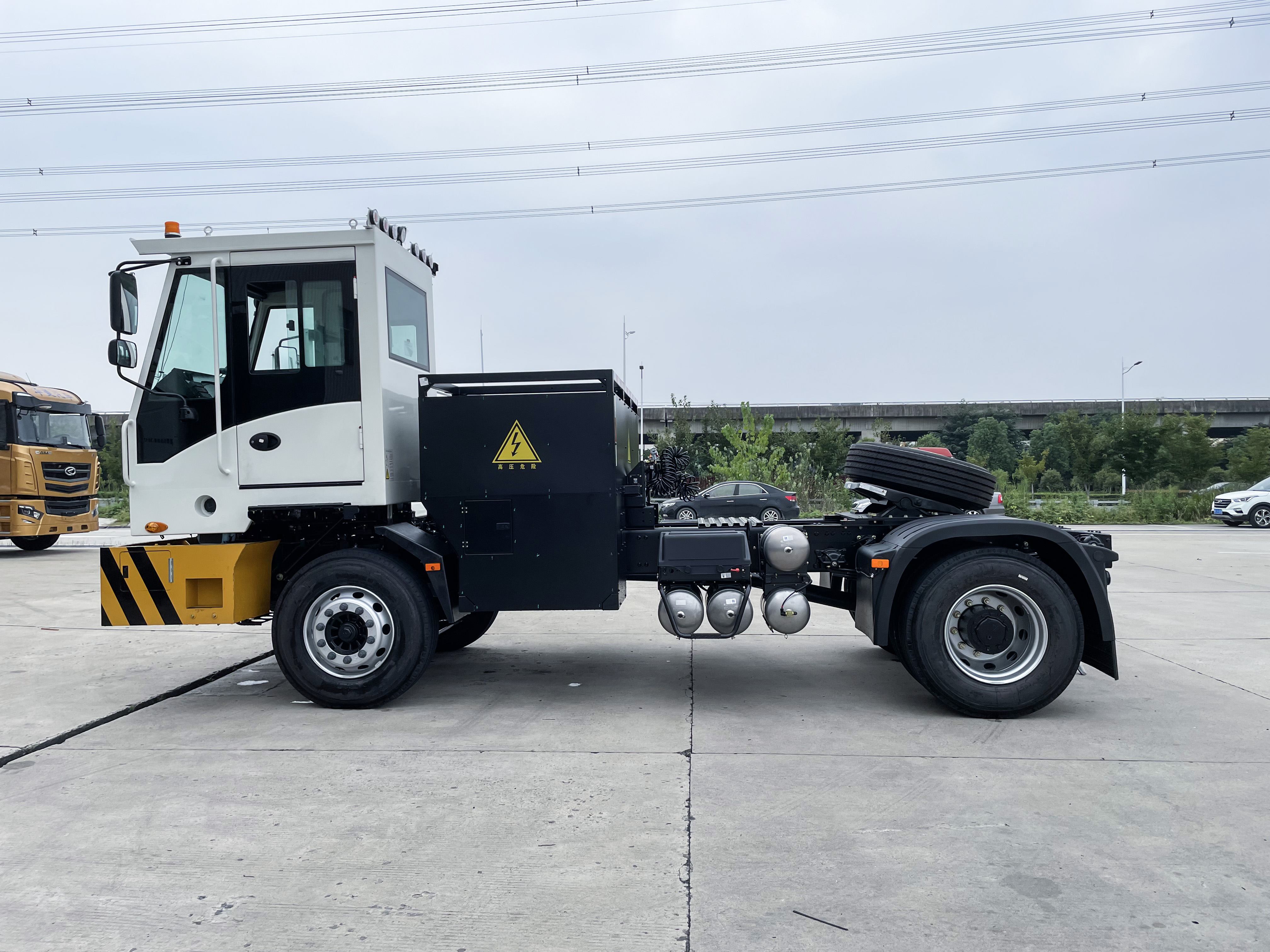
When evaluating an electric terminal tractor, you must investigate whether battery placement and high-voltage component routing impact the overall cab height, window placement, or operator sightlines. In some retrofitted designs, large battery packs mounted behind the cab can obstruct the lower portion of the rear window. This reduces the visibility of the fifth wheel and gladhands. Purpose-built EV models integrate the batteries low in the chassis to maintain the identical 180-degree sightlines found in diesel models. This ensures that the transition to zero emissions does not compromise operational safety.
The most significant safety trade-off of EV noise reduction is the removal of auditory warnings. A silent cab improves operator communication via radio and drastically reduces fatigue. However, it removes the loud engine rumble that traditionally warns yard workers of an approaching vehicle. Ground personnel rely heavily on engine noise to track vehicle movements subconsciously.
This silent operation makes physical cab visibility and automated pedestrian warning systems even more critical. EV models must be equipped with acoustic vehicle alerting systems (AVAS) that emit a synthetic sound at low speeds to warn pedestrians. Operators must rely heavily on their sweeping visual checks. Ground personnel may not hear the vehicle backing into a dock space, making the operator eyes the only line of defense.
Procuring equipment with excellent visibility features is only the first step. Addressing the practical challenges of maintaining these features and ensuring operator safety during service is vital for long-term success. A dirty window negates the best cab design.
Introducing a new vehicle requires comprehensive training. Operators accustomed to standard trucks must adapt to different spatial dimensions, larger glass surfaces, and advanced camera systems. Training programs must emphasize the correct usage of the sliding rear door. They must also cover the proper adjustment of the air-ride seat to maximize the downward viewing angle. If the seat is too low, the operator loses the advantage of the raised cab.
Facilities must also address the risk of screen fixation. Operators may begin to rely too heavily on interior monitors rather than utilizing their physical sightlines. Training must reinforce that cameras are supplementary tools. Turning the head to look through the 180-degree rear window remains the primary method for safe reversing. Simulators or controlled yard exercises help break the habit of staring at the dashboard.
Visibility components require rigorous maintenance protocols. Wiper system reliability is paramount. A failed wiper motor during a rainstorm instantly blinds the operator, forcing a work stoppage. Maintenance teams must ensure mirrors are tightly secured and easily adjustable. Keeping the extensive glass surfaces clear of yard debris, grease, and mud is a daily operational requirement. This necessitates readily available cleaning supplies at the fueling or charging stations.
Mechanical work on these specialized vehicles demands strict protocols. Maintenance staff must ensure the cabover is fully locked down during normal operations. This prevents the cab from shifting or unlatching during tight maneuvers or hard braking.
Require the safety bar to be securely propped whenever the cab is tilted forward for wiper motor, defrosting unit, or electrical wiring inspections.
Establish clear rules against placing any part of the body under a raised fifth wheel unless approved safety blocks or jack stands are properly positioned.
Mandate daily pre-trip inspections focusing specifically on the functionality of backup alarms, camera lenses, and all exterior lighting.
Verify that all reflective tape is clean and intact during weekly preventive maintenance checks.
Superior cab visibility remains a non-negotiable requirement for mitigating risk and maintaining efficiency in high-volume distribution yards. Relying on modified road trucks introduces severe blind spots that directly cause collisions, slow down throughput, and endanger ground personnel. Purpose-built designs with 180-degree sightlines, raised seating, and sliding rear doors provide the structural foundation for a safe operation. Supplementary technologies like radar and 360-degree cameras offer critical secondary protection.
Schedule a comprehensive site audit to map out high-risk blind spot zones in your current yard layout.
Request an on-site demo of specific purpose-built models to test 180-degree visibility under real working conditions.
Consult with a fleet safety specialist to integrate new camera systems and spotter protocols into your daily operations.
Implement a daily glass and camera lens cleaning protocol at all fueling and charging stations.
A: They feature purpose-built designs including off-center cabs, sliding rear doors, and 180-degree rear windows. These elements eliminate thick B-pillars and provide operators with an unobstructed, panoramic view of the trailer corners and the fifth wheel during tight reversing maneuvers.
A: The most critical features include 180-degree structural visibility, ROPS/FOPS certified cabs for rollover protection, radar-based collision mitigation systems, and ergonomic sliding rear doors that allow safe egress without swinging into traffic.
A: Yes. Because electric models lack traditional engine noise, ground personnel cannot hear them approaching. This requires an increased reliance on the operator visual awareness, 360-degree cameras, and the mandatory use of acoustic vehicle alerting systems (AVAS) to warn pedestrians.
A: Sliding rear doors allow operators to step directly onto the rear platform to connect air lines and electrical cables rapidly. This eliminates the time wasted navigating around a swinging door and removes the hazard of hitting adjacent trailers or passing yard traffic.
A: The best approach combines an optimized cab design featuring continuous rear glass with 360-degree camera systems. Additionally, utilizing proper high-output LED yard lighting and enforcing strict spotter protocols with radio communication ensures complete spatial awareness.


