 English

Views: 0 Author: Site Editor Publish Time: 2026-07-26 Origin: Site


Hauling high-density materials leaves zero room for error. Minor miscalculations in load placement exponentially increase the risk of catastrophic rollovers, especially when the bed is elevated. Operators face immense pressure to move maximum tonnage efficiently while navigating unpredictable job site terrain. A perfectly balanced load on flat pavement can quickly become a deadly hazard on a five-degree lateral slope. Understanding how weight interacts with vehicle geometry is a strict requirement in heavy civil construction and aggregate transport.
Improper load distribution accelerates vehicle wear, violates axle weight compliance, increases liability, and causes severe operational downtime. Fleet managers and operators must balance maximum payload efficiency with strict safety margins. When a steering axle lacks sufficient weight, the driver loses directional control. Overloading the rear tandems destroys suspension components and drastically increases the likelihood of tire blowouts.
Moving beyond basic fill-the-box mentalities requires a technical understanding of center of gravity, material behavior, and specific axle configurations to engineer a stable load from the excavator bucket to the dump site. Operators must treat the cargo box as a dynamic environment where physics dictates safety.
Center of Gravity (CoG) is the primary stability metric: Keeping the heaviest materials low and centered prevents lateral shifts during transit and dumping.
Axle configuration dictates loading strategy: The distribution parameters for a 6x4 dump truck differ significantly from an 8x4 dump truck due to wheelbase and load-bearing capacities.
Material type alters distribution rules: Flowable aggregates require different leveling techniques compared to asymmetrical demolition debris to prevent unpredictable weight shifts.
Dumping is the highest-risk phase: Even perfectly distributed loads can cause rollovers if unloaded on uneven, uncompacted, or sloped ground.
Defining what constitutes a stable load requires analyzing vehicle handling, braking distance, and rollover thresholds. A stable load allows the suspension system to articulate as designed without bottoming out or transferring excessive lateral force to the chassis. When a dump truck corners, centrifugal force pushes the weight outward. If the load is properly distributed, the tires maintain maximum contact patches with the road surface, ensuring predictable steering and optimal braking performance. Success is measured by the vehicle's ability to remain planted during emergency maneuvers and maintain equilibrium during the critical discharge phase.
Vertical and horizontal center of gravity shifts directly affect the truck's suspension and tire adhesion. The CoG is the precise point where the total weight of the vehicle and its payload is evenly balanced. Lowering this point drastically improves stability. When dense materials are piled too high, the vertical CoG rises, creating a pendulum effect during cornering. This lateral weight transfer compresses the suspension on the outside of the turn while lifting the inside tires, drastically reducing traction and increasing rollover risk.
The mathematical relationship between bed height, load weight, and lateral stability dictates operational limits. As the dump box raises, the CoG shifts rearward and upward along an arc. A load that is perfectly stable during transit becomes highly precarious at a 45-degree dump angle. If the material sticks to the upper portion of the raised bed rather than flowing out smoothly, the CoG remains dangerously high. Even a one-degree lateral slope on the ground can shift the CoG outside the vehicle's track width, resulting in an immediate and unavoidable rollover.
Understanding the seesaw effect is mandatory for safe loading. The fulcrum of this seesaw is typically the rear drive axles. Weight placed too far forward overloads the steering axle, making the wheel heavy and unresponsive while increasing the risk of front tire blowouts. Conversely, weight placed too far rearward behind the drive axles lifts the front end. This loss of steering axle traction eliminates the driver's ability to turn effectively and severely compromises braking power, as the front brakes handle a significant portion of the vehicle's stopping force.
Bridge formula compliance has a direct correlation to safe load distribution. Federal and local regulations dictate how much weight can be carried based on the distance between axles. These laws exist to protect highway infrastructure, but they also serve as a structural guideline for the vehicle itself. Spreading the payload across a longer wheelbase reduces the concentrated stress on the chassis frame rails and suspension pivot points. Operators must load the box to satisfy these legal weight distribution formulas, which inherently promotes a safer, more balanced vehicle.
Axle configurations dictate the physical tolerance limits for front-to-rear distribution errors. A standard three-axle configuration has a relatively narrow margin for error compared to a four-axle setup. The distance from the cab shield to the tailgate determines where the bulk of the material must sit. Misjudging the drop zone by just a few feet can shift thousands of pounds off the intended axle group, leading to immediate handling degradation and potential structural failure over rough terrain.
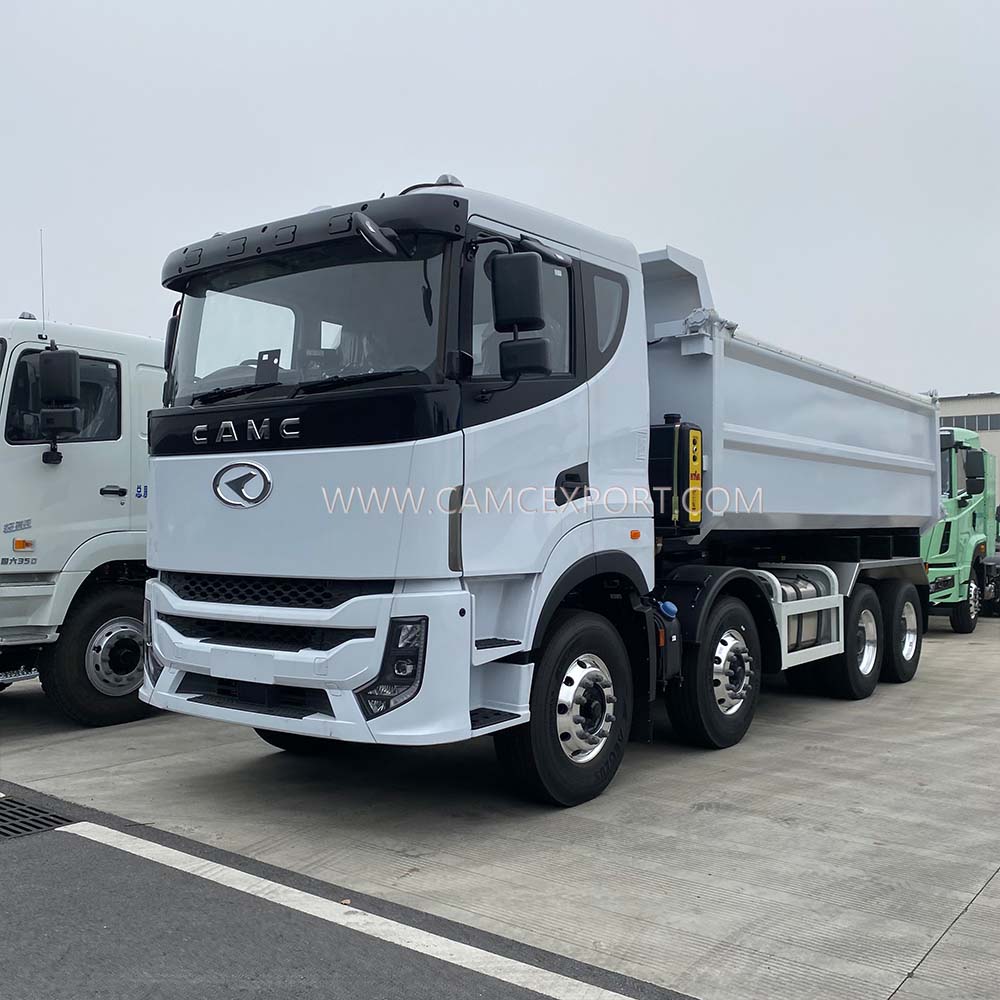
Establishing a low CoG requires mandating that the densest, heaviest materials are loaded first. When hauling mixed loads, operators must instruct the loader to place concrete chunks, wet dirt, or large boulders flat on the floor of the bed. This foundational layer anchors the vehicle to the road. Lighter materials, such as dry topsoil, brush, or loose gravel, should then be layered on top. This bottom-heavy approach ensures the suspension geometry remains stable and the vehicle resists lateral forces during transit.
The risks of top-heavy loading become immediately apparent during cornering and evasive maneuvers. If a loader operator dumps light debris first and caps it with heavy clay, the vehicle becomes top-heavy. The suspension will lean aggressively in curves, and the driver will feel the truck pushing through turns. This instability accelerates tire wear on the outer edges and significantly increases the risk of a rollover if the driver is forced to swerve to avoid an obstacle.
Targeting the optimal weight split between the steer axle and the drive or tandem axles is a daily operational requirement. The general rule is to center the heaviest portion of the payload slightly forward of the rear axle group, ensuring enough weight transfers to the steer axle to maintain directional control. Loader operators should begin dumping in the center of the box, then adjust subsequent buckets slightly forward or backward based on the material's slump and the specific truck's wheelbase.
Avoiding rear-heavy loads is paramount. When material is piled against the tailgate, it creates a cantilever effect that lifts the front wheels. This reduces steering control and braking efficacy to dangerous levels. Drivers experiencing a rear-heavy load will notice the steering wheel feels excessively light, and the truck may wander within its lane. In wet or icy conditions, a rear-heavy truck will understeer severely, plowing straight ahead regardless of steering input.
Techniques for ensuring symmetrical lateral distribution are vital to prevent uneven tire wear and suspension fatigue. The loader must approach the truck squarely and drop the material directly over the centerline of the box. If the material favors the driver or passenger side, it places constant, unequal stress on the leaf springs, walking beams, or air bags. Over time, this asymmetrical loading causes premature failure of suspension bushings and leads to uneven tread wear on dual tires.
The dangers of off-center loading compound when navigating steep inclines or crowned roads. Most rural highways and haul roads feature a crown to shed water, meaning the truck is already leaning slightly to the right. If the load is also biased to the right side, the combined shift in the CoG pushes the vehicle closer to its tipping point. Drivers must visually inspect the load from the rear before leaving the site to ensure the material is perfectly level from left to right.
The physical contact between the load and the steel or aluminum bed liner affects sliding thresholds during transport. Smooth aluminum beds offer less friction than scarred steel beds, meaning materials like dry sand or smooth river rock are more prone to shifting. Operators must understand how their specific bed material interacts with the cargo. Applying heat to the bed via exhaust routing can prevent wet materials from freezing, but it can also alter the friction coefficient of certain aggregates.
Preventing premature longitudinal shifting during sudden deceleration or steep uphill climbs requires proper leveling. If a load is piled in a steep cone rather than leveled out, a hard brake application will cause the top of the cone to avalanche forward against the cab shield. Accelerating up a steep grade can cause loose material to spill over the tailgate. Leveling the load with the excavator bucket before transit maximizes the surface area contact with the bed, increasing overall friction and stability.
| Material Type | Friction Level on Steel | Slump Potential | Loading Strategy |
|---|---|---|---|
| Dry Sand | Low | High | Level flat, tarp immediately |
| Wet Clay | High (Sticky) | Low | Load center, monitor for bed hang-up |
| Riprap / Boulders | Medium | Low | Use dirt cushion, interlock pieces |
| Hot Mix Asphalt | Medium | High | Distribute evenly, maintain heat |
The standard tandem drive setup on a 6x4 dump truck handles weight transfer through a robust rear suspension system, typically utilizing walking beams or heavy-duty leaf springs. This configuration relies on the tandem axles to carry the vast majority of the payload. Because there are only three axles total, the load must be precisely centered to avoid overloading the rear group while keeping enough weight on the single steer axle. The suspension is designed to articulate over uneven terrain, keeping all four rear duals in contact with the ground.
Shorter wheelbases offer better maneuverability in tight urban job sites but require tighter adherence to front-to-back load centering. With less distance between the steer and drive axles, any misplaced weight has an exaggerated effect on handling. Operators using this configuration must ensure the loader operator does not dump too far rearward, as the shorter frame lacks the leverage to counteract a heavy tailgate load. The primary advantage remains its tight turning radius and agility in confined spaces.
The addition of twin steer axles or drop axles fundamentally changes the load distribution equation for an 8x4 dump truck. By incorporating a second steering axle or a load-bearing lift axle, the vehicle can legally and safely carry significantly more weight. The twin steer setup distributes the front-end load across four tires instead of two, drastically improving steering response, braking capacity, and front-end stability when hauling maximum payloads. This configuration allows for a more forgiving load placement, as the extra axle absorbs discrepancies in front-to-back distribution.
Distributing weight across a longer wheelbase allows for higher overall payloads while maintaining strict axle weight compliance. The extended frame provides a larger footprint, inherently lowering the vehicle's susceptibility to lateral weight shifts. When loading, operators can spread the material over a longer horizontal plane, keeping the vertical CoG lower than it would be in a shorter box carrying the same volume. This extended distribution is necessary for highway hauling where bridge laws strictly govern axle weights.
Balancing the nimbleness of a three-axle setup against the superior weight distribution and payload capacity of a four-axle setup depends entirely on site conditions. A shorter truck excels in residential construction, narrow logging roads, and sites requiring tight reversing maneuvers. It sacrifices total payload capacity. The larger four-axle configuration dominates in high-volume aggregate hauling, highway paving projects, and mass excavation, where maximizing tonnage per trip is required, and the sites offer adequate space for wider turning circles.
Managing the slump factor is a daily requirement when hauling flowable materials. Sand, pea gravel, and hot mix asphalt will naturally settle and spread during transit due to road vibration. If loaded in a single, high peak, the material will slump outward, potentially spilling over the sides or pushing against the tailgate. Loaders should distribute flowable aggregates in multiple smaller drops along the length of the box, creating a uniform, flat profile that minimizes shifting during acceleration and braking.
Techniques for crowning and tarping maintain load integrity and prevent wind-induced shifting. While the load should be generally flat, a slight crown in the center helps shed water if it rains. An automated tarping system must be deployed tightly over aggregates. Wind shear at highway speeds can easily blow sand or small gravel out of the bed, creating hazards for trailing vehicles and altering the load distribution. A secured tarp acts as a physical barrier, keeping the material compacted and in place.
The necessity of a sand or dirt cushion cannot be overstated when hauling large, irregular items. Dropping a three-ton boulder directly onto a bare metal floor will dent the bed, damage the subframe, and shock the suspension. Operators must first lay a thick bed of sand or loose dirt to absorb the impact. This cushion also prevents large rocks from sliding freely across the slick metal surface during transit, locking them into place and stabilizing the overall load.
Interlocking techniques prevent boulders and demolition debris from rolling against the tailgate. When loading riprap or concrete slabs, the excavator operator must carefully puzzle the pieces together, ensuring heavy items are wedged securely against one another. The heaviest pieces should be placed directly over the axles, never at the extreme rear. If a massive boulder rolls backward and slams into the tailgate during an uphill climb, the sudden weight shift can lift the front wheels off the ground.
Accounting for the drastic weight increase and shifting properties of saturated materials requires extreme caution. Wet clay, sludge, or saturated topsoil weighs significantly more per cubic yard than its dry counterpart. Operators must reduce the total volume loaded to avoid exceeding gross vehicle weight ratings. Wet materials act like a liquid in the box, sloshing side to side during cornering. This dynamic weight transfer severely destabilizes the truck, requiring drivers to reduce cornering speeds drastically.
Managing the suction effect is the most dangerous aspect of hauling wet materials. Saturated clay or freezing mud can stick to the upper half of the raised bed during unloading. As the bed raises, the material refuses to slide, keeping tons of weight suspended high in the air. This massive shift in the CoG will cause the truck to roll over instantly if the ground is not perfectly level. Operators must ensure bed vibrators are functioning, utilize bed liners, or manually clean the box to prevent material hang-ups.
Methods for securing palletized building products or utility supplies within a dump box require specific tie-down protocols. While dump boxes are designed for loose bulk, they are frequently used to transport pallets of block, sod, or equipment. These items must be loaded tightly against the front cab shield to prevent forward movement during braking. Weight must be distributed evenly left to right, ensuring the pallets do not create an asymmetrical load that impacts suspension dynamics.
The necessity of heavy strap tie-downs and edge protection prevents cargo from sliding on slick metal beds. Unlike flatbeds, dump boxes lack standard rub rails. Operators must utilize internal D-rings or secure straps over the top of the box, using edge protectors to prevent the metal rails from severing the straps. Unsecured pallets will slide backward during acceleration, violently striking the tailgate and causing severe damage and instantaneous weight shifts.
A load perfectly distributed for transit becomes highly unstable when the bed is raised to a 45-degree angle. The hoist cylinder pushes the weight upward, drastically raising the center of gravity. At full extension, the truck is essentially balancing a massive weight on a narrow pivot point. Any lateral force from wind, uneven ground, or sticking material will overcome the vehicle's track width and cause a rollover. The suspension must be fully deflated to create a rigid, stable platform before the PTO is engaged.
The absolute requirement for level, compacted ground during the dumping phase cannot be compromised. Operators must never dump on a side slope. If the job site is uneven, the driver must reposition the truck or request a dozer to level the dumping area. When backing up to an edge or a stockpile, both sets of rear duals must be on equally firm ground. If one side sinks into soft mud while the bed is raised, the truck will twist and capsize within seconds.
Rough haul roads, washboard surfaces, deep ruts, and steep site access inclines amplify minor load imbalances. A load that is slightly off-center will cause the truck to bounce violently over washboard roads, destroying shock absorbers and fatiguing the frame. Deep ruts can force the truck into an aggressive lean, testing the limits of the load's lateral stability. Drivers must actively read the terrain and adjust their path to keep the chassis as level as possible.
Best practice speeds and cornering protocols for heavily loaded vehicles in off-road environments dictate a slow, methodical approach. Momentum is the enemy of stability on uneven ground. Drivers must approach corners at a crawl, allowing the suspension to articulate without transferring violent lateral forces to the chassis. When descending steep grades, engine brakes must be utilized to maintain control without overheating the service brakes, ensuring the load does not shift forward aggressively.
Establishing clear communication protocols between the driver and the excavator or wheel loader operator ensures sequential, centered loading. The driver is ultimately responsible for the load, but the loader operator controls the placement. Fleets should implement standardized hand signals or utilize CB radios to direct the loading process. The driver must instruct the loader on exactly where to place the first bucket and when to adjust front-to-back distribution based on the truck's specific suspension feedback.
Driver positions the truck on flat ground and applies the parking brake.
Loader operator places the first bucket of heavy material flat on the bed floor.
Driver verifies the lateral balance in the mirrors.
Loader operator distributes remaining material evenly, avoiding the extreme rear.
Driver performs a final visual inspection to ensure the load is level and secure.
Pre-trip protocols for inspecting tailgate locks, tensioning mechanisms, and tarping systems prevent shifting or accidental cargo discharge. A failed tailgate latch can release tons of material onto the highway, causing catastrophic accidents. Drivers must physically inspect the locking pins and air cylinders before leaving the loading site. The hinges must be greased, and the sealing edges must be clear of debris to ensure the tailgate closes flush and locks securely.
The role of onboard payload scales, inclinometers, and stability monitoring systems provides real-time feedback to operators. Modern onboard scales measure suspension pressure to provide accurate weight distribution data across all axle groups, eliminating the guesswork of loading. Inclinometers mounted on the dashboard alert the driver if the chassis is sitting at an unsafe lateral angle before the bed is raised. These technologies serve as a fail-safe, preventing human error from escalating into a rollover event.
Proper load distribution is the foundational requirement for dump truck safety, directly dictating the vehicle's operational lifespan and rollover resistance. Ignoring the physics of weight transfer leads to accelerated mechanical wear, severe handling deficiencies, and catastrophic accidents during the unloading phase. By treating load placement as a precise engineering task, fleets protect their drivers, their equipment, and their bottom line.
When evaluating fleet expansion, match the truck configuration strictly to the density of the materials hauled and the spatial constraints of the job sites. A three-axle setup provides the agility needed for tight urban environments, while a four-axle setup delivers the payload capacity and wheelbase stability required for heavy highway hauling. Selecting the right geometry for the specific application inherently improves load distribution and overall safety margins.
Implement mandatory operator training on material-specific loading sequences immediately.
Audit current fleet axle configurations to ensure they align with the primary materials being transported.
Integrate onboard inclinometers and payload scales across the fleet to remove the guesswork from load distribution.
Establish strict site-leveling protocols for all dumping zones.
A: The optimal distribution centers the heaviest portion of the payload slightly forward of the rear axle group. This ensures the drive axles carry the bulk of the weight while transferring enough mass to the steering axle to maintain positive directional control and braking efficiency without overloading the front suspension.
A: The 8x4 configuration features an extended wheelbase and an additional steering or lift axle. This spreads the payload over a larger footprint, lowering the vertical center of gravity and providing superior lateral stability. The extra axle also absorbs front-to-back loading discrepancies better than a shorter three-axle setup.
A: As the bed raises, the center of gravity shifts dramatically upward and backward. If the ground is uneven, soft, or sloped, or if sticky material hangs up in the top of the raised bed, the vehicle's lateral balance is destroyed, causing it to tip over the rear pivot points.
A: The heaviest, densest materials must always be loaded first, flat on the floor of the bed. This establishes a low center of gravity. Placing heavy items on top of lighter materials makes the truck top-heavy, drastically increasing sway and rollover risk during cornering.
A: Reduce the total load volume to account for the increased weight of saturated materials. Use bed liners or heated boxes to prevent freezing and sticking. Always ensure the truck is on perfectly level, compacted ground before dumping, and use bed vibrators to encourage smooth, even material flow.
A: Lift axles allow operators to distribute heavy payloads across more tires and a longer wheelbase, ensuring compliance with bridge laws. When lowered, they bear a portion of the load, reducing stress on the drive axles and improving overall vehicle stability during transit.
A: Palletized cargo must be loaded tightly against the front cab shield to prevent forward shifting. Use heavy-duty ratchet straps secured to internal D-rings or routed over the top rails with edge protectors. Never rely on friction alone to hold pallets on a slick metal bed.


