 English

Views: 0 Author: Site Editor Publish Time: 2026-07-28 Origin: Site


Premature tire degradation drains budgets in high-cycle distribution yards, intermodal terminals, and ports. Uneven tire wear rarely happens as a standalone defect. It acts as a lagging indicator of underlying mechanical misalignment, improper operational practices, or failing suspension components that drive up expenses for fleet operators. Ignoring these wear patterns leads to frequent blowouts, compromised handling, and excessive downtime. Technicians must look past the rubber and inspect the steering geometry, suspension health, and yard conditions. We provide a systematic framework below for fleet managers and diesel technicians to diagnose specific wear patterns quickly. By identifying the root causes, maintenance teams can implement preventative maintenance protocols that maximize equipment uptime and keep operations running smoothly. This guide breaks down the exact mechanical and operational faults destroying your tires and outlines how to fix them.
Alignment is the Primary Culprit: Misaligned toe angles and worn kingpins account for the majority of rapid, asymmetrical steer tire wear.
Inflation Dictates Footprint: Overinflation and underinflation create distinct center or edge wear patterns, exacerbated by the heavy, fluctuating loads of yard operations.
Pattern Recognition Drives Diagnosis: Identifying specific irregularities—such as cupping, feathering, or one-sided shoulder wear—allows maintenance teams to pinpoint exact component failures.
Trailer Alignment Impacts the Tractor: "Dog-tracking" caused by pulling misaligned container chassis or trailers forces the tractor to steer off-center, wearing out steer tires prematurely.
Modern Fleet Alternatives: Upgrading to an electric terminal tractor alters vehicle weight distribution and reduces certain mechanical stress points, though strict tire management remains critical.
Operations demand reliable equipment performance. A standard dock tractor running two-shift or three-shift schedules needs durable rubber to maintain continuous container movement. Baseline expectations dictate consistent tread life across all axles, but yard environments punish tires relentlessly. Technicians must monitor wear rates closely using calibrated tread depth gauges. Unpredictable degradation disrupts logistics workflows and forces trucks into the shop outside of scheduled maintenance windows. Fleets require predictable maintenance intervals to keep the yard fluid. Achieving optimal tire lifespan determines overall yard efficiency and directly impacts the bottom line.
When a tire wears unevenly, the usable life of the casing drops drastically. A tire designed to last thousands of hours might need replacement in a fraction of that time if the steer axle is out of alignment. Maintenance teams must establish a baseline for acceptable wear based on their specific yard surface, average load weights, and shift lengths. Tracking these metrics allows managers to spot anomalies early and pull a truck for alignment before the tire is completely destroyed.
Frequent replacements drain maintenance budgets rapidly. Hard costs accumulate from purchasing new tires constantly, but the hidden costs often hit harder. Labor hours spent swapping tires reduce shop productivity, pulling mechanics away from critical engine or transmission work. Equipment downtime halts container movement, causing bottlenecks at the loading docks or railheads. Preventative alignment saves money long-term by maximizing the lifespan of every tire in the fleet. Routine suspension maintenance prevents catastrophic failures that could sideline a truck for days.
Consider the workflow disruption when a tire blows out mid-shift due to severe shoulder wear. The operator must stop, wait for a service truck, and potentially block a high-traffic lane. The cost of that lost productivity far exceeds the price of the tire itself. Proactive care extends usable tread life significantly and keeps the trucks moving containers instead of sitting on jack stands.
Compromised tread depth introduces severe operational hazards. Reduced braking efficacy threatens yard personnel and other equipment. Jackknife risks increase exponentially on wet yard surfaces when drive tires lack the necessary bite to control a heavy trailer. Heavy loads require maximum traction, especially when navigating steep ramps or uneven dock plates. Unionized port environments enforce strict regulatory compliance regarding equipment safety.
Safety inspectors penalize fleets operating unsafe vehicles, and a bald steer tire is an immediate red flag. Maintaining proper tread depth ensures safe stopping distances and predictable handling. Operators rely on the steering feedback to maneuver 80,000-pound loads in tight spaces. When uneven wear alters the contact patch, the truck becomes unpredictable, increasing the likelihood of collisions or dropped trailers.
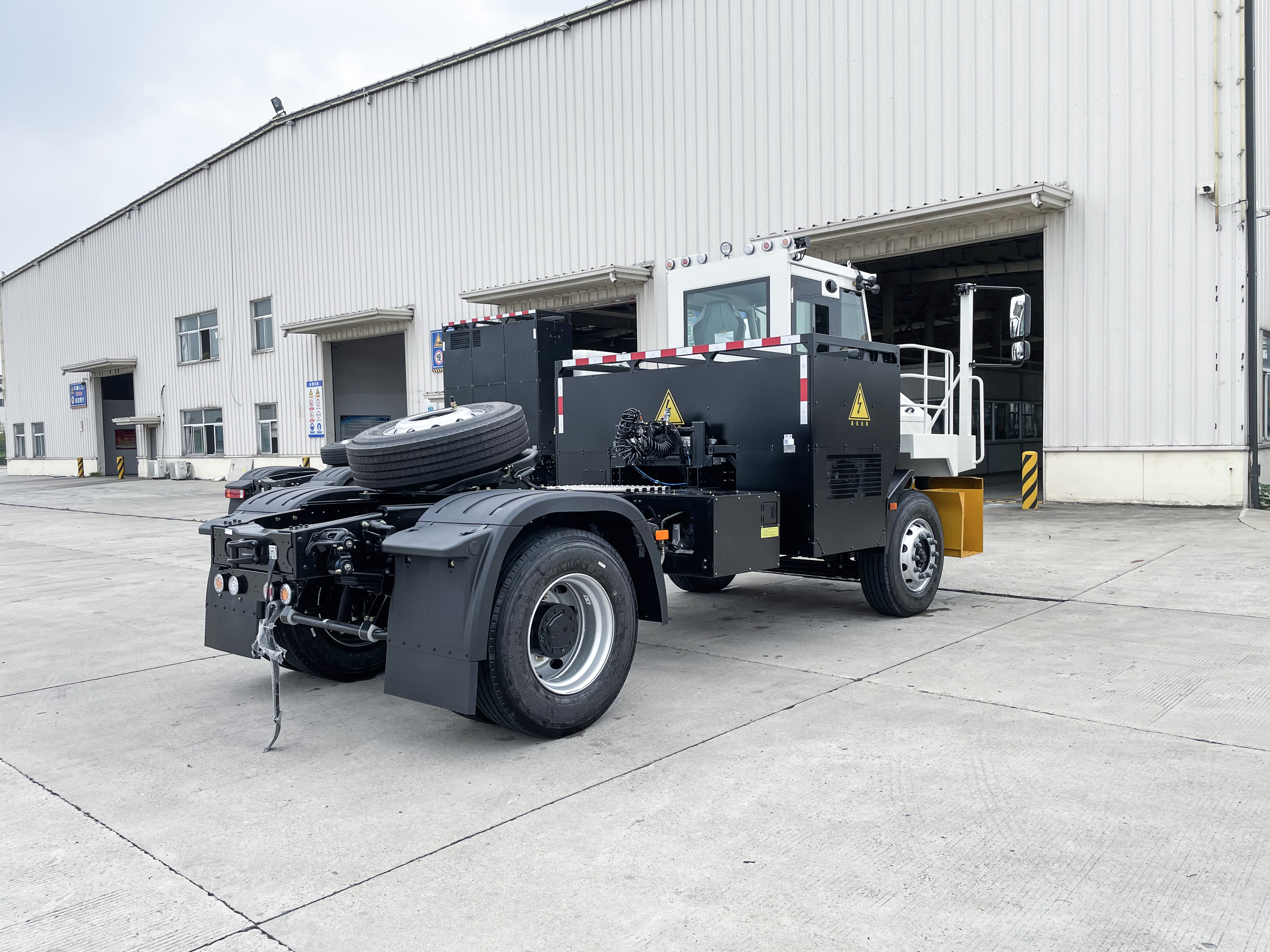
Toe-in and toe-out conditions destroy tread blocks faster than any other alignment issue. Improper toe angles cause feathering across the tire face, where the tread ribs wear smoothly in one direction and feel sharp when you rub your hand across them in the opposite direction. Camber and caster angles dictate the vertical alignment and steering pivot points. Improper adjustments here lead to smooth, one-sided shoulder wear, as the tire leans too far inward or outward while rolling.
The tractor-trailer tracking interface presents unique challenges in yard operations. Pulling misaligned trailer chassis forces the terminal tractor to crab continuously down the lane. The vehicle steers off-center to compensate for the trailer pushing sideways. This dynamic accelerates scrub wear on steer tires, as they are constantly fighting the lateral force of the misaligned load behind them.
Inspect tie rod ends for excessive play using a dial indicator.
Measure toe angles with a laser alignment system to ensure they meet OEM specifications.
Check the steering gear box for internal wear that allows the wheels to wander.
Verify that the steer axle is perfectly perpendicular to the frame rails.
Worn kingpins, bushings, and tie rod ends allow lateral wheel movement under load. Excessive play destroys steering precision and allows the tire to scrub sideways during straight-line driving. Loose top or bottom kingpin housing bolts create severe issues. Improperly torqued bolts allow the entire housing to shift during hard turns or heavy braking. This leads to severe asymmetrical steer tire wear, often biased heavily to the right front tire due to the crown of the yard or standard turning patterns.
Compromised shock absorbers fail to dampen impacts from potholes or uneven dock plates. When the shock cannot control the rebound of the suspension spring, the tire bounces rapidly down the road. This bouncing results in cupping or scalloping patterns, where small craters are gouged out of the tread face. Replacing worn suspension components stops further cupping and restores a smooth ride.
Wheel bearings require precise torque specifications and end-play measurements. Loose bearings create erratic wheel wobble during operation, allowing the hub assembly to shift slightly on the spindle. Improperly torqued assemblies compromise hub integrity and lead to premature bearing failure. Localized irregular wear patches form on the tread surface as the wobbling wheel scuffs against the pavement.
Technicians must inspect bearing end-play during routine service using a dial indicator. Tightening procedures must follow manufacturer guidelines strictly, usually involving a specific sequence of torquing, backing off, and re-torquing the spindle nut. Packing the bearings with the correct high-temperature grease also prevents overheating, which can cause the bearing to seize and destroy the spindle, hub, and tire simultaneously.
Constant sharp maneuvering degrades rubber quickly. Concrete or degraded asphalt accelerates scrub wear on steer tires, acting like coarse sandpaper every time the driver turns the wheel while stationary or moving slowly. Yard traffic flow patterns cause asymmetric wear across the fleet. Standard one-way routing layouts place disproportionate lateral loads on specific tires.
Continuous counter-clockwise loops stress the right-front steer tire heavily. The weight of the vehicle shifts to the outside of the turn, grinding the right shoulder into the pavement. This mimics mechanical misalignment visually, leading technicians to chase alignment issues that do not exist. Drivers must navigate tight spaces carefully and avoid turning the steering wheel while the truck is completely stopped, a practice known as dry steering.
Overinflation creates a convex tire shape, pushing the center of the tread out further than the shoulders. This causes center wear and excessive stress on the center tread lugs, reducing traction and making the tire susceptible to impact breaks. Underinflation creates a concave shape, lifting the center of the tread off the ground. Dual-edge wear results from low pressure, as the shoulders bear the entire weight of the load.
Mismatched dual tire diameters present critical risks on drive axles. Unequal inflation pressures or pairing a new tire with a worn tire forces the larger tire to carry more weight and drag the smaller one. This compounding wear destroys both tires rapidly and puts immense strain on the differential gears.
| Inflation Condition | Tread Contact Patch | Resulting Wear Pattern | Operational Risk |
|---|---|---|---|
| Overinflation | Center only | Accelerated center tread wear | Harsh ride, impact blowouts |
| Underinflation | Shoulders only | Dual-edge shoulder wear | Overheating, sidewall failure |
| Mismatched Duals | Uneven load distribution | Scrubbing on the smaller tire | Differential damage, rapid tread loss |
| Proper Inflation | Full, flat contact | Even wear across all ribs | Maximum traction and lifespan |
Improper fifth-wheel positioning shifts excessive dynamic weight onto specific axles. If the fifth wheel is positioned too far forward, it overloads the steer axle, making the steering heavy and accelerating front tire wear. If it is too far back, it unloads the steer axle, reducing steering control and overloading the drive tires. Consistent overloading stresses specific axles heavily and causes the tire casings to flex beyond their design limits.
Tread degradation accelerates under extreme pressure, leading to heat buildup and eventual tread separation. Operators must distribute payload weight evenly by adjusting the fifth wheel to optimize axle loads. Proper weight management extends tire longevity and prevents premature failure of suspension components like leaf springs and airbags.
Maintenance technicians need accurate diagnostic tools to identify the root cause of tire damage. Visual evidence matches specific mechanical failures, allowing mechanics to fix the truck rather than just replacing the rubber. A thorough inspection involves running a hand over the tread blocks, measuring tread depth at multiple points across the face, and checking the sidewalls for impact damage.
By categorizing the wear pattern, the shop can streamline the repair process. If a tire shows signs of feathering, the mechanic goes straight to the tie rods and toe alignment. If the tire shows cupping, the mechanic checks the shocks and wheel balance. This targeted approach reduces diagnostic time and ensures the actual problem gets resolved.
Feathering acts as the primary indicator of toe misalignment. Tread ribs wear smoothly in one direction and feel sharp in the opposite direction. This happens because the tire is being dragged sideways slightly as it rolls forward. Technicians must inspect tie rod ends immediately for play. Correcting the toe angle resolves this issue and prevents the replacement tire from suffering the same fate.
Dips or craters appear around the tread circumference. This links directly to suspension failure. Worn shock absorbers allow the tire to bounce uncontrollably after hitting a bump. Unbalanced wheels or out-of-round brake drums also cause rhythmic bouncing. Replacing worn suspension components and balancing the wheel assembly stops further cupping.
Diagonal wear points to rear suspension misalignment or drivetrain issues transferring irregular torque to the wheels. Misaligned tandem axles drag tires sideways slightly, creating a diagonal scuff pattern across the tread face. Technicians must check tracking alignment to ensure the drive axle is perfectly parallel to the steer axle. Correcting axle geometry prevents further diagonal scrubbing.
Mechanical wear differs from operational wear. Aggressive braking locks duals or steers, dragging the stationary rubber across the concrete. Slow trailer pneumatic release timing drags locked wheels when the driver accelerates before the trailer brakes fully release. This initiates localized flat spots on the tread. Flat spots cause severe vibration, which then accelerates suspension wear. Driver training reduces aggressive braking incidents and prevents flat-spotting.
Fleets need strict schedules for pressure checks to combat the daily abuse of yard operations. Tread depth monitoring identifies irregular wear early, before the tire is ruined. Routine tire rotation equalizes wear across all positions, moving slightly scuffed steer tires to the drive axle where they can finish their lifespan safely. Technicians must document tread depths weekly using a digital gauge.
Consistent monitoring prevents premature tire disposal and provides data to justify alignment schedules. When a fleet tracks tire performance by wheel position and truck number, patterns emerge. Management might discover that trucks operating in a specific sector of the yard wear out right-front tires twice as fast, prompting a change in routing or yard layout.
Manual pressure checks are often skipped in the real world. Fast-paced logistics hubs prioritize speed over maintenance, and drivers rarely use a pressure gauge during pre-trip inspections. Automated Tire Pressure Monitoring Systems (TPMS) solve this problem entirely. Telemetry data provides real-time pressure alerts directly to the maintenance dashboard.
Fleet managers can address low pressure immediately, dispatching a service truck to air up a tire before it overheats and fails. TPMS eliminates the human error factor and ensures every tire operates at the optimal footprint, maximizing traction and minimizing edge wear.
Upgrading to an electric terminal tractor alters vehicle architecture fundamentally. Battery placement changes the center of gravity, often lowering it and distributing the weight more evenly across the frame. The lack of traditional heavy diesel engine blocks shifts weight distribution away from the steer axle, which can reduce front-end component wear.
Electric models reduce certain vibration-induced wear because electric motors run smoother than diesel engines. However, the high instant torque delivered by electric drivetrains requires durable tire compounds. If operators accelerate aggressively, the instant torque will spin the drive tires, causing accelerated scrub. High-torque tires with specialized tread patterns prevent this rapid drive-tire degradation.
Conduct a fleet-wide tread audit immediately to identify existing irregular wear patterns and pull affected trucks for alignment.
Recalibrate maintenance intervals based on yard-specific scrub rates, traffic flow, and the surface conditions of your facility.
Install automated TPMS sensors to eliminate manual pressure check failures and receive real-time alerts for underinflated tires.
Consult OEM specialists regarding suspension upgrades, heavy-duty shock absorbers, and proper kingpin torque specifications.
Monitor driver braking behavior through telemetry to reduce flat-spotting, aggressive scrub wear, and dry steering incidents.
A: Misaligned toe angles and worn steering components cause most steer tire wear. Toe-in or toe-out conditions create feathering across the tread. Worn kingpins allow lateral play, leading to severe asymmetrical shoulder wear.
A: A misaligned trailer forces the tractor to "dog-track" or crab sideways. The driver must steer off-center to keep the vehicle moving straight. This constant steering correction accelerates scrub wear on the front tires.
A: High-cycle yard trucks require alignment checks every 500 to 1,000 hours of operation. Tires should be rotated when tread depth variance exceeds 2/32 of an inch between positions to equalize wear.
A: Yes. Improper fifth-wheel positioning shifts excessive dynamic weight onto specific axles. Loose kingpin housing bolts allow erratic wheel movement, causing severe asymmetrical wear, usually biased to the right front tire.
A: Cupping or scalloping indicates suspension failure. Worn shock absorbers, loose wheel bearings, or unbalanced wheel assemblies allow the tire to bounce rhythmically, gouging out localized patches of rubber.
A: Electric models lack heavy diesel engines, altering weight distribution and reducing vibration wear. However, their high instant torque can accelerate drive-tire scrub if operators accelerate aggressively, requiring specialized high-torque tire compounds.
A: Mismatched duals cause uneven wear. If one tire has a larger diameter or higher inflation pressure, it carries more weight and forces the smaller tire to drag along the pavement, destroying both treads.


