 English

Views: 0 Author: Site Editor Publish Time: 2026-09-10 Origin: Site


Buying a tractor truck for long-haul or heavy-duty transport requires more than comparing engine horsepower or looking for the lowest quotation. The right vehicle must match the route, operating cycle, trailer interface, terrain, fuel conditions, maintenance resources, and regulations of the destination market.
A diesel tractor truck may be a practical choice for fleets that require sustained operation, established refueling infrastructure, and a conventional heavy-duty powertrain. However, diesel is only one part of the decision. Buyers must evaluate the entire vehicle configuration and confirm which specifications will actually be supplied.
This guide explains how to compare a commercial truck tractor for long-distance and demanding transport work. It focuses on application fit and purchasing checks, while keeping detailed 6×4 axle education, trailer-matching theory, retarder safety, and supplier qualification as separate topics.
Define the operating application first: Record the route, terrain, daily distance, combination requirements, climate, fuel conditions, and expected operating hours.
Evaluate the complete powertrain: Engine output, torque delivery, transmission, rear axle, cooling system, fuel system, and emissions configuration should work as one package.
Choose the axle and chassis layout for the real route: A 6×4 may suit demanding surfaces, while a 4×2 may be more appropriate for steady paved-road operation.
Check dimensions and interfaces before ordering: Confirm fifth-wheel position, chassis dimensions, tires, cab clearance, turning requirements, and trailer connections.
Consider lifecycle support: Parts identification, maintenance information, warranty terms, technical support, and export documents affect the practical value of the vehicle.
There is no universally best truck tractor. The best choice is the configuration that meets the application requirements consistently and can be documented clearly in the quotation and final order.
Before asking a supplier to recommend a heavy duty tractor truck, prepare a short application brief. A vague request such as "one powerful tractor truck" does not provide enough information for a reliable configuration recommendation.
Record whether the truck will operate mainly on highways, regional roads, industrial routes, construction access roads, ports, or a mixture of these environments. Include daily distance, average operating hours, stop-start frequency, road gradients, surface conditions, and seasonal changes.
Also describe the ambient conditions. High temperatures, cold weather, dust, rain, altitude, and poor road surfaces can influence the required cooling, filtration, tires, suspension, cab equipment, and maintenance plan.
The duty cycle matters because two fleets may use the same tractor truck category but place very different demands on the vehicle. Long, steady highway work may prioritize operating efficiency and driver comfort. Mixed or demanding routes may place greater emphasis on traction, chassis robustness, ground clearance, and component serviceability.
The tractor truck should be evaluated as part of the intended tractor–semi-trailer combination. Provide the trailer type, connection requirements, operating environment, and any relevant clearance or turning constraints.
This article does not replace a dedicated trailer-matching review. The purchasing principle is simple: identify the main interfaces before selecting the truck, then ask the supplier to confirm the proposed configuration against those interfaces.
Are you buying one vehicle for a specific route, several units for a fleet, or a new truck tractor for distribution in another market? The answer affects the required documentation, spare-parts planning, training, warranty discussion, and quotation structure.
Importers and distributors should also determine whether they need a standard configuration, a market-specific adaptation, or several options for different end users. This prevents the supplier from quoting a model that looks suitable but cannot support the intended commercial application.
Horsepower is important, but it does not describe the entire operating behavior of a diesel tractor truck. Buyers should review engine displacement, torque output and delivery, rated operating range, cooling requirements, fuel system, emissions level, and compatibility with the transmission.
The question is not simply "How much power does the engine have?" It is "Can the complete powertrain deliver the required performance over the route and combination without creating an unsuitable operating or maintenance burden?"
Ask the supplier to identify the exact engine configuration, the applicable technical documents, and whether the stated output applies to the standard vehicle or an optional version.
The transmission affects starting, acceleration, cruising, shifting, driver workload, and the way engine output reaches the drive axles. Manual and automated solutions may suit different fleet preferences, service resources, and market conditions.
When comparing a commercial truck tractor, request the transmission type, number of forward and reverse gears, gear-ratio information where relevant, control method, and maintenance requirements. Confirm that the transmission is approved for the proposed engine and axle configuration.
Diesel fuel availability and quality vary between markets. Ask the supplier to confirm the intended fuel specification and any requirements for filtration, fuel storage, or routine maintenance.
Emissions requirements should also be treated as a destination-market issue. Do not assume that a model offered in one region is automatically eligible for registration in another. Confirm the applicable emissions configuration and request the documents required by the importer or local authority.
A specific vehicle can help buyers move from general requirements to a practical comparison. The CAMC H9 diesel tractor truck is publicly listed with a diesel powertrain, a 6×4 drive form, and 430 hp output. These details provide a starting point for an application discussion, but they do not replace confirmation of the exact market configuration.
Before buying, ask the supplier to confirm the engine version, emissions level, transmission, axle ratings, fuel tank, dimensions, options, and documents that will apply to your order. Published model information should become a verified order specification before payment or production.
The axle layout should support the route and combination without creating unnecessary operating cost. A 6×4 tractor truck uses two rear drive axles and may be relevant where the vehicle regularly encounters demanding traction conditions. A 4×2 uses one rear drive axle and may suit fleets focused on steady paved-road work.
The key point is that the axle layout should be selected as part of the complete chassis. Review axle ratings, suspension, tires, frame design, wheelbase, fifth-wheel position, ground clearance, and turning requirements together.
A 6×4 may be appropriate when the fleet operates on mixed surfaces, uneven access roads, construction routes, industrial yards, inclined roads, or other conditions where additional driven-axle traction may be useful.
This does not mean that every heavy-duty buyer needs a 6×4. Additional driven components can affect vehicle weight, mechanical complexity, maintenance, and operating cost. The correct question is whether the route uses the additional capability often enough to justify the trade-off.
A 4×2 may be suitable for applications dominated by paved highways, predictable routes, and operating conditions where one rear drive axle meets the fleet's technical and legal requirements.
The decision should be based on the complete application rather than on a simple assumption that more driven axles always provide better value. Compare the route, trailer, tires, axle ratings, maintenance resources, and expected operating pattern.
Vehicle length, width, height, wheelbase, axle position, and fifth-wheel location can affect turning, loading, registration, and trailer compatibility. Ask for the exact drawing or specification sheet when the fleet has strict clearance, port, warehouse, or road limits.
Do not rely only on a generic model name. Confirm whether the stated dimensions apply to the base vehicle, the selected cab, or an optional equipment package.
Long-haul transport places repeated demands on drivers, so the cab should be included in the selection process. Review sleeping arrangements where relevant, seat adjustment, visibility, storage, heating and ventilation, lighting, controls, noise, access, and safety-related equipment.
The suitable cab depends on route length, driver-rest requirements, climate, fleet policy, and local regulations. A cab that is comfortable for one operating pattern may not be necessary for another, while an unsuitable driver environment can affect fatigue, productivity, and vehicle acceptance.
Ask which cab features are standard, which are optional, and whether each option changes vehicle dimensions, weight, lead time, or export documentation. This is especially important for importers comparing several versions of a new truck tractor.
The purchase decision should include what happens after the truck enters service. A vehicle may meet the initial specification but still create problems if routine maintenance, spare parts, troubleshooting, or technical communication is difficult.
Ask how replacement parts are identified. Useful systems may include a parts catalogue, component numbers, diagrams, service manuals, or a digital identification process. Confirm which parts are recommended for initial stock and which items have longer procurement times.
For fleet buyers and distributors, parts planning should reflect the number of vehicles, operating distance, local service capacity, and expected downtime risk. Do not assume that every local workshop can identify or source a part without supplier support.
Request maintenance intervals, fluid requirements, inspection points, troubleshooting guidance, and service documentation. The information should correspond to the actual engine, transmission, axle, cab, and optional equipment configuration.
If the vehicle will operate far from the supplier, discuss how technical questions are handled. Clarify what information the operator should provide during a fault report and whether support is delivered directly or through a local service partner.
Warranty terms should be reviewed before the order is finalized. Confirm the duration, coverage, exclusions, start date, claim process, required evidence, parts responsibility, and transport arrangements for warranty cases.
The quotation, order confirmation, and contract should use consistent language. If the website and commercial documents show different terms, ask the supplier to resolve the difference in writing before proceeding.
Buying a tractor truck for export involves more than arranging ocean freight. The importer must confirm the vehicle's registration, customs, technical, and operational requirements for the destination market.
Ask the supplier to identify which documents it provides and which documents must be arranged by the buyer. Depending on the market, the package may include a commercial invoice, packing list, certificate of origin, bill-of-lading information, vehicle identification data, technical specifications, conformity documents, operation manuals, maintenance information, and parts records.
The technical data should remain consistent across the quotation, proforma invoice, inspection record, and shipping documents. Check the engine, fuel type, drive layout, axle ratings, dimensions, weight, emissions level, and identification details before shipment.
For distributors comparing a 6x4 tractor truck supplier or a diesel tractor truck manufacturer, also ask about the supplier's ability to support destination-specific options. Do not assume that a configuration available domestically is automatically available for export.
Before requesting a final quotation, prepare a comparison table and send the same technical brief to each candidate supplier.
| Selection area | Questions to confirm | Why it matters |
|---|---|---|
| Application | What route, terrain, climate, distance, and duty cycle will the truck serve? | Establishes the technical starting point |
| Combination | What trailer type, connection, clearance, and turning requirements apply? | Reduces compatibility risk |
| Engine | What fuel type, output, displacement, torque, emissions level, and cooling system are included? | Confirms powertrain suitability |
| Transmission | What transmission type, gear range, controls, and maintenance requirements apply? | Connects engine output to the operating cycle |
| Axles | Is the proposed layout 4×2, 6×4, or another configuration? What ratings apply? | Matches traction and load management needs |
| Chassis | What are the dimensions, wheelbase, suspension, tires, and fifth-wheel position? | Supports registration and vehicle integration |
| Cab | Which driver, climate, storage, and sleeping features are standard or optional? | Supports long-haul usability |
| Serviceability | How are parts identified, ordered, and supported? | Limits maintenance and downtime risk |
| Export documents | Which commercial, technical, compliance, and shipping documents are provided? | Supports import and registration processes |
| Order control | Which specifications and options will appear in the final contract? | Prevents configuration changes or ambiguity |
This checklist is also useful when comparing a new truck tractor against a used vehicle or when evaluating a 6x4 tractor truck for sale from different suppliers. The commercial comparison becomes more meaningful after the technical requirements are fixed.
Horsepower does not explain the full engine behavior, transmission match, axle configuration, cooling system, fuel requirements, or legal operating limits. Compare the complete powertrain.
A heavier or more complex vehicle is not automatically more suitable. Additional capability should correspond to the route and operating cycle so that the fleet does not carry unnecessary purchase, fuel, tire, or maintenance costs.
Online listings may present a general model, stock photograph, or base configuration. Before placing an order, request the exact vehicle specification, option list, commercial terms, and document package.
An imported vehicle should be evaluated against the available technicians, parts channels, tools, fuel, maintenance facilities, and training resources in the destination market.
Incomplete or inconsistent documents can delay customs, registration, or delivery. Confirm the required package while the vehicle configuration is still being negotiated.
Vehicle selection and supplier qualification are connected but different decisions. This article helps define the tractor truck configuration. A separate supplier-evaluation process should verify the manufacturer's identity, quality evidence, export execution, and contractual responsibilities.
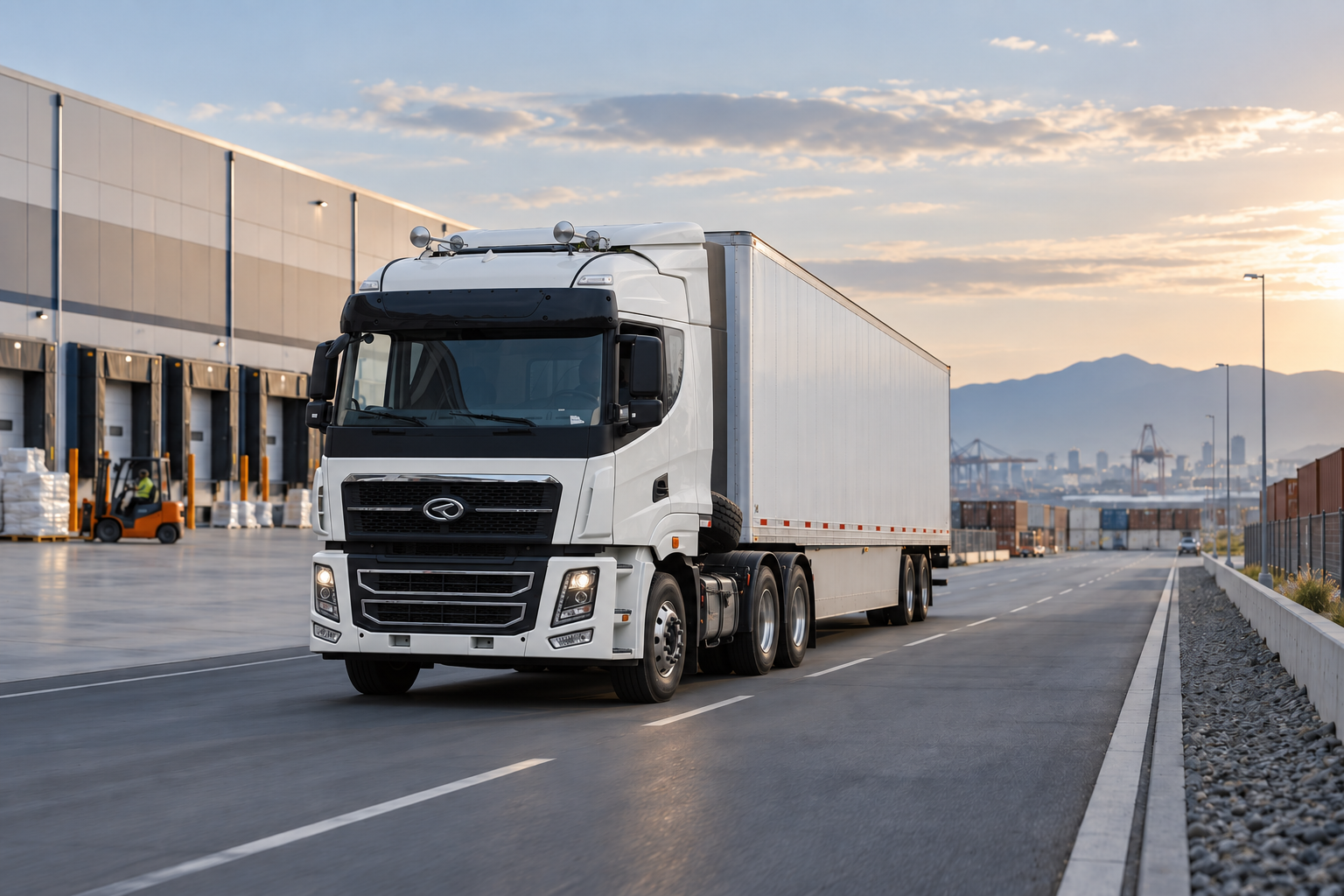
Choosing a diesel tractor truck for long-haul or heavy-duty transport starts with the application, not the model name or headline horsepower. Define the route and duty cycle, confirm the powertrain, select the axle and chassis layout, review the cab, evaluate serviceability, and verify export and destination-market requirements.
There is no single configuration that suits every fleet. A 6×4 may be appropriate for demanding mixed routes, while a 4×2 may be sufficient for predictable paved-road work. The correct choice is the one that meets the real operating requirements and is documented consistently from quotation through delivery.
Start with the route, duty cycle, terrain, climate, trailer interface, and destination requirements. Then verify the engine, transmission, axle layout, dimensions, cab, serviceability, export documents, warranty, and final order specification.
A diesel powertrain may suit fleets that need sustained heavy-duty operation, conventional refueling infrastructure, and established maintenance resources. The decision still depends on fuel availability, emissions requirements, route conditions, and total operating cost.
The required output depends on the route, terrain, combination, operating weight, speed, climate, and transmission. Horsepower should be evaluated together with torque delivery, gearing, cooling, axle configuration, and the complete vehicle specification.
No. A 6×4 may suit demanding or mixed routes that require additional driven-axle traction. A 4×2 may be sufficient for predictable paved-road operation. Compare the actual application, maintenance resources, operating cost, and legal requirements.
Request an exact technical specification, option list, quotation, commercial terms, inspection information, vehicle identification data, export-document checklist, operation and maintenance materials, parts information, and written warranty terms. The required compliance documents depend on the destination market.


