 English

Views: 0 Author: Site Editor Publish Time: 2025-10-26 Origin: Site


In today’s fast-paced logistics and heavy-duty transportation industry, efficiency, reliability, and flexibility are essential to the success of businesses. Companies engaged in freight transport, construction material delivery, or urban distribution rely heavily on high-performance vehicles to manage diverse and demanding tasks. Among the most frequently used vehicles in commercial transportation are tractor trucks and semi-trucks. While these terms are often used interchangeably, they have distinct functions, structures, and operational advantages that can significantly impact a company’s logistics efficiency.
The global transportation market has evolved over decades, driven by the increasing demand for long-distance freight, urban delivery optimization, and heavy cargo transport. Modern fleet management requires a precise understanding of vehicle capabilities to ensure cost-effectiveness, timely deliveries, and safety compliance. A common misconception is that tractor trucks and semi-trucks are essentially the same, but this is far from the truth. Each vehicle type is designed for specific tasks, and choosing the wrong type can lead to operational inefficiencies, increased maintenance costs, and safety risks.
A tractor truck, also referred to as a heavy-duty truck or prime mover, is a self-powered vehicle designed specifically to tow trailers. Unlike cargo trucks, tractor trucks themselves do not carry goods; they provide the power and mobility needed to pull various types of trailers. Tractor trucks are essential in long-haul freight, heavy-load transport, and operations requiring flexibility in trailer types.
Long-Haul Transportation: Tractor trucks are equipped with high-performance diesel engines and durable axles, enabling them to cover hundreds of kilometers on highways, rural roads, or even challenging terrains. They are engineered to operate continuously, making them ideal for intercity and cross-country logistics.
Heavy Cargo Transport: These vehicles can tow trailers carrying construction machinery, industrial equipment, shipping containers, and other heavy goods, providing reliable and consistent performance.
Flexible Trailer Towing: One of the standout features of a tractor truck is its ability to connect to multiple trailer types. Whether flatbeds, box trailers, refrigerated units, or specialized containers, tractor trucks maximize fleet versatility and utilization.
High-Power Engine: Tractor trucks are equipped with engines ranging from 400 HP to over 600 HP in modern models, ensuring the capability to pull fully loaded trailers under various road conditions.
Durable Chassis and Axles: Reinforced frames, heavy-duty axles, and advanced suspension systems provide stability and longevity, even under continuous heavy-load operation.
Spacious and Ergonomic Cabin: The cabin design emphasizes driver comfort and safety. Features include adjustable seating, intuitive control layouts, climate control, and clear instrument panels, reducing fatigue during long trips.
Safety Systems: Modern tractor trucks often include ABS (Anti-lock Braking System), ESC (Electronic Stability Control), collision monitoring, lane assist, and other driver-assist technologies.
CAMC H08 6×4 Tractor Truck: This model features a high-strength integrated frame, 450 HP diesel engine, heavy-duty axles, and a high-capacity fuel tank, optimized for long-distance and heavy cargo operations. Its 12R22.5 18-ply all-weather tires provide excellent traction on uneven roads.
CAMC H9 6×4 Tractor Truck: Available in left-hand or right-hand drive, it offers a low-floor, high-roof cabin with enhanced accessibility and comfort. Powered by the EM 310 H46-A engine paired with a JAS 280 (QL) transmission, it delivers reliable performance for heavy-duty logistics.
CAMC G2 8×4 Chassis: A high-performance platform designed for construction, mining, and infrastructure applications. Equipped with a 430 HP CM6D28.430 Euro 6 engine, 12-speed manual gearbox, and reinforced rear axles, it provides superior traction and towing capacity even under extreme conditions.
Tractor trucks play a crucial role in global logistics, providing flexible, high-performance solutions for businesses requiring heavy cargo transport and multi-trailer compatibility.
A semi-truck, also known as a semi-trailer truck, is a combination of a tractor truck and a semi-trailer, forming a complete freight transportation unit. Unlike a standalone tractor truck, a semi-truck is designed to transport cargo directly on a trailer. Semi-trucks are commonly used in full truckload (FTL) logistics and are optimized for predictable, scheduled routes.
Tractor Truck + Semi-Trailer: The tractor truck acts as the powered unit, while the semi-trailer carries the cargo. This combination forms a complete freight vehicle capable of transporting large volumes of goods.
Large Cargo Capacity: Semi-trucks can transport significantly more cargo in a single trip compared to standalone trucks, reducing the need for multiple journeys.
Fixed Trailer Type: Companies often standardize trailer types for semi-trucks to optimize for specific routes and cargo, ensuring operational efficiency.
Full Truckload Transport: Semi-trucks are ideal for long-distance freight transport, moving goods from one city to another or between warehouses and ports.
Scheduled Route Logistics: Their trailer type and load configuration are typically fixed, making semi-trucks suitable for predictable, repeatable logistics operations.
High Transport Efficiency: By moving entire trailer loads in one trip, semi-trucks reduce transit time and operational costs.
Cargo Security: Cargo is securely fixed within the trailer, minimizing the risk of damage or loss during transit.
Optimized Fleet Management: Standardized trailers and routes allow for better planning and predictable scheduling, improving overall logistics management.
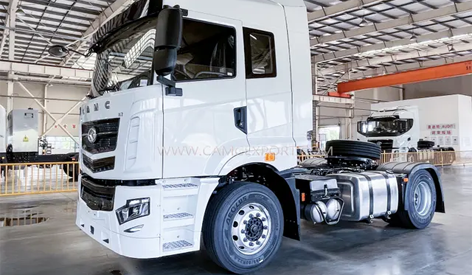
Understanding the differences between these two vehicle types is critical for fleet management, cost control, and operational efficiency.
Tractor Truck: A standalone, self-powered vehicle capable of towing multiple trailer types.
Semi-Truck: A combination of a tractor truck and a semi-trailer, forming a complete freight transportation system.
Tractor Truck: Highly flexible and suitable for multiple trailer configurations, adaptable to different cargo types and transportation scenarios.
Semi-Truck: Primarily used for full truckload shipping on fixed routes, providing predictable and efficient logistics.
Tractor Truck: Can operate independently and allows drivers to attach or detach trailers as needed, providing operational flexibility.
Semi-Truck: Requires a trailer to function and is less maneuverable, especially in tight urban areas or confined work sites.
Tractor Truck: Maintenance primarily focuses on the tractor itself, generally resulting in lower overall costs.
Semi-Truck: Maintenance must cover both the tractor and the trailer, leading to higher total costs but increased cargo capacity per trip.
Tractor trucks can tow a wide variety of trailers, including flatbeds, box trailers, refrigerated trailers, and container units. This versatility allows businesses to adapt quickly to different cargo types and shipping requirements, maximizing fleet utilization and reducing idle time.
Modern tractor trucks are equipped with high-horsepower engines and reinforced axles that can handle long-distance hauls and heavy loads efficiently. For instance, the CAMC H08 6×4 features a 450 HP engine capable of maintaining stable performance even under demanding conditions.
Ergonomically designed cabins, spacious seating, intuitive control layouts, and advanced safety features such as ABS, ESC, and collision monitoring ensure that drivers can operate for extended periods with minimal fatigue, while maintaining high safety standards.
Tractor trucks can perform efficiently on highways, rural roads, urban streets, and construction sites, making them suitable for diverse transportation scenarios.
Semi-trucks can transport an entire trailer’s worth of cargo in a single trip, reducing the number of trips required and improving operational efficiency, particularly for long-haul shipments or port-to-warehouse transfers.
Semi-trucks perform optimally on scheduled, repeatable routes where trailer type and load remain consistent. This standardization simplifies fleet management and enhances predictability.
Cargo is securely fixed in the semi-trailer, reducing the risk of shifting or damage during transit. Advanced securing mechanisms, including tie-downs, restraints, and container locks, further improve safety.
While the initial cost and maintenance of a semi-truck are higher than a standalone tractor truck, their capacity for larger loads and predictable route operation can justify the investment for businesses with consistent logistics demands.
Selecting the right vehicle depends on your business’s specific transportation needs:
Flexible towing or multi-trailer operations → Tractor Truck (e.g., CAMC H08/H9).
Full truckload on fixed routes → Semi-Truck.
Other critical factors to consider include:
Power and Load Requirements: Tractor trucks are ideal for heavy loads and long distances.
Fuel Efficiency: Smooth transmissions and optimized engines reduce operating costs.
Driver Comfort: Ergonomic cabins and advanced safety systems improve driver efficiency and reduce fatigue.
Maintenance Costs: Tractor trucks typically have lower maintenance costs, while semi-trucks require servicing both tractor and trailer.
Fleet Strategy: Companies with diverse shipping needs benefit from a flexible tractor truck fleet, whereas predictable routes benefit from semi-trucks.
For detailed specifications and models, visit the CAMC official website to explore their high-performance tractor truck lineup.
In conclusion, while tractor trucks and semi-trucks are both essential in the logistics and heavy-duty transport industry, their differences define their applications:
Tractor Trucks: Offer flexibility, high performance, and versatility for towing multiple trailer types and handling diverse cargo.
Semi-Trucks: Excel in transporting full truckload shipments along fixed routes, with optimized cargo security and operational efficiency.
Understanding these distinctions allows businesses to select the most suitable vehicle for their operations, improving efficiency, reducing costs, and enhancing safety. For companies seeking reliable, high-performance solutions, CAMC tractor trucks—including the H08, H9, and G2 series—provide powerful engines, durable chassis, comfortable cabins, and advanced safety features, making them ideal for heavy-duty, long-distance, and multi-trailer transport operations.


