 English

Views: 0 Author: Site Editor Publish Time: 2026-06-06 Origin: Site


Equipment specifications often look straightforward on paper. Yet, assuming a vehicle's travel profile remains static is a costly mistake. Real-world conditions demand precise spatial awareness from operators and managers alike. A miscalculated clearance metric can easily trigger severe safety hazards. These dangers range from devastating power line strikes to catastrophic structural bridge damage. Fleet planners constantly face rigid municipal laws. They must navigate unforgiving dumping environments on a daily basis. Ignoring operational heights directly disrupts routing and destroys expensive infrastructure.
In this guide, we will dissect standard travel measurements. We will carefully evaluate raised-bed operational risks affecting your fleet. You will discover how dynamic payload factors alter vehicle profiles during daily tasks. Finally, this article provides highly actionable frameworks. You will learn to match equipment specifications precisely to your unique physical site constraints.
Standard Travel Heights: Most standard on-road dump trucks measure between 10 to 13 feet tall, with tri-axle models averaging around 10.5 feet.
Operational (Raised) Heights: A raised dump body exponentially increases the vehicle's height, routinely requiring 15 to 18 feet of vertical clearance during offloading.
Dynamic Variances: Spec sheets provide baseline figures; actual vehicle height fluctuates based on payload weight (suspension compression) and aftermarket chassis modifications.
Safety & Selection: High-sided truck beds increase the center of gravity, elevating rollover risks on sloped or uneven terrain, making height a critical factor in both capacity planning and site safety.
Buyers must baseline their logistics using accurate standard dimensions. A typical on-road dump truck usually measures between 10 to 13 feet in overall height. This translates to roughly 3 to 3.8 meters vertically. Single-axle models generally sit at the lower end of this spectrum. Quad-axle models push closer to the maximum legal limits. The industry workhorse for transporting aggregates and hot asphalt remains the standard tri-axle model. It averages precisely 10.5 feet in standard travel height. Understanding these baseline figures helps project managers plan safe municipal routing.
Off-road conditions demand entirely different equipment structures. You must strictly differentiate between highway-legal configurations and site-restricted heavy machinery. Articulated models and rigid haulers dominate mining operations and heavy civil projects. They easily exceed 15 feet in static height straight from the factory. Because they drastically surpass highway bridge limits, you cannot drive them on municipal roads. Instead, transport crews use specialized lowboy trailers to move them between jobs. Planners must secure oversized load permits when relocating this massive equipment.
| Vehicle Class | Axle Configuration | Average Travel Height | Primary Application |
|---|---|---|---|
| Light/Medium Duty | Single-Axle | 10.0 - 10.5 feet | Landscaping, residential paving |
| Heavy Duty (On-Road) | Tri-Axle / Quad-Axle | 10.5 - 12.0 feet | Aggregates, commercial asphalt |
| Articulated (ADT) | Multi-Axle Off-Road | 12.5 - 14.5+ feet | Muddy terrain, heavy civil construction |
| Rigid Hauler | Two-Axle Off-Road | 15.0 - 18.0+ feet | Quarries, deep surface mining |
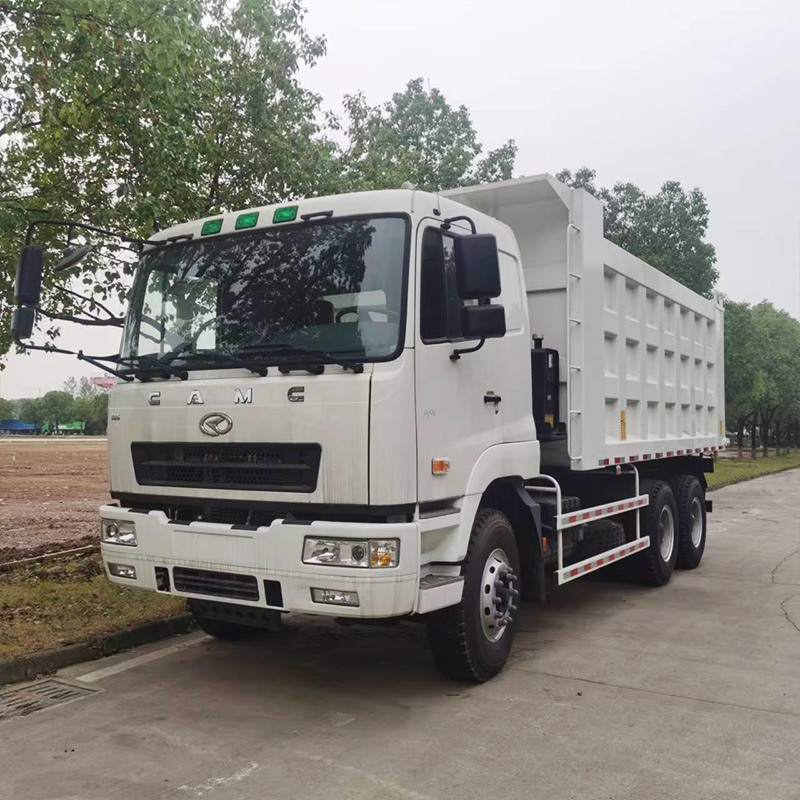
A vehicle's travel height becomes entirely irrelevant at the drop site. The critical metric shifts to the peak height of the raised front cylinder. A raised body exponentially increases vertical space requirements. Small capacity models handling 2 to 5 yards require significant room. They need a minimum of 15 feet of vertical overhead clearance when fully raised. Medium to large vehicles demand even more spatial awareness. Tri-axles carrying 16 or more yards require up to 18 feet of vertical clearance. Failing to account for this massive multiplier guarantees equipment damage.
Buyers must audit specific constraints before dispatching any vehicle. Many hazards exist directly above the drop zone. Operators face severe risks from low-hanging electrical power lines. Municipal bridges and dense tree canopies often block critical access routes. Indoor warehouse dumping facilities present strict ceiling limitations. Planners need to assess these high-risk overhead obstructions carefully. A thorough risk assessment prevents catastrophic strikes. It also protects companies from expensive liability claims and utility repair fines.
Vehicle height operates as a highly dynamic variable. Suspension travel strictly governs this vertical dimension. An empty vehicle rides significantly higher than a fully loaded one. Often, this difference spans several inches. This creates a severe operational risk for fleets. Drivers may successfully navigate under a low bridge while fully loaded. However, they might strike that exact same bridge on the return trip. The uncompressed suspension pushes the cab roof or front cylinder higher. Drivers must understand this empty versus loaded discrepancy perfectly.
Frame dimensions vary heavily by manufacturer. Generic OEM brochures often provide inaccurate final numbers. Upfit modifications alter the "as-built" height considerably. Fleet owners frequently add oversized tires for better mud traction. Specialized heavy-duty suspensions raise the baseline chassis height. Custom steel cab shields extend above the standard roofline. Motorized tarp systems add extra inches to the top rail. You must measure the finished, upfitted vehicle physically. Relying purely on factory spec sheets invites logistical disaster.
Many operators wrongly assume taller equipment performs better. Taller sideboards certainly allow for more material volume. However, they dramatically raise the vehicle's center of gravity. Highly elevated beds exponentially increase lateral sway. This happens frequently on unpaved, uneven, or sloped surfaces. The resulting weight shift leads to severe tipping hazards during offloading. Low-profile designs are strategically superior for graded or unstable sites. They keep the mass closer to the axles.
Common Mistake: Utilizing high-sided models on unstable grading. This amplifies sway during the final cylinder extension phase.
Common Mistake: Ignoring ground bearing pressure. Soft mud sinks one side of the rear tandem, instantly creating a fatal tilt.
Best Practice: Select low-profile designs for sloped dumping sites. They prioritize stability over maximum volume.
Best Practice: Audit lateral incline angles meticulously before ever engaging the PTO to raise the bed.
Efficiency relies heavily on loader compatibility. The height of the sideboards must align perfectly with site equipment. Sideboards usually sit 48 to 52 inches above the truck frame. This measurement must remain compatible with your active wheel loaders. Excavators also need enough clearance to swing buckets smoothly over the rails. If the sideboards exceed the loader's maximum hinge-pin dump height, operations stall completely. Proper matching ensures efficient, spill-free loading cycles.
Measure the maximum hinge-pin height of your existing wheel loaders or excavators.
Calculate the exact vertical distance from the ground to the top of the sideboards.
Ensure a minimum clearance gap remains. This prevents heavy buckets from striking and damaging the top rails.
Verify that the loader bucket width fits securely between the front and rear bulkheads.
Planners must measure physical bottlenecks prior to selecting truck sizes. You cannot dispatch massive vehicles into confined municipal spaces. For example, large tri-axles require 18 feet of dumping clearance. They also typically require gate access widths exceeding 11 feet. Heavy-duty load-bearing ground remains absolutely essential to support their weight. An organized site access audit prevents costly delivery delays. It guarantees vehicles can enter, maneuver, and exit without striking perimeter infrastructure.
| Constraint Category | Minimum Clearance Target | Verification Method |
|---|---|---|
| Gate Entry Width | 11+ feet | Manual tape measure across gate posts |
| Overhead Drop Zone | 18+ feet | Laser measurement to lowest ceiling/wire |
| Turning Radius | 50+ feet | Site blueprint review and path plotting |
| Ground Integrity | Sufficient for GVWR | Soil compaction test for heavy axles |
Theoretical specs fail to capture field realities. Never rely entirely on paper measurements. You should institutionalize strict physical verification protocols across your fleet. Operators must carry manual folding height sticks inside their cabs. They must physically verify clearances at new or variable-terrain job sites. Ground spotters provide a crucial second layer of visual defense. Spotters can monitor overhead hazards while the driver focuses on the terrain. Proactive mitigation tactics safeguard both the expensive equipment and the human operator.
Site supervisors should mandate pre-dump walk-arounds. The driver must exit the cab to survey the immediate drop zone. They need to inspect the ground for unexpected washouts or soft spots. They must also check the skyline for newly sagging utility wires. By enforcing these mitigation tactics, fleets drastically reduce their accident rates.
Managing overhead clearances requires constant vigilance. Dump truck height operates as a dual-metric reality. You must track both travel height and operational raised height daily. Remember that payload dynamics heavily impact the final numbers. Empty suspensions ride inches higher than fully loaded configurations. This single fact causes countless bridge strikes every year.
Cross-reference your specific job site overhead limits today. Compare your existing wheel loader capacities against the maximum uncompressed vehicle dimensions. Implement manual height verification rules for all operators. Finalize your procurement and dispatch schedules only after completing comprehensive physical clearance audits.
A: Height indirectly impacts weight by determining cubic capacity, but legal limits are strictly governed by the DOT Bridge Formula (axle count and wheelbase), not the physical height of the box. High sides combined with dense materials (like asphalt) easily lead to illegal overloading and structural damage.
A: Not inherently. Both can be manufactured to the same dimensions (e.g., 52-inch sideboards). The primary difference is weight—aluminum bodies are lighter, allowing for greater legal payload under identical physical footprint constraints.
A: While highway overpasses are typically required to clear 14 to 16 feet, older municipal and rural bridges frequently fall below 13 feet, making the 10.5-foot standard dump truck a safer universal choice, provided the route is audited for empty-load suspension variations.


