 English

Views: 0 Author: Site Editor Publish Time: 2026-06-04 Origin: Site


Miscalculating equipment dimensions often leads to severe consequences on the job site. You might face costly project delays, damaged property, or outright rejected deliveries. Whether you are managing fleet logistics, scoping a commercial paving site, or ordering residential landscaping materials, "eyeballing" site access is a high-risk approach. You need exact measurements before dispatching any heavy machinery.
Securing the right equipment requires balancing three strict variables. First, you must evaluate exterior physical dimensions for safe site clearance. Second, you must calculate interior volume for optimal material yield. Finally, you must confirm axle configurations for strict legal weight compliance. Failing to align these three factors results in logistical breakdowns.
This guide breaks down standard vehicle widths and critical height clearance requirements. We explore different capacity categories and compliance-driven evaluation metrics. You will learn how to match equipment dimensions to your job site safely. By understanding these dimensions, you ensure secure, legally compliant material transport every time.
Standard Width: The standard exterior width of most commercial dump trucks is 8.5 feet (102 inches), excluding mirrors.
Minimum Gate Access: A minimum opening of 10 feet is required for tandem-axle trucks, while tri-axles and larger vehicles require at least 11 feet of clearance to account for turning angles and blind spots.
Vertical Risk: While resting height sits around 7.5 to 11 feet, a fully raised dump bed requires 15 to 18 feet of vertical clearance, frequently exceeding standard overhead wire and bridge limits (14 feet).
Volume vs. Weight: Physical size does not guarantee payload. Dense materials (like gravel or asphalt) will exceed Department of Transportation (DOT) weight limits long before they fill the visual volume of the truck box.
Federal and local DOT regulations establish strict boundaries for commercial vehicles operating on public roads. These rules dictate that the maximum legal width for commercial vehicles without an oversize load permit is 8.5 feet (102 inches). Almost every dump truck on the market adheres strictly to this baseline width. This rule applies across the board, from medium-duty tandems to massive 18-wheeler combinations.
While the exterior footprint measures a strict 8.5 feet, the interior box dimensions differ significantly. The interior box width generally measures between 84 and 88 inches. The thickness of the side walls, structural pillars, and external hardware consumes the remaining space. You must account for this interior measurement when planning load volumes.
Buyers and fleet operators must match the interior width of the dump box to the width of the loader bucket on site. Equipment compatibility is crucial for operational efficiency. If your loader bucket is wider than the truck box, you face a major bottleneck. A size mismatch here drastically slows down cycle times and increases material spillage. Spillage requires manual cleanup, which eats into your daily schedule.
Many modern dump beds feature a smart, tapered design. For example, a box might measure 84 inches wide at the front and 86 inches wide at the tailgate. This slight rearward widening serves a vital engineering purpose. It prevents material bridging inside the box during elevation. The taper ensures a cleaner, faster drop for sticky loads like wet clay or hot asphalt.
Best Practices for Width Compatibility:
Always measure your primary loader buckets before finalizing a fleet purchase.
Factor in the width of external mirrors when navigating tight urban alleyways.
Opt for tapered box designs if you frequently haul adhesive or heavy, wet materials.
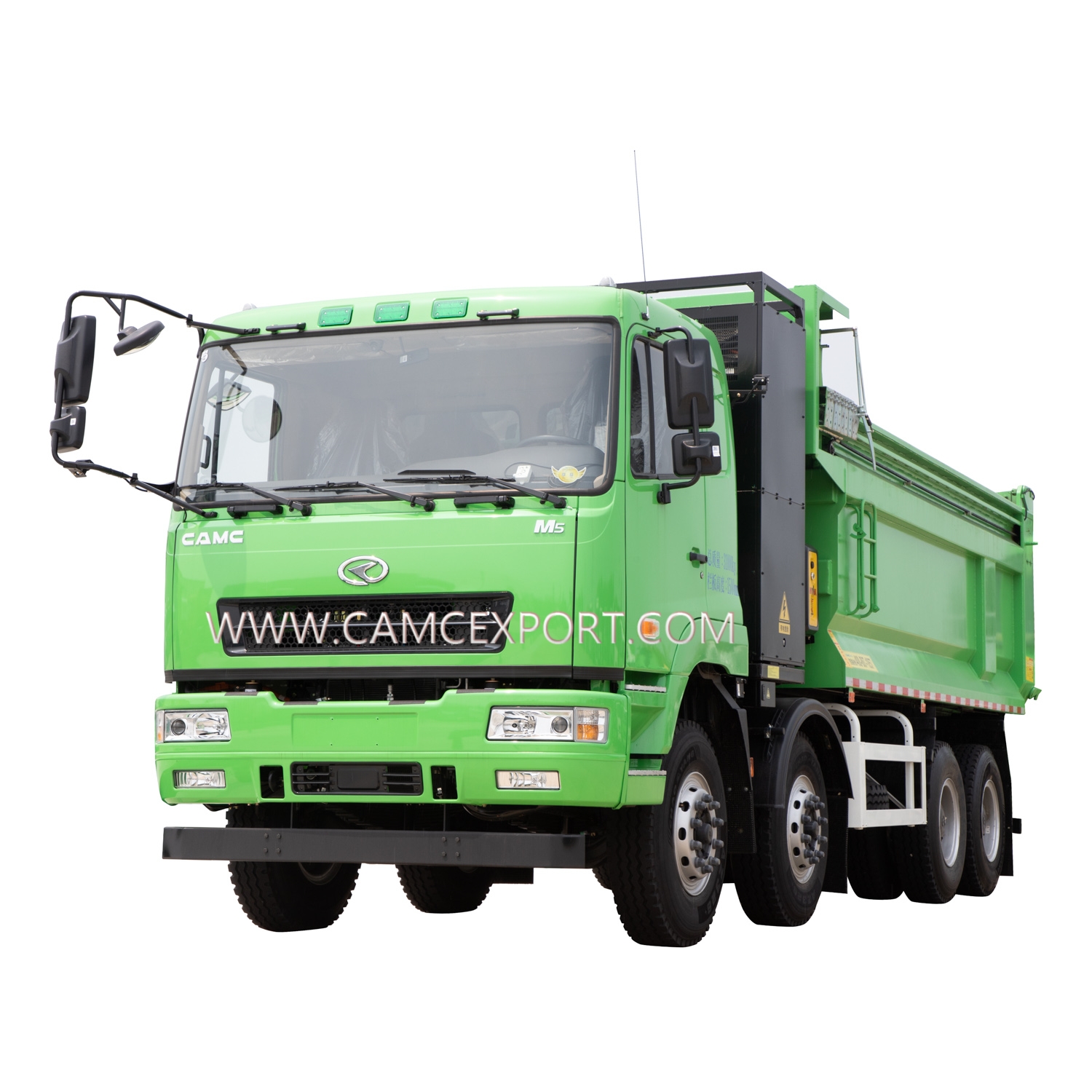
An 8.5-foot exterior footprint cannot safely navigate a 9-foot gate. Drivers need adequate buffer zones to maneuver heavy equipment safely. Standard tandem axle vehicles require an absolute minimum horizontal clearance of 10 feet. Heavy-duty tri-axles demand at least 11 feet of clearance. They feature extended wheelbases and much wider turning radii, making tight cornering extremely difficult.
Delivery failures frequently stem from vertical ignorance. Site managers often measure ground access but completely forget to look up. A raised dump box requires 15 to 18 feet of overhead clearance to fully empty its load. Operators must audit the delivery footprint carefully prior to dispatch. Standard overhead wires and residential bridges often sit at just 14 feet. You must identify tree branches, residential eaves, and low-hanging utility lines before the vehicle arrives.
A common residential error involves unsafe dumping requests. Homeowners often request drivers to dump materials over a fence or retaining wall. Professional fleets universally prohibit this action. Dumping over a barrier carries a high risk of catastrophic property damage and load shifting. If the rear wheels cannot safely plant on stable ground, the entire vehicle risks tipping over during the hydraulic lift.
Common Site Access Mistakes:
Ignoring the swing radius of the front cab when backing through a narrow gate.
Failing to account for soft soil or mud, which alters the vehicle's height and stability.
Assuming overhead power lines meet the 14-foot minimum standard without verifying visually.
Selecting the right vehicle class dictates how efficiently you handle material logistics. If you deploy a massive vehicle for a small residential job, you waste fuel and risk property damage. If you dispatch a compact vehicle for a highway project, you cripple your supply chain with endless return trips.
Below is a breakdown of the three primary size categories you will encounter in the field.
These smaller vehicles prioritize high maneuverability and feature a short wheelbase. They navigate tight corners easily. They are best for tight residential driveways, micro-landscaping projects, and urban sites with restricted turning radii. You can park them in standard residential spaces without blocking neighborhood traffic.
The 10-wheeler represents the industry middle-ground. It offers an excellent balance of payload capacity and agility. Fleet managers rely on them daily. They are best for general road construction, commercial site prep, and moderate aggregate hauling. They carry enough material to keep crews busy but remain nimble enough to access standard commercial job sites.
These massive haulers feature extended wheelbases, specialized heavy-duty suspensions, and massive throughput capabilities. Combination setups, such as a tractor paired with an end-dump trailer, can reach 50 to 60 feet in total length. They are best for heavy highway projects, mining operations, and high-volume asphalt paving. Maneuverability is severely restricted. They require dedicated staging areas and extremely wide access roads.
| Size Category | Typical Capacity (Yards) | Primary Advantage | Ideal Project Application |
|---|---|---|---|
| Compact / Single-Axle | 2 – 5 | High maneuverability | Residential driveways, urban landscaping |
| Medium / Tandem-Axle | 6 – 12 | Capacity/agility balance | Commercial site prep, road repair |
| Large / Tri-Axle or Trailer | 16+ | Massive throughput | Highway paving, mining, major earthwork |
A common procurement mistake involves evaluating a haul strictly by its cubic yardage. Physical volume does not equal legal weight capacity. We call this the payload illusion. Because dense materials like hot-mix asphalt or wet gravel weigh roughly 2 tons per cubic yard, a 15-yard box fills up fast. It will easily reach 30 tons, shattering the Gross Vehicle Weight Rating (GVWR) of a standard chassis before the box looks visually full.
Under the federal DOT Bridge Formula, legal weight limits rely heavily on axles. The formula determines capacity by evaluating the number of axles and the distance between them. You cannot simply load a box to its brim if you lack the structural axle support to distribute that weight legally.
Here is how axles generally dictate your legal capacity:
Single-Axle: Typically maxes out at 10–12 legal tons. Suitable for topsoil and light mulch.
Tandem-Axle: Carries roughly 14–18 legal tons. Excellent for sand and standard gravel.
Tri-Axle / Quad-Axle: Distributes weight more effectively across a longer footprint. These configurations allow for 20–25+ legal tons. Municipal paving bids often explicitly require them.
Fleet managers must also evaluate body material economics. You will often choose between AR450 high-strength steel and lightweight aluminum bodies. Steel is absolutely necessary for abrasive riprap and large demolition boulders. However, an aluminum body sheds thousands of pounds of curb weight. This weight reduction allows operators to legally haul an extra 1.5 to 2 tons of payload per trip under strict state limits. You maximize daily throughput by shedding unnecessary body weight.
You cannot blindly trust advertised capacity numbers. True capacity—measured in Cubic Yards—relies on basic geometry. You calculate it by multiplying interior Length x Width x Height (in feet) and dividing the total by 27. However, the theoretical yield rarely matches the practical yield on the job site.
Buyers must actively account for design features that subtract from raw interior volume. We call this volume deception. While specific features improve operational efficiency, they simultaneously eat into your payload space.
Consider these two common structural volume deductions:
Hoist Wells: Front-mounted hydraulic cylinders require a housing unit often called a doghouse or hoist well. This necessary protrusion eats up approximately 0.5 cubic yards of interior space at the front of the bed.
Elliptical/Curved Corners: Premium boxes utilize curved 24-inch radius corners to prevent dirt buildup. This brilliant design eliminates manual scraping and significantly lowers labor costs. However, cutting out the square corners reduces available capacity by another 0.5 cubic yards.
When procuring a vehicle or hiring a fleet, you must use smart shortlisting logic. Prioritize structural efficiency over raw advertised yardage. Features like cross-memberless floors and dirt-shedding front aprons keep the box clean. They improve daily operating margins far more than an extra half-yard of theoretical space. A clean, efficient box completes more cycles per day than a slightly larger box that requires constant manual cleaning.
Knowing that a vehicle measures 8.5 feet wide is only the first step in project planning. Successful material logistics require a comprehensive understanding of your job site geometry and legal weight thresholds. You must look beyond simple exterior measurements to ensure safe deliveries.
To avoid rejected deliveries and property damage, verify 10-to-11-foot gate widths before dispatch. Audit your delivery zones for 18-foot vertical clearance hazards. Finally, always calculate payload limits based on strict DOT axle laws rather than just estimating cubic yardage by eye.
Before ordering materials or signing an equipment lease, measure your exact site access points with a tape measure. Identify the specific density of your primary material to avoid overloading the chassis. Cross-reference your required daily payload with local DOT bridge weight formulas to guarantee compliance.
A: No. Width is standardized at 8.5 feet. Payload capacity is determined by the length of the box, the density of the material, the chassis GVWR, and the number of axles.
A: You need a minimum horizontal gate width of 10 feet and an overhead clearance of 15 to 18 feet, free of power lines and tree branches.
A: Tri-axles feature an additional drop axle that spreads the load weight over a longer distance, allowing them to legally carry 20-25 tons on public roads without violating DOT weight restrictions.


